
Indian Boardgames, Colonial Avatars: Transculturation, Colonialism and Boardgames
My latest book is out now. Although I haven't yet got my hands on a copy yet, my yuletide celebrations have started on a high note.
How did an Indian game meant to teach the process of rebirth change into the children’s race-game, Snakes and Ladders? Why does the Bengali language use Dutch loan-words for the suits of cards? How do the rules of Chess change in India and Europe? The answers to these and other related questions can be obtained after examining in depth the relationship of colonialism to boardgames.

Focusing on Indian boardgames and their European versions, this book explores how the British Empire's appropriation of ancient games had a signal effect on identity and culture in the formerly colonized countries of the Global South.
Boal and Videogames Revisited: A Paper I Want to Write Someday
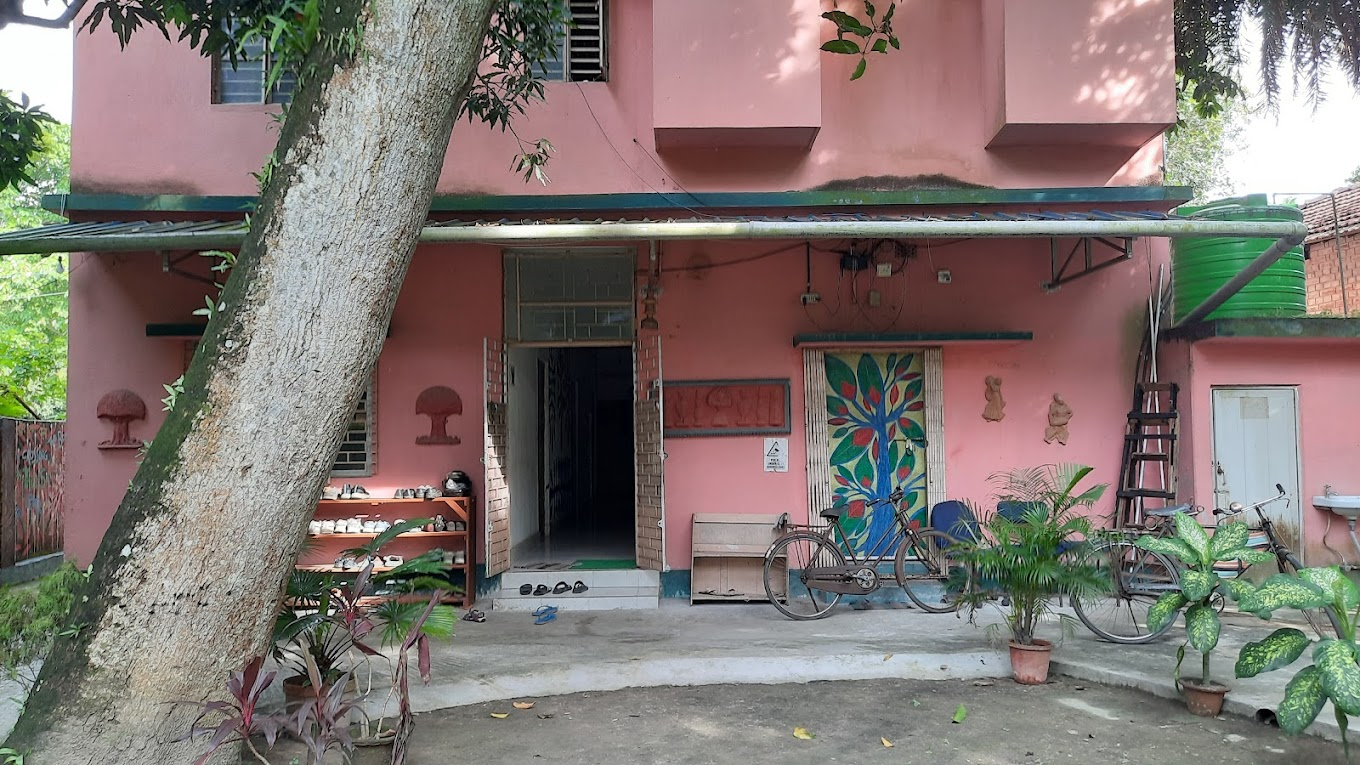
I've been toying with returning to Gonzalo Frasca's work on Augusto Boal for a while now. Recently, I was able to visit Badu in Madhyamgram thanks to my colleagues in CSSSC and meet Sanjoy Ganguly, the founder of the theatre group Jana Sanskriti, which Boal had worked with closely. Speaking to Sanjoy babu, I was reminded of the many synergies between Boal's ideas and videogames, something that Frasca focused on in his Masters' thesis but which has been largely forgotten in recent years. In my PhD years, I had looked at Boal's Games for Actors and Non-actors and had always wanted to return to it in connection to videogame narratives and Frasca's excellent Masters' research. So here's the very rudimentary beginnings of an idea, something that I hope to turn into a paper. I did write a little on Boal, Aristotle and videogames in a recently published book chapter (in Literary Cultures and Digital Humanities in India eds. Nishat Zaidi and Sean Pue) but I want to do something more detailed on Boal and games. Let me know if you are interested.
Videogame narrative theories started off with a distinctly Aristotelian poetics with Brenda Laurel’s Computers as Theatre and other ensuing research. Such analyses were based on the assumption of a protagonist endowed with agency and the primary concern with understanding videogame narratives vis-a-vis Aristotle was multiple endings of these games and therefore, the deviation of the ‘beginning, middle and end’ model in Aristotle. The ultimate aim of the game narrative still remained Aristotelian in the sense that it was supposed to be cathartic, in a process variously considered to be a purging or a purification of emotions. Going beyond how videogames may modify the thinking around the narrative telos, this paper will re-examine how videogames play or can be played (in the theatrical sense) and whether there can be videogames where player agency is not considered paramount. Indeed, some earlier scholars have already commented on the ‘illusion of agency’ in videogames; here, a concomitant but different model is being considered. What happens when videogames represent the oppressed and those who do not feel enabled or lack the agency to effect a change of fortune (even if it is from good to bad, as Aristotle posits as the basis of tragedy)?
Writing about the videogames of the oppressed, Gonzalo Frasca introduced the work of the Brazilian playwright Augusto Boal to game studies way back in 2001 in his Masters’ thesis submitted to the Georgia Institute of Technology. Boal has famously called the catharsis-based thinking behind Aristotelian tragedy as ‘coercive tragedy’ and sees the political in the way such tragedy is thought through. Frasca in his Master’s thesis writes:
This thesis examines the potential of videogames as a medium for fostering critical thinking and discussion about social and personal problems. [...]Therefore, videogames have the potential to represent reality not as a collection of images or texts, but as a dynamic system that can evolve and change. After studying how the process of interpretation functions in simulations, I propose to adapt the basic elements of the work of drama theorist Augusto Boal into videogame design. Boal created a set of techniques for participative theatre that raises the spectators awareness about their reality and encourages personal and social change. (Frasca 2001)To my knowledge, Frasca’s early work on Boal and videogames has not been followed up in game studies discussions and if it does critically examine the agency and catharsis based thinking of the poetics of videogames through the Boalian lens, then the fuller implications of such thinking need to be made clear. In this paper, I intend to address Boal’s concept of the ‘spect-actor’ in videogames, developing on the earlier research by Frasca and clarifying how it disrupts the agency-based thinking in videogames as the player is seen as both a spectator and actor. In the process, it will also question the catharsis-based model as well as the ever-popular ‘Hero’s Journey’ of Joseph Campbell that is a favourite among games researchers and designers. The spect-actor concept, in itself, is not without its flaws as Boal’s critics have pointed out but instead of only focusing on his better known Theatre of the Oppressed, this paper will also include the ludic activities that Boal envisaged for his theatre in his Games for Actors and Non-actors. Boal’s ludic theatre has found a niche far away from his homeland - in the remote village of Badu in West Bengal, India. As Sanjoy Ganguly, the director of Jana Sanskriti, which extensively uses Boalian techniques claims: ‘the exercises require the participants to create images and the initial stages of scenarios, and it is clear that these are derived from the personal experience of the performers’ (). Ganguly also goes on to explain how Boalian theatre can directly affect the living scenarios of those who feel oppressed: ‘Forum theatre can lead them to understand that it is not a question of a family, it is not a problem between a man and a woman: it is the problem of patriarchy’(). Frasca has already addressed the connect between Forum theatre and the way in which videogames resemble it through his mods of The Sims. This paper will examine further examples, from both mainstream and lesser known games, such as Papers, Please!, 80 Days and Undertale come to mind. It will address the games that Boal designed for his theatre and examine possibilities of analogues in videogames in order to challenge and unsettle entitled, agency-based and cathartic conventions prevalent in current thinking around the poetics of narrative games.
Indicative Bibliography
Boal, Augusto. 1993. Theatre of the Oppressed. Translated by Charles A. McBride. Tcg ed. edition. New York: Theatre Communications Group Inc.,U.S.
— 2002. Games for Actors and Non-Actors. Translated by Adrian Jackson. 2nd ed. New York: Routledge.
Campbell, Joseph. 2008. The Hero with a Thousand Faces. Novato, CA: New World Library.
Frasca, Gonzalo. 2004. ‘Videogames of the Oppressed’. Electronic Book Review. http://www.electronicbookreview.com/thread/firstperson/Boalian.
Ganguly, Sanjoy. 2020. From Boal to Jana Sanskriti: Practice and Principles. Edited by Ralph Yarrow. 1st edition. New York: Routledge.
Laurel, Brenda. 2013. Computers as Theatre. 2nd edition. Upper Saddle River, NJ: Addison Wesley.
Gautam Sen Memorial Boardgame Museum
 Gautam Sen Memorial Boardgames Museum

The museum hosts a collection of boardgames both ancient and modern, ranging from the oldest ever boardgame, The Royal Game of Ur to current games such as Settlers of Catan and Grizzled. On display are mainly the older games from different parts of the world with a focus on Indian games, of course. You will find games such as Go, Mancala and Senet here as well as a collection of Ganjifa cards and chess sets from all over the world.
The museum is an entirely non-profit and private space and entry is by invitation or prior appointment only. It is still a very small effort and we encourage only those who are really interested in boardgames to visit.
The timings are 5:30 to 7:30 p.m. on weekdays and from 11 a.m. to 6 p.m on weekends.
There is no charge for visiting the museum.
Here is our new website with details of how you can visit:
https://sites.google.com/view/kolkataboardgamemuseum/home
.jpg)
We request you not to touch the exhibits and while the museum is also open to children, we encourage supervised visits. Also, the boardgames are not available to play unless you obtain special permission.
Browsing the museum is easy and there are three ways to go about it:
- You could use the museum’s mobile devices to scan the QR codes (on the exhibits for detailed information. We have tried to consult authoritative sources and in most cases the codes will direct you to the Ludii Portal, which is one of the authoritative research sites on boardgames. Where the Ludii website does not have the information, we have referred you to similar academic forums.
- You could also use this index and read the entries following the numbered exhibits.
- If you are feeling chatty and want an adda over a cup of tea, just ask me about an exhibit and I will jog my memory for information and of course, anecdotes.
My new book
So my new book is out. You can get it on the Bloomsbury website: https://www.bloomsbury.com/in/videogames-in-the-indian-subcontinent-9789354356919/
Here's what it is about:
Description
Videogames in the Indian Subcontinent: Development, Culture(s) and Representations explores the gaming culture of one of the most culturally diverse and populous regions of the world-the Indian subcontinent. Building on the author's earlier work on videogame culture in India, this book addresses issues of how discussions of equality and diversity sit within videogame studies, particularly in connection with the subcontinent, thereby presenting pioneering research on the videogame cultures of the region.
Drawing on a series of player and developer interviews and surveys conducted over the last five years, including some recent ones, this book provides a sense of how games have become a part of the culture of the region despite its huge diversity and plurality and opens up avenues for further study through vignettes and snapshots of the diverse gaming culture. It addresses the rapid rise of videogames as an entertainment medium in South Asia and, as such, also tries to better understand the recent controversies connected to gaming in the region In the process, it aims to make a larger connection between the development of videogames and player culture, in the subcontinent and globally, thus opening up channels for collaboration between the industry and academic research, local and global.
Table of Contents
Section One: Development
1 Digital Technology and Videogames in the Indian Subcontinent: An Attempted History
2 The Videogame Industry in the Indian Subcontinent: The Current Scenario
Section Two: Cultures
3 Diverse Subcontinent, Ludic Cultures: The Non-Digital Game Cultures as Context
4 Digital Gaming Cultures in the Indian Subcontinent
Section Three: Representation
5 Representations of the Subcontinent in Videogames Global and Local
6 Absent Discourses in Game Cultures: The Case for Diversity
7 What Wakens the Sleeping Giant?
Bibliography
Appendix One: Timeline
Appendix Two: Survey
Glossary
Ludography

Game Studies India Adda to DiGRA India
Suniti Chattopadhyay, in his 1913 article ‘Hostel Life in Calcutta’, describes adda as 'a social activity or a space for a carefree talk with boon companions'. In Games Studies, because of the nature of the area, things are much more flexible and easygoing than in most other academic circles. Bringing Games Studies to India has always been my dream. Or at any rate, it has been for the past twenty years. What better mode of bringing Game Studies scholars in India together than an adda. A carefree chat about games without the fear of being shushed. And in a country that has one of the largest and most diverse gaming populations yet is not on the games research and development radar, it was necessary to get the conversation going. Especially when there are so many who have such fantastic ideas about games and gamers. In 2019, when I organised the GamesLit conference in Kolkata (arguably the first international Games Studies conference in India), the high quality of the papers from India impressed not just me but also my colleagues from abroad. It was Espen Aarseth who asked me why I was not setting up something whereby we could have a games research community in India. The thought remained with me and during the pandemic, I decided to take the plunge by roping in some talented young researchers who I thought would be able to carry on the discussion, giving it a local flavour (through the adda mode) while also participating in the international network.

Today, after ten months of our existence as Games Studies India, we have been recognised as a chapter of the Digital Games Research Association (DiGRA). We are now DiGRA India. It is a dream come true for me that after two decades, digital games studies now has a platform for debate and discussion in India. DiGRA India, in its earlier avatar, Games Studies India Adda, has featured talks by eminent scholars and industry experts from both India and abroad. These can be accessed on our YouTube channel, here. As DiGRA India starts functioning we hope that we can connect the research on India's gaming culture to the rest of the world.
Check out DiGRA India on our website: https://digraindia.com/
Chess and Death
Covid-19 has left its indelible dark mark over my family. My dad-in-law, Gautam Sen, passed away recently felled by that dread disease. He was a polymath - a chartered accountant, a traveller and someone with a deep interest in history. As his daughter says, he has now gone to visit 'the unknown country from whose bourn no traveller returns'. For me, he will remain the embodiment of the ludic, a chess-player par excellence and an enthusiast in the digital. He was forever battling Fritz and other computer programs often beating them or drawing the game. I had tried to introduce him to strategy games - Napoleon: Total War, specifically, because of his interest in Bonaparte. That didn't quite work out but Chess remained a lifelong passion with him. He had been instrumental in bringing the Soviet grandmaster and former World Champion, Vasili Smyslov, to Calcutta and gave up a potential chess-playing career for family necessities. Every now and then, I would see him sitting in his office and watching chess matches on YouTube. A chess enthusiast myself, I have never had the patience to watch chess games but he would analyse them with much care and consideration.
I will not have those conversations about chess again when I am at home and I doubt anyone else here will beat Fritz 7; not me, certainly. The shelves are, however, filled with books on Chess. Yes, these remain. Memories.

------
(This is a personal post and although I refrain from posting about anything other than my research, Covid-19 and the damage it did to my family is certainly an exceptional scenario; hence this post.)
Speaking on Board Games for the Indian Museum's Stories of World Cultures series
Here's me presenting on boardgames in episode number 29.
The Looting of the Ganj i Sawai and Uncharted 4
 |
| Nathan Drake discovers the treasures of the Great Moghul in Uncharted 4 |
Games and Literary Theory Conference, Kolkata November 2019
 | |
The GamesLit 2019 team: GamesLit pioneers
|
 |
| Keynote Diane Carr responding to a question from Prof Sumit Chakrabarti |
 |
| Anirban Ray on games from ancient Egypt |
 |
| Game scholars from the world over. (From left): Tomasz Majkowski, Me, Yue-Jin Ho, Pavel Grabarcyk, Olli Leino, Poonam Chowdhury, Espen Aarseth, Samuel Heine. |
My Arctic Adventure - Tromsø 2018
 |
| Beautiful is an understatement: Tromso from my hotel. |
 |
| The northernmost games studies PhD scholar is on his way with flying colours |
The assessment procedure was pretty simple and friendly. I got a whole lot of very useful ideas from the discussion with Emil and Holger. I'm hoping that my two penn'orth of thoughts was of some use to them as well. The other highlight (and it was really high) was the cable car ride up to a mountain peak overlooking Tromso and our many slippery trysts with the ice. And then there was a fantastic three-course dinner. I usually reserve my opinions on things culinary for a different space but I can't help commenting on this one since this was a three-course grand affair with wines to match each course. Not something I'll get anywhere outside Europe. I'm sure.
 |
| The LEGO house in Tromso |
 |
| Mural from the more Leftist days |
 |
| Gandhi ji outside the Peace Studies Centre where I gave my talk. |
The second talk was on a very different topic - Indian boardgames as precursors to gamification. I had given this talk to a packed gallery in the Indian Museum (thanks to the efforts of the wonderful education officer, Sayan Bhattacharya) but I have never written about it. Here was a far smaller audience and certainly one that was unfamiliar with Indian boardgames and some had never even played Snakes and Ladders! The mechanics of the game is, thankfully, very easy to explain because of how our former colonial masters simplified it from the original Gyan Chaupar. So I was able to move the discussion from the simple race game that was about a straightforward telos to the very complex and almost unending game of rebirth. Quite fulfilling to talk at length about karma and its complicated working through what is considered a children's game. Again, I was asked interesting questions about how during gameplay people start creating narratives of their own and also whether these games are more like simulations than games. One of my biggest takeaways, however, was the translation of the Persian text in one of the Gyan Chaupar boards. Azadeh Isaksen, who originally hails from Iran, was quick to spot almost literal translations of the Hindu terms into Persian in the bilingual Gyan Chaupar board that I showed in my slides. This has set me thinking - why translate it? and is it actually possible to translate the religious ideas?
 |
| Persian translations underneath the Sanskrit terms on this Gyan Chaupar board. |
The stay in Tromso was all too short - just two days and I was on the plane again. All the way from Oslo to Dubai, I was sitting beside a Croquet player from Norway (there are only forty-five in the country) who was on his way to Cape Town for a Croquet World Championship. It was kind of hard to get through the hoops of the Croquet conversation (literally) and finally, fatigue and sleep took over.
 |
| Sami Game Jam |
 |
| Sami drum |
While I was in Tromso learning about Sami culture, my friend Shailesh Prabhu was attending a Sami game jam somewhere in Northern Finland. They have made some fantastic game prototypes representing Sami culture and the subaltern narratives that do not get represented in our majoritarian discourse. Here's the link to some of the games - https://itch.io/jam/sami-game-jam.
I hope I can go back again and learn more about the Sami culture.
Visiting Kyrat!
Like the Maoist struggle in Nepal of not-so-long ago, Kyrat is experiencing civil strife. The government is under the dictator, Pagan Min - strangely, the name is the same as that of the Burmese emperor whom the British hounded out of Burma after committing gross acts of aggression in the Second Anglo-Burmese War in 1852. The key architect of that war was Lord Dalhousie, governor-general of India and arguably, also responsible in part for the events of 1857 in India. Now why the villain of Far Cry 4 should have the same name as a Burmese king who opposed British colonialism is something that eludes me. There is an obvious inference that one can make though: the powers that defy the European rules of the game, are to be cast as villains and the name Pagan also, of course, has distinct non-Christian echoes. In the game, Min has seized power after the fall of the country's royal dynasty and now styles himself the king of Kyrat.

The player will most likely join the Golden Path (there is a possibility of choosing otherwise but of that later), which is the armed resistance to Min's government and was founded by his father Mohan Ghale. The two leaders of the Golden Path have sharply contrasting world-views. Sabal, the traditionalist is described by the Far Cry Wiki thus:
He sees great value in his heritage, race, culture, history and legacy and believes that Kyrat needs the stability of traditions to bring peace to its people. Sabal often seeks moral guidance from the religious texts and teachings of Kyra. He is also smart enough to know how to use religion as a political tool. These views are in direct conflict with Amita's world view.
With tensions rising between the two leaders, Amita is now head to head with Sabal over the installation of Bhadra as the next Tarun Matara. Amita sees the practice as superstitious, old, and ultimately sexist, objectifying young women and robbing them of autonomy, a good education, and social life. She believes that intellectual, social, and financial progress is the only way to ensure a stable future for Kyrat.
The Tarun Matara, in the game, is the daughter of the God Banashur who is embodied in a living child selected by the community for this purpose. Those unfamiliar with local traditions will fail to see the clear similarity to the Kumari in Kathmandu, Nepal, who is still worshipped as a living goddess. The Kumari puja is a longstanding tradition among Hindu communities across the Indian subcontinent and it is popular among all sections of society. Indeed, the abolition of the tradition as a way of upholding women's rights might be considered problematic even in South Asian Feminist discourses. For example, here is an alternative point of view:
Chanira Bajracharya, a 19-year-old Nepalese student, was a Kumari of Patan, a city within Kathmandu Valley. Fulfilling the role from age five to 15, she says she still looks up to the goddess: "I feel I'm blessed and a lot of my success comes from those blessings." She says the tradition encourages respect for women in a male-dominated society. (for the full article, click here).
Anyone who knows the history of Nepal would recognise in Pagan Min's usurpation of power a reference to the end of the Nepali Royal Family (the Shah dynasty) that ruled the country for centuries until in the previous decade, the Crown Prince gunned down his entire family and the country ended up facing civil war involving Maoist rebels and government forces in the years after. This also effectively closed the country to tourists for a long time. A BBC report from 2003 states "While the Maoists are not targeting tourists, the war has started directly hitting the tourism sector - Nepal's most important industry." Ajay is also shown as entering Kyrat at a time when tourism has all but closed down. While reflecting the recent history of the region, the Kyrati civil strife also helps the designers to set the context for the adventures in the gameplay of Far Cry 4.
The parallel history that Ubisoft constructs is intriguing on many other counts. There is a conscious attempt at thinking through the history of South Asian nations and Kyrat is a composite of the cultures of Nepal, India, Burma and even parts of China. As mentioned earlier, the developers, however, managed to completely ignore the fact that the Nepali people have their own language, which is somewhat different from Hindi, the language spoken in Far Cry 4 . Hindi is spoken in large sections of Northern India and is also the popular language of Bollywood - no wonder the Nepali fans of the videogame were left dismayed at the developers' decision to make the Kyrati population speak Hindi in a setting that largely resemble Nepal. Maybe Bollywood has to be the stereotype for all things South Asian. There are other stereotypes too - all the villains in the story are foreigners. Pagan Min is Chinese and so is his chief general and adopted sister, Yuma Lau. His other governors, Noore and Paul Harmon "de Pleur"are both foreigners and they are both people who came to Kyrat either as tourists or as human rights workers. There is also a corrupt CIA agent and a couple of hippie drug-dealers. Ajay Ghale himself seems to be an American citizen but besides him, Kyrat does not seem to have any outside influence on its political climate. The UN, the USA and even the nearby powers such as India and China seem happy to leave it alone. Finally, the outlook on the country's and indeed, the region's history is bleak. If the player supports Sabal and let's him take over the government, a series of pogroms against the other faction begins and the country goes back to its orthodox religion that deprives women of their rights. If the player hands over the government to Amita, eventually Kyrat becomes a drug-producing state, where all the energies of its population go into cultivation narcotics and in building an army. Just as Far Cry 2 sees no happy ending for the nameless African country it is set in, Far Cry 4 too has the same fate in store for Kyrat. Another formerly-colonised country doomed to a continuing state of confusion and suffering. Clearly, the people aren't capable of looking after themselves after the European colonial powers leave. Once again, the game characteristically attempts to present plurality and complexity but ends up with extremely predictable stereotypes that seem to hint that things were better off under colonial rule. Resistance either creates villains like Pagan Min (as his real-life Burmese namesake might have seemed to the British East India Company) or confused bigots and ideologues such as Sabal and Amita, all of whom lead the country to destruction.

The crab-rangoons, for me, are quite important because they symbolise how the local culture is treated in the game. Just like the dish is a mix of many Asian cuisines and at the same time, a very North American fabrication, Kyrat in Far Cry 4 is kind of similar. With its hotch-potch of South Asian and Western influences, the game seems to struggle with representing an unfamiliar (to the West) and exotic part of the Orient and to end up with a very Western notion of the place. Kyrat itself is like a crab rangoon - a Western impression of a mix of South Asian cultures. Although most would like their money's worth and play out the game battling Min's forces, the hidden message is that whatever heroics Ghale performs, Kyrat is doomed anyway and perhaps the best way is to let Min continue his rule and keep supplying the West with heroin and slaves. Eating the crab rangoons and opting for the status quo would mean not rocking the boat at all - it would also mean accepting a very Orientalist (in the sense Edward Said uses the term) notion of South Asia, where the next best thing to colonialism is the perpetuation of colonial codes within the so-called postcolonial nation-states. As for me, I do not like crab-rangoons much so I naturally ended up upsetting the apple cart (or the plate of crab-rangoons, as it were). Then again, I guess there are a lot of people who'd prefer the crab-rangoons. Who knows!
Another book. More on Postcolonialism.
Videogames and Post-colonialism: Empire Plays Back
This book focuses on the almost entirely neglected treatment of empire and colonialism in videogames. From its inception in the nineties, Game Studies has kept away from these issues despite the early popularity of videogame franchises such as Civilization and Age of Empire. This book examines the complex ways in which some videogames construct conceptions of spatiality, political systems, ethics and society that are often deeply imbued with colonialism.
Moving beyond questions pertaining to European and American gaming cultures, this book addresses issues that relate to a global audience – including, especially, the millions who play videogames in the formerly colonised countries, seeking to make a timely intervention by creating a larger awareness of global cultural issues in videogame research. Addressing a major gap in Game Studies research, this book will connect to discourses of post-colonial theory at large and thereby, provide another entry-point for this new medium of digital communication into larger Humanities discourses.

Darmok and Jalad at DiGRA: Keynoting at DiGRA 2017 in Melbourne
DiGRA 2017 is over and many participants are by now already home either in lovely Australia, where it was hosted, or in other parts of the world. This DiGRA was different for me, it will always remain special because I was one of the two keynote speakers. Melanie Swalwell, whose work archiving and preserving videogames and digital heritage needs no introduction, was the other keynote speaker. I, however, spoke on a different kind of preservation and another perspective on archiving. It was time I had to speak on Darmok and Jalad at Tanagra.
Those of you who are unfamiliar with the Darmok episode of Star Trek will think I am raving but watch the episode you must if you are to learn the secret. The Darmok episode is about a superior alien species establishing contact with the starship Enterprise and even the ship's super-advanced universal language translator is unable to parse what the Tamarians mean to say. The words are clearly translated but the meaning is beyond the wildest guesses of the crew: 'Darmok and Jalad in Tanagra'. Only later, through a test of faith and cooperation between the Tamarian captain and Captain Picard (of Enterprise), is it established that the Tamarians use a different system of signification - one where there culture and history form the basic units of communication. 'Darmok and Jalad in Tanagra', then means 'friendly cooperation' just as was found between the Tamarian historical heroes Darmok and Jalad on the planet of Tanagra. Kind of like saying Achilles and Patroclus in Troy to indicate loyalty and friendship. There were two reasons for my using the Darmok example: I was talking about the plurality of history and how history itself can become a way of talking about a people; I was also talking about the impossibility of representing the history of a culture using one unified and inflexible system. Those who know my recent work on postcolonialism and videogames will have guessed it. Here's me bringing subaltern studies (and historiography) to game studies. And the feedback was encouraging, I'm happy to say.

Before I say more about my keynote-talk, let me first say a bit about some of the fascinating talks that I managed to attend. Mia Consalvo and Chris Paul spoke on 'value-crafting' and indie games - something I need to share with my Indian indie developer friends to see what they think. The paper is available here. I also enjoyed the presentation on indie and dojin games by Michael Fiadotau - the dojin culture in Japan was unknown to me. As was the fascination with Pachinko (Ozu has a movie about Pachinko) that was discussed in another paper. Similarly, it was fascinating to hear of Maria Garda's work on the videogaming practices as reflected in the archives of Communist-Poland. Rene Glas and Jesper Vught's paper on using Let's Plays in the classroom reminded me of the class exercises that I had for my games and storytelling course in Oklahoma City. You can find an extended abstract here. I chaired a session where Espen Aarseth and Pawel Grabarczyk spoke on the game-identity of the games that are ported as well as of other kinds of iterations of the game. This was followed by Marcus Carter and Adam Chapman's intriguing analysis of truth and authenticity in Total War: Rome 2 and the fantasy world of Total War: Warhammer. Darshana Jayemanne, Antonio Zarandona and Adam Chapman presented an interesting enquiry on the destruction of built-heritage in videogame worlds. Again, something that my own work on digital archives of colonial cemeteries speaks to. Finally, I was also part of Phillip Penix-Tadsen's wonderful panel on the Global South and videogames, where I spoke on India and learnt a lot about game curation in Argentina, game development in Brazil and Nigeria, as well as games education in South Africa. In my own talk, I highlighted the key problems and promises of the Indian industry, the Western stereotypes and our own lack of innovative designs but I also projected the genius of some of the leading game designers from India. People were particularly interested in hearing about Missing, the serious game about child-trafficking in Bengal. There were many papers that I would have loved to hear but couldn't due to the lack of time and the parallel sessions (after all I don't have the time-turner). I did get a lot out of the doctoral consortium run by Steven Conway and the diversity workshop run by Adrienne Shaw and organised by Darshana Jayemanne. Highlights from the doctoral consortium - a project on narratives by Arseniy, Mahli-Ann Butt's PhD proposal on self-care in games, Kiona Niehaus's project on how racial characteristics are represented in game design, Lars de Wildt's project on comparative studies of religious representation in games and Marcus Toftedahl's work on videogames in India and China.
Besides all the networking and attending presentations, I had the wonderful opportunity to catch up with James Manning and continue somewhat our debate from almost eight years ago - on storytelling in videogames. Chatting with Nick Webber on games and history (he had presented on the Britishness of games) and with Peter Nelson about Chinese notions of spatiality and Le Corbusier were other hghlights of the trip. I met the fantastic Laura Crawford, who in between serious discussions on postcolonial identity squeezed in advice on where to get marmite and veggie mite. Last but not least, I got a full-day tour of Melbourne courtesy my friend, Tom Apperley and his daughter Lyra. And I also got to see the MCG and pose beside a statue of Sir Don himself.
But to return to the keynote. Yes, it worked out despite the huge stress that I was under. Here's a description of both the keynotes. To be a DiGRA keynote speaker - it was a dream come true. Veritably.
So here's how I started. And the beginning will give you an idea of what followed:
Darmok and Jalad at Tanagra.
Everyone here except diehard Star Trek fans is probably thinking that I am insane.
But I wanted to begin with these words from a rather strange episode of Star Trek where Captain Picard meets an alien spaceship captain who speaks to him in a language with familiar words but which remains incomprehensible despite the Enterprise’s universal translator machine.
After an almost deadly confrontation, Picard is able to figure out that the semantics in this alien language is not connected to individual words but to the knowledge of the entire history of the alien culture.
History, in the form of metaphor, serves as a language here. The episode serves
1. To remind us of the different ways in which history can be perceived
2. And tell us how this multiplicity of perceptions is important to comprehend
what we think of as different, Othered, alien and even monstrous.
It is with these two points in mind that I have called my talk ‘Playing Alternative Histories’
In formerly colonised nations, there is often a trend to have a nationalistic reaction after independence. Whether or not bordering on jingoism, such a reaction also replicates a similar logic to that of Empire. Somebody has to be controlled and if that's not possible, what people remember also has to be controlled. Instead of such a portrayal that almost reflects the logic of empire, I posited the multiplicity of videogames as being a fitting platform for the plurality of historical narratives - especially, the unheard and the voiceless histories that subaltern historians have attempted to represent. Meg Jayanth's work on the dialogues in 80 Days and Dhruv Jani's (Studio Oleomingus) Somewhere were the examples I used. This was the alternative history possibility that I wanted to highlight in videogames - just like in the Darmok episode, here is a situation where we need to reexamine our historical framework and be open to other forms of representation.
Here's the full slideshow:
I had two more days two explore Melbourne after the conference. With the last libations and farewells over, I set out for the two ludic attractions that I had planned to visit. The first one was a cricket-lover's pilgrimage (I mean the game and not the insect) to Melbourne Cricket Ground and the second was to ACMI or Australian Centre for the Moving Image. At the MCG, I was totally enthralled by the Sports Museum and especially its Cricket section. Here's a Lego version of MCG (seen in a departmental store) andof course, a statue of the Don in the MCG Sports Museum:


ACMI, too, was a real revelation and I liked the displays ranging from the magic lantern to the latest VR technology. I got to play some very old games such as Tempest and Pong; for the first time (can you believe it!) played Pro Evolution Soccer and then got my very own bullet-time sequence capture.
On the more retro side, I also got to see a zoetrope and to make some cool scary shadows of myself a la Nosferatu. My friend, Tom Apperley and his little daughter, Lyra, were supposed to come and pick me up for a visit to the zoo so I stopped making scary shadows and headed towards the exit. On the way out I saw these messages left in the ACMI by people (mainly kids) from all over the world saying what the future will be about:

Straight out of Star Trek. Maybe we'll get there someday. And it might be worth remembering the Darmok episode, then.
Just check the Twitter feed for DiGRA where @adrishaw says '#digra17 was easily my favorite DiGRA'. I totally agree. Great work by Marcus Carter and everyone else in his organising team.


