
Showing posts with label Deleuze. Show all posts
My Book Is Out at Last!
After action report
,
agency
,
Becoming
,
Bergson
,
Boal
,
Death
,
Deleuze
,
Magic Circle
,
monograph
,
Slider
,
Spinoza
,
storytelling
,
technicity
,
Time
,
Total War
,
walkthroughs
,
Wastelands
No comments
As some of you know already, my book Videogames and Storytelling: Reading Games and Playing Books was published in September 2015 by Palgrave Macmillan. Here is the blurb from the publisher’s website:

Grand Theft Auto IV saw more copies being sold than the latest superhero blockbusters or the last Harry Potter novel. Most of its players and critics commend its storytelling experience; however, when it comes to academic analysis, mainstream humanities research seems confused about what to do with such a phenomena. The problem is one of classification, in the first instance: 'is it a story, is it a game, or is it a machine?' Consequently, it also becomes a problem of methodology – which traditional discipline, if any, should lay claim to video game studies becoming the moot question. After weathering many controversies with regards to their cultural status, video games are now widely accepted as a new textual form that requires its own media-specific analysis. Despite the rapid rise in research and academic recognition, video game studies has seldom attempted to connect with older media and to locate itself within broader substantive discourses of the earlier and more established disciplines, especially those in the humanities. Video Games and Storytelling aims to readdress this gap and to bring video games to mainstream humanities research and teaching. In the process, it is also a rethinking story versus game debate as well as other key issues in game studies such as time, agency, involvement and textuality in video game-narratives.
(For more info, such as the Table of Contents and ordering, see the publisher's website: http://www.palgrave.com/page/detail/Video-Games-and-Storytelling/?sf1=barcode&st1=9781137525048)
For those inclined towards electronic editions, a Kindle version is also available now. Here’s the link: http://www.amazon.com/Video-Games-Storytelling-Reading-Playing-ebook/dp/B017DQ7J3E/ref=dp_kinw_strp_1/276-1064401-1083624
What I don’t say in the blurb but feel I should here is that the book comes with a few warnings. There’s quite a bit of Deleuze in there (as there has been and will be in my work) and there’s my obsession with the now extinct THQ Studio’s hallmark game series STALKER. Predictably, of course, there’s Tarkovsky, Lewis Carroll and PKD rubbing shoulders inside discussions on videogames. My interest in paratexts and walkthroughs takes the form of a chapter-length discussion and of course, time, agency and involvement (called ‘immersion’ by some) figure importantly in what I have to say. Finally, I end with a discussion of eggs and which end to break them on. Ludology vs. Narratology has turned into the egg-endian debate that the Lilliputs in Gulliver’s Travels consider so sacrosanct.
Here's the email address for those wishing to request a review copy: reviews@palgrave.com
Finally, I love the book cover. Thanks especially to Palgrave Macmillan for all their help and patience.
DiGRA 2015 in Lueneberg
Conference
,
Deleuze
,
DIGRA
,
Germany
,
Gothic
,
minor literature
,
slavery
,
Slider
,
storytelling
No comments
Much has happened in these many days when I have been away from ‘Ludus Ex’. I write a (fairly) regular column in the Times of India, Kolkata edition and that has given me another non-academic outlet for my thoughts. A blog, however, has its own sense of freedom and flow. So here I am.
Here I am sitting on the upper floor of a cafe in Luneberg in Germany and telling you about it. Luneberg is a fairy-tale town with its houses seemingly made of chocolate and liquorice. Medieval German houses dating back to the 12th century and two huge solid churches that were ringing their bells when I entered the cafeteria. The many towers and turrets of these old houses are proper Assassin’s Creed territory and one expects that Ezio or Altair will be leaping off them and hiding in the haystack below. It is 10:30 a.m now and the streets are still empty. Germany is on holiday today - not sure, why. I am here for DiGRA 2015. By a quite strange quirk of fate, I have three presentations to make here. DiGRA begins this afternoon and I will be part of Mark Wolf’s panel on Videogames across the World. Mark himself is not here and the panel will be led by the eminent Dutch videogames scholar, Joost Raessens.
I arrived yesterday and as I was taking in the sights and sounds of this very pretty toy-town and trying to survive conversations with my now very rusty German, a bunch of very varied English accents greeted me: DiGRA early arrivals had hit town. They had also hit the local brew - Heidegeist. With its deceptively After-Eightish taste, the minty Heidegeist was mighty enough to fell a couple of conference participants. Amongst the survivors and abstainers, too, one could feel that the DiGRA spirit was equally potent.

[The organisers of DiGRA pulled off their game with so much poise and balance. Back centre:Mathias, the magister ludi, in front of him: Sonia Fizek, in that athletic position: Niklas Schrape and far to the left: Nina Cerezo]
Just before I met the others, Matthias (Fuchs), the main organiser of this DiGRA, popped out of one of those toy houses and said hello. The last time I had met him was in Calcutta when he visited in 2011. I also met Tanya Krzywinska and Doug Brown shortly afterwards - I had last seen them in 2006 at Brunel University, I think.This DiGRA looks like its going to be one for reunions and I’m already walking down a mesh of many memory lanes and by-lanes.
Being at heart always the flaneur, I had signed up for a city tour organised by the hosts, Leuphana University. Bylanes again. This time, however, these were real lanes through which we were taken around by our very capable student-guide, Ann-Kathrin Wagner. Excessive salt-mining in the Middle Ages had caused random subsidences in the town and the houses looked like prototypes for Hundertwasser’s designs. Apparently Heinrich Heine had lived here, Bach had practised on the organ at St. Johannes Kirche and the composer of a very famous German song (something with the moon in it) was born here. After an hour of time-travel around horse-drawn carriages, medieval cranes and a fascinating board-games shop, it was time for DiGRA 2015.


[The Johannis Kirche: Bach learnt to play here (the organ and not videogames!)]
DiGRA Day One
I started DiGRA with a panel on the present and future of Game Studies consisting of Frans Mayra, Sebastian Deterding, Joost Raessens and other Game Studies luminaries. The debate was around whether Game Studies could be expanded to include everything. The Humanities focus of Games Studies was duly noted (‘Does that make Game Studies a Humanities discipline? Should universities award a B.A in Games Studies?’ - these were the questions that came to mind then) and someone compared it to early media studies. There was a claim that gamification could be seen as exploding that temporal dispositif. Instead of focusing on the versus, as in choice versus play, rails versus sandbox, new ways to future-proof games research were called for. Someone used that magic word ‘assemblage’ and although I’m not sure whether it was used in the Deleuzoguattarian sense, I couldn’t help feeling smug.
The ‘Videogames around the World’ panel went well although I wish there were more people attending. I learnt a lot about the gaming situation in Finland, the Netherlands, Australia and Venezuela. What I missed was more on how the local culture influenced the game design as this is something that I am interested in given the Indian context (as I said in my own presentation). Frans Mayra did mention how the Norse legends were used in some Finnish games and how an Americanised version of the Norse legends was used in Max Payne (remember the Ragnarok Club). Tom Apperley gave a very lucid account of the scenario in Australia and Venezuela - apparently, in the latter, videogames are mostly only available through torrents. Especially, if they show the same weapons that are used by the army and the police. Another, albeit slightly lesser, surprise came when Joost (Raessens) exclaimed ‘Shah Rukh Khan’ when I showed an image from Ra-One. Bollywood and its ubiquitous fame.
The first keynote was next. Tanya was at her best and the Gothic in gaming came alive again. As she linked up the Gothic in gaming to the history of the genre in ‘Monk’ Lewis, Radcliffe and later writers and moviemakers, she identified the five coordinates of the genre as: character / story-patterns, mise-en-scene and style, emotional modality, function and entropy (and the sublime). She describes the Gothic as a ‘grammar … and too complicated to call a genre.’ In a much-tweeted about academic twist, she redefined gamification as a form of genre remediation as she examined the links between Gothic videogames and their generic ancestors in earlier media.
DiGRA Day Two
Day One ended with a Gothic descent into the cellars of Lueneburg’s Maelzer pub where keeping one’s head unbumped against the low medieval ceilings was the ultimate test of sobriety. Despite the adventures that ensued, I was up early and ready for Astrid Ensslin’s talk on ‘Unnatural Narratology’. After this, more on lit and gaming in Inderst and Goergen’s talk on utopia and Feng Zhu on the ‘Implied Player’. Had a fairly long conversation with Feng on ‘minor literature’ and also my problems with Iser and reader-response. Bear in mind though that this was how I came to Game Studies in the first place! Because of my clumsiness with finding things, I missed part of Rudolf’s presentation which he co-authored with Arno Groegen. Have much to discuss re: utopia with Rudolf. However, we missed each other again this time as he is in faraway Canada.

[I used the example of Thralled - game based on slavery that Shailesh Prabhu told me about. A Brazilian delegate at the conference told me that Isaura is based on a real-life character]
Then there was my own paper on slavery in videogames. Kind of in the spirit of Tanya’s use of ‘gamification’, I had framed it as a remediation of the slave narrative via the computer game medium. In the paper, albeit still in its early stages, I stress the ambiguity of the slave-narrative - that is the experience of the total lack of agency and the simultaneous ‘illusion of agency’. This, according to me, emerges even more clearly in the videogame than in earlier media. The other point that I half-raised but that was taken up by Sonia Fizek (postdoc at Gamification lab and a longtime friend) was regarding how the slave’s non-agency and trauma could be seen as a metaphor for rethinking agency in games. She mentioned Stefano Gualeni’s game (Stefano was there in the audience, by the way!), Necessary Evil, as an illustrative example. I’ll have to play it to know. However, all thanks to Sonia, I will now explore the agency/ illusion of agency from the point of unfreedom and ambiguity.
Sonia’s own paper followed mine. Presented together with CERN anthropologist Ann Dippel's paper, her work looks at using games to make people perform scientific work (especially involving participation in experiments) and then analysing the big data. Sonia and Anne came up with the concept of ‘labourisation’ instead of gamification in an article they wrote together. The following two papers were on videogames in Eastern Europe. Jaroslav Svelch presented on how videogames were used for subversive protest against the repressive Communist regime. Indiana Jones in Wenceslas Square is one of the games that I remember from this presentation. Svelch’s earlier work on adventure games that address problems in Czech history an be found here (http://web.mit.edu/comm-forum/mit7/papers/Svelch_MiT7.pdf). Pyotr Sterczeweski, another new face at DiGRA, presented on construction of the notion of the political in Polish board games using Chantal Mouffe’s theory of the agonistic versus the antagonistic. I was surprised and impressed to learn that board-games in Poland are so deeply connected to their national history.

[Wenceslas Square: Indiana Jones cometh!]
From history board-games, I moved to an entire panel on games and history with Adam Chapman, Esther Macallum-Stewart and Tom Apperley. This was one of the highlights of the conference for me. The opportunity to hear Esther meld her knowledge of the First World War and videogames through her analysis of Valiant Hearts was pure pleasure. She argued that there has been a certain stereotypical representation of the war in European historiography and that videogames too have taken that on. In contrast the comic / graphic novel such as Charley’s War are perhaps more realistic models that any such presentation of history could consider. Adam also focused on how a particular type of presentation of history was privileged in the triple-A games and how it seemed to back up the ‘great men’ approach to history. Tom’s paper focused on the alternative reality aspect of history games and he started with a challenge to the Marxist historian Edward Hallett Carr.
After this, of course, there was three-sided football, beer and barbecue. And there was the young game designer from Copenhagen, Sabine Harrer, asking me to play her game (modelled on a similar thing created by a Feminist theorist) which involved colouring images of female genitalia. It also uses the C-word in its title. While this was, I admit, quite a shock to me at first, watching the reactions of all the others who played was really really interesting.
I also got to meet Chris Bateman with whom I hope to have many more conversations and also perhaps play the Royal Game of Ur someday. The night ended at around 2:30 a.m for me with a walk from the University to town through a rather spooky bridge and a park full of chairs. After catching up with friends such as Sebastian Moering, Rune Klevjer and Emil Hammar, it was time to call it another day.
DiGRA Day Three
Karen Palmer’s keynote ‘Is Hacking the Brain the Future of Gaming?’ was a breath of fresh air in that it pointed at possibilities for videogames using her neuroscience-based aids to games. Her syncself game of Parkour is aimed to provide players an environment where they can explore the concept of self. She calls it ‘not just art, not film but a whole trend towards mindfulness’. Palmer also discussed the example of Nevermind , a biofeedback-enhanced adventure horror game -exactly what I conceptualised in NTU with Russell Murray.
After this, I went for the session that I was waiting for for months - Mia Consalvo and Chris Paul on teaching videogames. The takeaways were many: from Conway’s game of life on paper to writing prompts on playthroughs there were many suggestions across the board. I was quite happy to see that I use the same initial texts that were recommended by Mia. Hanli Geyser from South Africa said she used African board games to get gaming across to students who are unable to access games technology. This is similar to my situation here in India although unlike in South Africa, I rarely have university computers available for my students. Recommendations came in from all around: Marsha Kinder’s Playing with Power, the first issue of Games and Culture and Ian Bogost’s ‘Here is How Games Persuade’ are some that I noted. I have much more in my notes but I feel that this session requires a separate post sometime. My only regret was that I had a paper to present in a parallel session afterwards and therefore, missed the discussion on setting assignments. All in all, a great takeaway from a great conference.
My own paper on minor literature as a framework for reading games comes out of my earlier work. Here’s Claire Colebrook on what it means for Deleuze and Guattari:
A minor literature, also, does not appeal to a standard but creates and transforms any noFon of the standard. If I seek to write a film script that is just like the popular and financially successful Star Wars (appealing to the spirit and tradiFon of American science ficFon), then this is a major work. But if I aim to produce a film that criFcs may not even recognise as a film, or that will demand a redefiniFon of cinema, then I produce a minor work. For Deleuze and GuaTari all great literature is minor literature, refusing any already given standard of recogniFon or success. (Colebrook 2002, 25)
In my paper, by looking at paratexts of videogames as exemplary of the ‘minor’ character of the games, I raise questions about the very distinction of the text and paratext (by the way the latter was a popular word in this DiGRA) as leading to the basis of narrativity in games. This paper is going to be out as a much reworked version in my forthcoming book, Videogames and Storytelling: Reading Games and Playing Books. The other paper in the session that I attended was on the use of Genettian focalisation in videogames. Interesting but something that could be expanded as a framework, perhaps.
The conference party at the Salon Hansen was nice. There was videogame art on the walls and I got to do something that is one of my main reasons behind going to conferences: speak to younger researchers. There was Ea (like in EA Sports she said she challenged everything) putting up a spirited defence of Espen Aarseth’s take on gaming and others who disagreed. After a relatively productive networking time when I also got to see some eminent names in game studies charging up the dance floor, I thought I’d beat a retreat after realising that the shots in my hand were jaegermeisters!
DiGRA Day Four
Eros and Thanatos - the creation and destruction of everything human. DiGRA was coming to an end and Tom Apperley was there to see that the world of game conferences was to be shaken up. Speaking on ‘nerdcore’ or representations of porn in videogames, Tom managed to shock quite a few people in there with a couple of photos of pin-up models wearing videogame gloves (and nothing else, just in case you had doubts). Making a case for viewing this as an excessive projection of masculinity, he highlighted the archiving and the legitimising characteristics of nerd core.
Tom’s talk was followed by the thanatos part - Markus Rautzenberg’s keynote on uncertainty and death was entertaining and thought-provoking. Some of this, I felt, connects to my own work on death (https://www.ntu.ac.uk/writing_technologies/back_issues/Vol.%202.1/Mukherjee/62762gp.html) although I connect more to the uncertainty and the temporal multiplicity of death in videogames and not so much the psychological experience. Bringing in a whole group of philosophers, such as Lacan, Bateson, Wittgenstein, Heidegger and Deleuze, Rautzenberg provided a deep, dense and thought-provoking angle on uncertainty. They video recorded the talk and I must watch it whenever they have it online.
I also need to quickly mention Olli Leino and Sebastian Moering's paper on applying existentialist philosophy in videogames. The talk left me with me many questions but I am only going to say that someone finally decided to bring up Sartre in Game Studies.
DiGRA Things-that-I-missed
All conferences are about missed connections and papers that you really wanted to hear but couldn’t. My biggest miss was Niklas Schrape speaking on Georg Klaus and games. Also Emil Hammar on ethical diversity, the panel with Jesper Juul in it and of course, the second session of Teaching Game Studies were big misses. I didn't know William Huber was at the conference until today when I started looking at the Twitter feeds more carefully. However, because I didn't bother too much with Twitter this time, I also missed the GamerGate trolls - happily.
Lueneberg memories
I can still hear the bells of Johanniskirche and see the huge organ when I close my eyes. Living in the 150-year old house owned by the Dartennes was a treat in itself. Finally, the dark beer at the Pons pub and the nice sushi at the bizarrely-named Pearl Harbour restaurant with my new-found friends are memories to cherish. And for once, I held the chopsticks right!

[A Sushi restaurant called Pearl Harbour: the name kinda shocked me into holding my chopsticks right - a feat that I've never managed elsewhere]
As I sit in Calcutta now, listening to the endless sea of traffic outside, it's time for that game called university teaching and exam-invigilations (labourisation, someone?). The next DiGRA is to be held in Dundee, Scotland. Strangely, I was in Dundee less than two weeks ago - so Reload!
Dublin Diary Continued
Okay, that was the more gamey part of my SHARP experience and it'll be a shame not to record the rest as being me, I managed to see videogames everywhere and even have deep conversations about gaming with people who seemed the unlikeliest interlocutors. Anyway, I was slightly miffed by the Early Modernists trying to mark the digital humanities for themselves in their very narrow fashion of creating electronic editions out of obscure (and not so obscure) Renaissance texts. Having seen the Digital Humanities (earlier called New Media Studies) emerge from their incunabular days, I see this recent trend for what it is: people who would shuddered, crossed themselves and shuttered their windows if you mentioned 'code' or 'internet' have now taken up cause with marking up text and xml. It's a good thing, if you ask me. I've spent enough of my life teaching luddite academics that someday they will need to check their emails not to welcome the digital Renaissance that these Early-Modern scholars are attempting to bring in. My beef is with the fact that they miss the woods for the trees. The digital umanista focus on printing and recreating texts like their counterparts in Renaissance Europe. As if that is the only area where digital technologies make a difference. The digital humanists for the most part need to move beyond the narrow confines of using their talents for xml text-creation and also focus on the sweeping and deep cultural changes that your everyday facebook conversation, your tweets, Angry Birds games and iPad apps effect. We need our Aldine Press but we need the Da Vincis too.



Angry Birds, Da Vinci and Aldus Manutius : the Digital Humanities formula
So, thanks for the efforts with EEBO (Early English Books Online) and ECCO (18th century database - too lazy to check the full form) and with merging them. I totally appreciated the challenges of merging two different software systems having worked on databases myself. It was also heartening to hear that the Bodleian has invested substantial monies into digitising texts and researching around the area. The digital humanists also stressed on the importance of adding annotations to the text (a project they have been working on) and spoke about their 'commonplacer' tool which would allow undergraduates to potentially design their own commonplace book from the various sources available and to then print off such books.

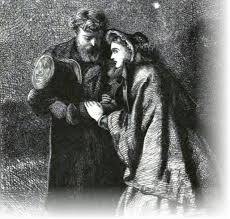
'I'm never going to let this story end, Estella'


DUBLIN DIARY : JUNE 2012


Angry Birds, Da Vinci and Aldus Manutius : the Digital Humanities formula
So, thanks for the efforts with EEBO (Early English Books Online) and ECCO (18th century database - too lazy to check the full form) and with merging them. I totally appreciated the challenges of merging two different software systems having worked on databases myself. It was also heartening to hear that the Bodleian has invested substantial monies into digitising texts and researching around the area. The digital humanists also stressed on the importance of adding annotations to the text (a project they have been working on) and spoke about their 'commonplacer' tool which would allow undergraduates to potentially design their own commonplace book from the various sources available and to then print off such books.
What I did not find in the so-called digital humanists, I found elsewhere. Librarians willing to engage with the problems of digitisation and the subcultures growing around these; academics asking about game engines and game IP; or even advising about archiving videogames and ephemeral textual experiences like gameplay - they all left me ever so thrilled. Then I went to a fascinating talk on whether children should be allowed to choose what they read. So the problems aren't restricted to videogames and the discussions that we have around the PEGI or other ratings (I remember a lovely talk by a BAFTA guy at GameCity a couple of years ago). Even now, libraries keep pondering issues related to whether children should be allowed to read Twilight or Hunger Games - if the so-called 'safe' nature of reading a book is not something we can be sure about, then obviously greater care needs to be taken before people brand videogames as the new evil toy for children. The presentation by Lynne McKechnie spanned discourses in this context from the United Nations Article Thirteen (freedom to seek, receive and impart information), IFLA, the Library Bill of Rights and other such organisations; she unpicked the problems and the inner tensions in the whole discourse. When I asked her what she thought about children being granted access to videogames, she said that the children she worked with were able to make judgments about the material for themselves, the same as they would with other kinds of stories. Kids are smart and making them play less videogames isn't going to make them smarter; perhaps the reverse - but that's another discussion.
'I'm never going to let this story end, Estella'
The other panel that I liked was one on the endings of Great Expectations. Now, this has been one of my stock examples for the multiplicity of texts and of stories in tradtional narrative media being 'reloaded' as it were. Mary Hammond's talk was revelatory in that it provided another look at the famous ending (the later one being suggested by Bulwyer-Lytton) in terms of the market and as a response to what readers wanted. Kind of like the Sherlock Holmes revival? Hammond took issue with Ankhi Mukherjee's point about Dickens's endings breaking the 'habitual coherence of the cultural experience' by challenging any such coherence. She also went on to examine the multiple adaptations of GE, one of Dickens's most adapted novels - including an Indian one by Tanika Gupta and a South Park adaptation. Even in Dickens's lifetime and shortly after, says Hammond, the quires of different editions were being interchanged and the book repackaged. My earlier (mis)conception that the multiple endings were solely due to the author's (and his chum's) intention was set right; like every multiple text in the story-assemblage, Great Expectations and its adaptability owe much to other factors. I was later able to engage the speaker in a discussion about the gamelike nature of GE and her take on it is that the novel is a very plural text and it also tells a simple story. Complex bits, such as Orlick's murder of Mrs Joe, can be taken out easily as it has in certain adaptations. After reloading Dickens yet again, I went to digital humanities panel - of which I have said enough.


DUBLIN DIARY : JUNE 2012

I'm not going to leave out the Guinness, I'm not. Or the videogame-like Dublin tour that I made with my 'significant other' who was only there for a day. I'm only sad that I wasn't able to go visit England even if briefly - because of their prohibitive visa costs. They sell salt and vinegar crisps in Ireland so I bought some for my flight back and as the brown houses of Dublin disappeared when the plane rose into the clouds, I looked down wistfully at the lovely green of Ireland and then that other island that I had so grown to love over the seven years when I lived there.
The Philosophy of Computer Games - Memory and Athens
Assassins Creed
,
Bergson
,
Deleuze
,
Games and Philosophy conference
,
memory
,
Prince of Persia
1 comment
Then it was a dream come true. To talk about videogames and philosophy in Athens, the seat of Western Philosophy, was an overwhelming experience in itself. This was probably my last conference presentation outside the UK so I was quite tense about it. Moreover, I was speaking about Bergson, memory and videogames and I felt I was on shaky and unfamiliar ground. With all this in mind and with concerns about my visa and the whole Indian-travelling-in-Europe malarkey, I set forth for Athens.
As my friend Sebastian Moering (whom you will have encountered in earlier posts) says, I attract all sorts of weird adventures. Of these I shall tell you later. For the moment let us pass the graffiti covered walls of Panteion University screaming their protest against the powers that be and enter the conference hall. Gordon Calleja opened the conference by announcing its aim of bringing philosophy and game design, otherwise loosely connected, together in the arena of theoretical Humanities. Yannis Scarpelos added the poignant reminder of the world around us saying that Greece is a gameboard and that its people are pawns in a game - an analogy that amply illustrated why games were so important to social sciences and the humanities.
I forgot to say, I met the entire Ludotopia crowd (Alison, Sebastian and Niklas) as well as Mark Butler whose wisdom I have always respected. Among new found friends I count Isaac Lenhart, Armin Papenfuss, Christophe Bruchansky, Adam Russell, Graham Matthews, Daniel Vella and Stefano Gualeni. Anyway, let us go back to the conference hall.

As I started writing, I was thinking of making this a commentary on each of the papers. The further I got, however, the more difficult and time-consuming it seemed. So I'll switch from commentary to reportage. To start with the papers that I liked in particular.
Although we have very different theoretical orientations, Rune Klevjer's research has never ceased to impress me. Rune spoke about telepresence, embodiment and diegesis as relevant to the player's identity. His analogies ranged from Merleau-Ponty's 'blind man with a cane' to those who fly unmanned drones. He identifies a difference between being telepresent and being embodied. He also sees difficulties in having an embodied presence in a diegetic world. The player and diegetic character (story protagonist) are, for him, fellow travellers who share history and even memories but are not the same person. Readers of Ludus ex will know wherein I disagree with this - especially looking from the perspective of the player's involvement in the story as a 'becoming' (in the Deleuzian sense).
This brings me to Mark Butler's paper on 'Becoming-Zerg'. Mark-becoming-Protoss (as he confessed was normally the case) was now becoming-zerg. I have never seen anyone tackle the involvement / identity-formation in RTS games. I touched on this briefly in an earlier paper (and at more length in my thesis) but then left it there. So how can I become all the Zerg in Starcraft - do I become a Zerg, some zergs, the whole zerg-collective (these zerg things remind me of the Borg in Star Trek)? Mark brings in the Deleuzoguattarian concept of the assemblage. Identity is configured and de-configured (he replaces 'deterritorialise and reterritorialise' with these terms) and as such the borders between the player-experience are blurred due to a state of flow that is in place. The player's experience as a Zerg is a 'becoming'. Might I add here that the collective experience of identity in a multiplayer RTS game is also well explainable using this model.
Among the new researchers whose work I came across, Peter Day's Wittgensteinian reading of the relation between avatar and player impressed me. Like Mark (who made the comment), I am intrigued to see Peter's work moving beyond the Tractatus to other Wittgensteinian texts. I'm sure we will see more exploration of the connection between the metaphysical subject and the 'I' within the language of games. Felan Parker's application of Foucauldian aesthetic self-fashioning to expansive gameplay ( non-canonical things that players do with a game, e.g. playing Halo without killing any of the antagonists)was another interesting topic. Graham Matthews Lac(k)anian reading of Pacman and gameplay in general the restoration of lost unity in the progressive circuit of desire was another notable contribution. Graham is going to link his research on videogame to medical humanities and outside the conference walls (over a kebab, actually) he told me about his interest in analysing how health is perceived in videogames. Wonderful, I think!
The philosopher-theorists impressed and so did the philosopher-designers. Adam Russell (another East Midlands connection), known for his design of the identity mechanism in Fable, spoke on the underlying philosophical assumptions and problems of narrative-driven games. Like Rune, but approaching the question differently, Adam asked how we can be present in a game-world as an avatar who has personality and also memory. He invokes Heidegger's idea of 'thrownness' and brings in a comparison with our real selves where, he points out, we are always identifying with a character that we cannot fully control (ourselves). I was hoping Adam would say a bit more but tiredness and time-constraints clearly came in the way. I'm eagerly awaiting his paper online. From Adam to Stefano 'Digital Bat' Gualeni. Stefano is a famous game designer and on sharing a beer with him, I learnt loads about innovative game design - didn't know some cool people in some cool places were designing games based on biometric input. Stefano spoke about how we could use games to illustrate philosophical concepts. So next time, we won't present papers but build games instead.
Okay, looks like this is becoming a humongous post and I can see myself struggling to encapsulate everything here. Therefore, I'll steer towards more brevity. Some of the other papers that I see my work connecting with would be Daniel Vella's work on ruins and videogames, Mia Consalvo's keynote focusing on identification in social games (well this isn't my area but it was very interesting ) and Alison Gazzard's paper on perceptions of space in game worlds where she brings in Massumi in a way which seems to connect to my work on affect.
I haven't discussed the keynotes in detail but David Myers' biological naturalism based formulation of videogame identity was very interesting. Myers' paper engaged in a dialogue with Eric Olson, the other keynote speaker. Olson's paper was provocative but I felt that some of his points needed more justification and certainly, a more solid base in terms of gameplay experience.
This was also the first conference where other Indians besides myself presented. Samir Passi and Ranjit Singh had to leave early and it was a pity that we didn't get better acquainted. The next day, after an enlightening early-morning trek to Acropolis with Isaac, I too had to leave quite early. Halfway through Consalvo's paper in fact - unfortunately. So I have homework to do. Not for anything in the world will I miss the chance to ask Sebastian and Niklas questions about their respective papers, both of which turned out very well as I've been told. Among the papers that the severe brain fatigue after presenting my own paper forced me to miss, I'll be looking forward to reading Elina Roinotti's paper on identity and governance in WoW. Although not a WoW fan, Esther MacCallum-Stewart's sterling work has got me more than casually interested. Elina was also our tireless host at the conference and I'd like to thank her and her team for making this a memorable experience.

Speaking of memorable experiences, my own presentation at this conference was certainly a major one for me. This is almost my swansong - the trailing last few things that I'm probably going to say to Game Studies before I go back to India (and to possible game-research oblivion) in July. It's fitting that what I had to say was about remembering. I have made so many friends in my journeys in videogame research and I hope our shared memories remain. My paper too was about shared memories and about constructing identities through memory (re - memberings as opposed to dismemberings). I pondered the question of how multiple memories of the same game event can exist (created at each reload of a saved instance) and how these influence who and what we are in the game. I find the models suggested by Henri Bergson and Gilles Deleuze particularly useful. For a quick overview check out the abstract below and for the full paper, click here. Click here for the slideshow.
There were interesting responses to my presentation from various people. This is work-in-progress and suggestions are always welcome. Mark wanted to see a bit more of the dismembering unpicked in the paper. There were interesting questions raised regarding collective memories in games in comparison to the writing of history (from Christophe) and about how someone else's memory could be appropriated by the player (in that say I share my savegame with you, as Alison asked). Gordon asked if I had not considered psychological studies of memory and my response is that Deleuze covers some ground here in his Bergsonism which I use heavily but that I'm intent on doing more work on this. There is also the neurobiological angle that I've started looking at. The concept of collective videogame memory appealed to many and left me wondering if I should have concentrated more on this aspect. Serendipitously, on my way back I met Mara, a Psychology student from Italy and we fell talking about the multiplicity of memory. Now I have some more articles to read :)
Before that, however, I need to synchronise my memories with those of Altair and Ezio of Assassin's Creed. I'm playing after ages and I've clocked eight hours already today. Now to quickly post this and get back to my game.
For papers by other presenters, use this link.
------
Abstract
Re-membering and Dismembering: Memory and the (Re)Creation of Identities in Videogames
[Heading: Identity, Artifacts and Memory]
Perhaps one of the most natural things in gameplay is to avoid the same tactics that killed the player in the last saved game when he or she reloads and play again. In fact, it seems so natural an element of gameplay, that the act of remembering is almost unnoticed. As scholars such as Michael Nitsche (2007) and Barry Atkins (2007) have observed, however, memory plays an important part in shaping videogame actions. Remembered actions educate the player against making some decisions and as Nitsche observes, narrow down the number of possibilities in each future iteration of gameplay. Simply put, based on memory, the player does not get killed in the same way twice. Atkins and also the present author have analysed how the remembered experiences in videogames complicate the temporal schema of the game plots, thus making them problematise linear chronologies. From these initial forays into looking at the relationship between the videogame and the player memory, one salient issue emerges. Remembered actions inform the future in-game deeds of the player and these, in turn, contribute to the construction of the in-game identity. Given its influence on in-game action and by extension of the player’s in-game identity, the role of memory can almost be seen as a ‘re -membering’ (from the original sense of the word ‘member’ meaning ‘body’) - memory therefore serves to re-embody and recreate the player-character.
The question, however, is further complicated because of the nature of the memory itself. Often, the memory is a collective construct. Digital artefacts such as walkthroughs and game wikisites host a massive database of remembered experiences uploaded by players. Future players ‘plug-in’ , as it were, to such a collective memory when they seek help or context while experiencing the game. Their experiences, arguably, are modified with the involvement with the collective memories in such paratextual material.
Remembered experiences can be instinctive and ‘gut responses’: for example, before entering a narrow lane in a First-Person Shooter where the avatar might have died in a previous instance, the remembered response might be to automatically spray the area with bullets before entering. At the same time, in-game memory is also a clearly defined entity that calls for reflective analysis. Some games consciously make memory a key trope in their plots and there they address issues like temporality and identity. Prince of Persia: The Sands of Time (2003) and Assassin’s Creed (2008) are prominent examples where the avatar’s lived experience is governed in various remembered experiences . STALKER: Shadow of Chernobyl (2007) is about a protagonist who plays out the game’s narrative in order to find out who he is - his identity and memory constantly inform each other.
The question of how the act of remembering (or re-membering) contributes to the in-game identity formation of the avatar might be problematic but whether it is an entirely new one is a moot point. A comparison with parallel concepts in philosophy would be useful, therefore, in exploring the role memory has in building in-game identities. Such a comparison would also provide concrete illustrations to support or refute philosophical models. Taking this approach, this paper explores parallels between Henri Bergson’s philosophy of memory and videogames. In doing so, particular emphasis is placed on the Bergsonian view of time and memory as a multiplicity. Like the mass of discrete yet inseparable remembered experiences that game walkthroughs, wikis and other records consist of, for Bergson multiplicity is qualitative and is characterised by both heterogeneity and continuity. Memory is categorised by Bergson into the automatic ‘habit-memory’ that is aligned with bodily perception and a ‘pure’ memory which involves thought and action.
The similarities with memory in videogames come out even in the comparison with the brief sketch of the Bergsonian model above. Despite the similarities, the process of identity-formation and its relation with the player memory still needs further clarification. Gilles Deleuze (1988) proposes a reading of Bergson that takes into account the Bergsonian multiplicity and also provides a more substantial model of perception, affection and action where in between the perception and the action, memory plays the important role where the character of the avatar can be seen to be constructed in the ‘movement of memory’. After a certain event in the game, how the player responds to it depends susbtantially on the past experience, whether it is his or her own or whether it is drawn from the collective wisdom of databanks or fellow players. The identity of the avatar is the result of actualisations that occur from within a complex space of parallel and interlocking possibilities. This space of possibilities is, however, constantly modified by the player’s previous actions as well as by what the player remembers of previous actions or in other words, his or her memory. Having analysed the function of memory in videogames and having compared it with Bergson’s concept of memory as well as Deleuze’s commentary on Bergson, this analysis will illustrate how player memory - both singular and collective - forms a key part of the mechanism of identity-formation.
Indicative Bibliography
Assassin’s Creed, 2008, Ubisoft Montreal, Ubisoft.
Atkins, B. 2007, ‘Killing time: time past, time present and time future in Prince of Persia: The Sands of Time’ in B. Atkins and T. Krzywinska (eds.), Videogame, Player, Text, Manchester: Manchester University Press. pp. 237-253.
Bergson, H., 2004. Matter and Memory, Mineola, N.Y: Dover Publications.
Deleuze, G., 1988. Bergsonism, New York: Zone Books.
Deleuze, G., 1986. Cinema 1 : The Movement-image, London: Athlone.
Nitsche, M., 2007, ‘Mapping time in video games’. In DIGRA. Tokyo. Available www.lcc.gatech.edu/~nitsche/download/Nitsche_DiGRA_07.pdf. Accessed: 12 January 2011.
Prince of Persia: The Sands of Time, 2003, Ubisoft Montreal, Ubisoft.
STALKER: Shadow of Chernobyl, 2007, THQ, GSC Gameworld.
------
As my friend Sebastian Moering (whom you will have encountered in earlier posts) says, I attract all sorts of weird adventures. Of these I shall tell you later. For the moment let us pass the graffiti covered walls of Panteion University screaming their protest against the powers that be and enter the conference hall. Gordon Calleja opened the conference by announcing its aim of bringing philosophy and game design, otherwise loosely connected, together in the arena of theoretical Humanities. Yannis Scarpelos added the poignant reminder of the world around us saying that Greece is a gameboard and that its people are pawns in a game - an analogy that amply illustrated why games were so important to social sciences and the humanities.
I forgot to say, I met the entire Ludotopia crowd (Alison, Sebastian and Niklas) as well as Mark Butler whose wisdom I have always respected. Among new found friends I count Isaac Lenhart, Armin Papenfuss, Christophe Bruchansky, Adam Russell, Graham Matthews, Daniel Vella and Stefano Gualeni. Anyway, let us go back to the conference hall.

the 'Philosophy of Computer Games' mascots
As I started writing, I was thinking of making this a commentary on each of the papers. The further I got, however, the more difficult and time-consuming it seemed. So I'll switch from commentary to reportage. To start with the papers that I liked in particular.
Although we have very different theoretical orientations, Rune Klevjer's research has never ceased to impress me. Rune spoke about telepresence, embodiment and diegesis as relevant to the player's identity. His analogies ranged from Merleau-Ponty's 'blind man with a cane' to those who fly unmanned drones. He identifies a difference between being telepresent and being embodied. He also sees difficulties in having an embodied presence in a diegetic world. The player and diegetic character (story protagonist) are, for him, fellow travellers who share history and even memories but are not the same person. Readers of Ludus ex will know wherein I disagree with this - especially looking from the perspective of the player's involvement in the story as a 'becoming' (in the Deleuzian sense).
Among the new researchers whose work I came across, Peter Day's Wittgensteinian reading of the relation between avatar and player impressed me. Like Mark (who made the comment), I am intrigued to see Peter's work moving beyond the Tractatus to other Wittgensteinian texts. I'm sure we will see more exploration of the connection between the metaphysical subject and the 'I' within the language of games. Felan Parker's application of Foucauldian aesthetic self-fashioning to expansive gameplay ( non-canonical things that players do with a game, e.g. playing Halo without killing any of the antagonists)was another interesting topic. Graham Matthews Lac(k)anian reading of Pacman and gameplay in general the restoration of lost unity in the progressive circuit of desire was another notable contribution. Graham is going to link his research on videogame to medical humanities and outside the conference walls (over a kebab, actually) he told me about his interest in analysing how health is perceived in videogames. Wonderful, I think!
The philosopher-theorists impressed and so did the philosopher-designers. Adam Russell (another East Midlands connection), known for his design of the identity mechanism in Fable, spoke on the underlying philosophical assumptions and problems of narrative-driven games. Like Rune, but approaching the question differently, Adam asked how we can be present in a game-world as an avatar who has personality and also memory. He invokes Heidegger's idea of 'thrownness' and brings in a comparison with our real selves where, he points out, we are always identifying with a character that we cannot fully control (ourselves). I was hoping Adam would say a bit more but tiredness and time-constraints clearly came in the way. I'm eagerly awaiting his paper online. From Adam to Stefano 'Digital Bat' Gualeni. Stefano is a famous game designer and on sharing a beer with him, I learnt loads about innovative game design - didn't know some cool people in some cool places were designing games based on biometric input. Stefano spoke about how we could use games to illustrate philosophical concepts. So next time, we won't present papers but build games instead.
Okay, looks like this is becoming a humongous post and I can see myself struggling to encapsulate everything here. Therefore, I'll steer towards more brevity. Some of the other papers that I see my work connecting with would be Daniel Vella's work on ruins and videogames, Mia Consalvo's keynote focusing on identification in social games (well this isn't my area but it was very interesting ) and Alison Gazzard's paper on perceptions of space in game worlds where she brings in Massumi in a way which seems to connect to my work on affect.
I haven't discussed the keynotes in detail but David Myers' biological naturalism based formulation of videogame identity was very interesting. Myers' paper engaged in a dialogue with Eric Olson, the other keynote speaker. Olson's paper was provocative but I felt that some of his points needed more justification and certainly, a more solid base in terms of gameplay experience.
This was also the first conference where other Indians besides myself presented. Samir Passi and Ranjit Singh had to leave early and it was a pity that we didn't get better acquainted. The next day, after an enlightening early-morning trek to Acropolis with Isaac, I too had to leave quite early. Halfway through Consalvo's paper in fact - unfortunately. So I have homework to do. Not for anything in the world will I miss the chance to ask Sebastian and Niklas questions about their respective papers, both of which turned out very well as I've been told. Among the papers that the severe brain fatigue after presenting my own paper forced me to miss, I'll be looking forward to reading Elina Roinotti's paper on identity and governance in WoW. Although not a WoW fan, Esther MacCallum-Stewart's sterling work has got me more than casually interested. Elina was also our tireless host at the conference and I'd like to thank her and her team for making this a memorable experience.

'Re-membering and Dismembering': the title of my paper
Speaking of memorable experiences, my own presentation at this conference was certainly a major one for me. This is almost my swansong - the trailing last few things that I'm probably going to say to Game Studies before I go back to India (and to possible game-research oblivion) in July. It's fitting that what I had to say was about remembering. I have made so many friends in my journeys in videogame research and I hope our shared memories remain. My paper too was about shared memories and about constructing identities through memory (re - memberings as opposed to dismemberings). I pondered the question of how multiple memories of the same game event can exist (created at each reload of a saved instance) and how these influence who and what we are in the game. I find the models suggested by Henri Bergson and Gilles Deleuze particularly useful. For a quick overview check out the abstract below and for the full paper, click here. Click here for the slideshow.
There were interesting responses to my presentation from various people. This is work-in-progress and suggestions are always welcome. Mark wanted to see a bit more of the dismembering unpicked in the paper. There were interesting questions raised regarding collective memories in games in comparison to the writing of history (from Christophe) and about how someone else's memory could be appropriated by the player (in that say I share my savegame with you, as Alison asked). Gordon asked if I had not considered psychological studies of memory and my response is that Deleuze covers some ground here in his Bergsonism which I use heavily but that I'm intent on doing more work on this. There is also the neurobiological angle that I've started looking at. The concept of collective videogame memory appealed to many and left me wondering if I should have concentrated more on this aspect. Serendipitously, on my way back I met Mara, a Psychology student from Italy and we fell talking about the multiplicity of memory. Now I have some more articles to read :)
Before that, however, I need to synchronise my memories with those of Altair and Ezio of Assassin's Creed. I'm playing after ages and I've clocked eight hours already today. Now to quickly post this and get back to my game.
For papers by other presenters, use this link.
------
Abstract
Re-membering and Dismembering: Memory and the (Re)Creation of Identities in Videogames
[Heading: Identity, Artifacts and Memory]
Perhaps one of the most natural things in gameplay is to avoid the same tactics that killed the player in the last saved game when he or she reloads and play again. In fact, it seems so natural an element of gameplay, that the act of remembering is almost unnoticed. As scholars such as Michael Nitsche (2007) and Barry Atkins (2007) have observed, however, memory plays an important part in shaping videogame actions. Remembered actions educate the player against making some decisions and as Nitsche observes, narrow down the number of possibilities in each future iteration of gameplay. Simply put, based on memory, the player does not get killed in the same way twice. Atkins and also the present author have analysed how the remembered experiences in videogames complicate the temporal schema of the game plots, thus making them problematise linear chronologies. From these initial forays into looking at the relationship between the videogame and the player memory, one salient issue emerges. Remembered actions inform the future in-game deeds of the player and these, in turn, contribute to the construction of the in-game identity. Given its influence on in-game action and by extension of the player’s in-game identity, the role of memory can almost be seen as a ‘re -membering’ (from the original sense of the word ‘member’ meaning ‘body’) - memory therefore serves to re-embody and recreate the player-character.
The question, however, is further complicated because of the nature of the memory itself. Often, the memory is a collective construct. Digital artefacts such as walkthroughs and game wikisites host a massive database of remembered experiences uploaded by players. Future players ‘plug-in’ , as it were, to such a collective memory when they seek help or context while experiencing the game. Their experiences, arguably, are modified with the involvement with the collective memories in such paratextual material.
Remembered experiences can be instinctive and ‘gut responses’: for example, before entering a narrow lane in a First-Person Shooter where the avatar might have died in a previous instance, the remembered response might be to automatically spray the area with bullets before entering. At the same time, in-game memory is also a clearly defined entity that calls for reflective analysis. Some games consciously make memory a key trope in their plots and there they address issues like temporality and identity. Prince of Persia: The Sands of Time (2003) and Assassin’s Creed (2008) are prominent examples where the avatar’s lived experience is governed in various remembered experiences . STALKER: Shadow of Chernobyl (2007) is about a protagonist who plays out the game’s narrative in order to find out who he is - his identity and memory constantly inform each other.
The question of how the act of remembering (or re-membering) contributes to the in-game identity formation of the avatar might be problematic but whether it is an entirely new one is a moot point. A comparison with parallel concepts in philosophy would be useful, therefore, in exploring the role memory has in building in-game identities. Such a comparison would also provide concrete illustrations to support or refute philosophical models. Taking this approach, this paper explores parallels between Henri Bergson’s philosophy of memory and videogames. In doing so, particular emphasis is placed on the Bergsonian view of time and memory as a multiplicity. Like the mass of discrete yet inseparable remembered experiences that game walkthroughs, wikis and other records consist of, for Bergson multiplicity is qualitative and is characterised by both heterogeneity and continuity. Memory is categorised by Bergson into the automatic ‘habit-memory’ that is aligned with bodily perception and a ‘pure’ memory which involves thought and action.
The similarities with memory in videogames come out even in the comparison with the brief sketch of the Bergsonian model above. Despite the similarities, the process of identity-formation and its relation with the player memory still needs further clarification. Gilles Deleuze (1988) proposes a reading of Bergson that takes into account the Bergsonian multiplicity and also provides a more substantial model of perception, affection and action where in between the perception and the action, memory plays the important role where the character of the avatar can be seen to be constructed in the ‘movement of memory’. After a certain event in the game, how the player responds to it depends susbtantially on the past experience, whether it is his or her own or whether it is drawn from the collective wisdom of databanks or fellow players. The identity of the avatar is the result of actualisations that occur from within a complex space of parallel and interlocking possibilities. This space of possibilities is, however, constantly modified by the player’s previous actions as well as by what the player remembers of previous actions or in other words, his or her memory. Having analysed the function of memory in videogames and having compared it with Bergson’s concept of memory as well as Deleuze’s commentary on Bergson, this analysis will illustrate how player memory - both singular and collective - forms a key part of the mechanism of identity-formation.
Indicative Bibliography
Assassin’s Creed, 2008, Ubisoft Montreal, Ubisoft.
Atkins, B. 2007, ‘Killing time: time past, time present and time future in Prince of Persia: The Sands of Time’ in B. Atkins and T. Krzywinska (eds.), Videogame, Player, Text, Manchester: Manchester University Press. pp. 237-253.
Bergson, H., 2004. Matter and Memory, Mineola, N.Y: Dover Publications.
Deleuze, G., 1988. Bergsonism, New York: Zone Books.
Deleuze, G., 1986. Cinema 1 : The Movement-image, London: Athlone.
Nitsche, M., 2007, ‘Mapping time in video games’. In DIGRA. Tokyo. Available www.lcc.gatech.edu/~nitsche/download/Nitsche_DiGRA_07.pdf. Accessed: 12 January 2011.
Prince of Persia: The Sands of Time, 2003, Ubisoft Montreal, Ubisoft.
STALKER: Shadow of Chernobyl, 2007, THQ, GSC Gameworld.
------
Agency: Responses to the DIGRA session
Okay, agency is not simple. While we know that it is much debated in other fields, most of us in game studies concern ourselves with very specific applications of the term. That's one problem.
These applications of the term aren't uniform. Another problem.
We keep coming back to it in circles. Yet another problem.
However, some good work is being done on it.
At least, we recognise that all the “satisfying power to take meaningful action and see the results of our decisions and choices” etc isn't really an explanation. Neither is the formal and material cause idea useful mainly because it still leaves too much to human volition.
Noah Wardrip-Fruin brings in the discussion of the machine's agency and sort of links with the actor-network theory (see his paper). I kind of like the ways in which he identifies the 'waxing and waning of agency' and how he slashes the simplistic proportionality equation of realism and agency.
However, I do not think that this approach adequately discusses the aleatory element in games (especially for me, in RTS) and how that affects and upsets the choice equation. Also not sure it accounts for the process of moment-to-moment perception of choice by the player and also the perception by the player of choices exerted by the machine (connection also with involvement and also context: a deeply involved player thinks he is fighting the Roman army and not a program on his pc). Further, I think that the term 'agency' itself is problematic especially with its humanist connotations (and indeed the morass of other connotations that relate it 'free will' and a whole lot of other things). In any case, it is problematic whenever it implies 'pure' choice. In videogames, the human choice is also a non-choice (on the level of the machine). Justin Parsler's very lucid explanation of how he uses the concept of weak agency (and strong agency) is useful here. In a very inspired smoking break, in the presence of Miriam Eladhari, a very informed academic whose name I forget and yours truly, Parsler described 'weak' agency as the choice to choose between a certain number of shirts in a shop and not to make the initial choice of what shirts are going to be there. In a sense, I think that this is the case on even other levels of freedom and choice. For example, even the number of shirts that can be made for you depends on the availability of the material and labour and so on. Choice is never the absolute free will claimed by Renaissance Humanists like Pico della Mirandolla ('Oration on the Dignity of Man'). Neither is it free will given by Divine Grace as a one time dispensation (i.e. God as Supreme Being makes a one-time grant of a mechanism of free choice that humanity can use until Doomsday) . Nevertheless, we experience the sense of choice and do not live in a wholly deterministic world, whether that of a Calvinist God or that of Agent Smith. Please, a subtler understanding of agency is required.
An 'extra value' airtight definition of agency might be available soon on superstore shelves in varicoloured cans. The cans, however, may be empty most likely, caveat emptor. If game researchers wish to use the term 'agency' in a qualified sense that accounts for the process of experiencing choice while recognising machine constraints, then the sense in which they define agency needs to be spelled out with no ambiguity. Wardrip-Fruin does this quite well and this sets his analysis apart from the sweeping generalisations made by some earlier commentators. However, it is important that game researchers don't only speak to themselves. When we talk to outsiders, the sense of what we say should not mislead them into construing the process as one of human-centred choice. To avoid any liberal humanistic connotations, I use the value-neutral term 'action' as the starting point for my analysis of the processes (choice-making/acting/experiencing) that go on in the game-machine-human complex.
I find it easier to look at agency from a Deleuzian perspective in my PhD dissertation. After yesterday's session, I feel I must at least state the issues I perceive with the problem of 'agency' in videogames and especially so, since recent scholarship is also tending to move in a similar directions. The aim is to enter the discussion- with yet another point of view.
Below is an extract from Chapter Seven, 'Playing in the Zone of Becoming I: Agency and Becoming in the Videogame, from my PhD thesis, The Zone of Becoming: Game, Text and Technicity in Videogame Narratives (Nottingham Trent University, 2009), pp. 220-260. Please cite with my permission.
--------------------------------------------------
Murray’s conceptions of agency have provoked much critical response. The above analysis of procedural authorship clearly shows that the action in videogames occurs in a process of interaction between player and machine rather than being located as embedded agency. Further, contrary to Murray’s anthropocentric model, the player as the protagonist or subject is not homogenous and absolute; neither is the participation in a game just a wearing of a mask or a journey into the Holodeck, as will be shown subsequently, here, and in the following chapter. In fact, how much of the playing-subject is human and how much machine is a moot question. Considering these issues, a theory of an anthropocentric and embedded agency is insufficient in explaining the process of action in videogames. Recent commentators, therefore, argue against this model and also take into account the issue that Murray calls attention to but does not pursue: the ‘call of the machine’. Critics like Atkins and Krzywinska express their scepticism about earlier conceptions of agency and Atkins briefly refers to these as the ‘illusion of individual agency’,i a phrase that will be significant in the subsequent sections of this chapter. A more sustained criticism, however, has been made by critics like Poremba and Susana Tosca who approach the problem from different perspectives. It will be instructive to identify these approaches first because they create the base for creating the model of ludic action in the subsequent sections.
Poremba quite clearly argues against the earlier conception of ‘embedded agency’ which is how she identifies the model proposed by Murray and followed by theorists like Klastrup. Commenting on GTA III, Poremba concludes that its agency is ‘difficult to attribute [and can be seen as] lying somewhere in a nebulous region between player, designer and system’.ii Though an issue such as agency, which has always been hotly debated in other contexts, obviously attracts a lot of controversy, recent game studies criticism generally is in consensus with the description above. The so-called nebulous region has, of course, attracted much critical attention and this chapter will also attempt to locate and explore the zone of ludic action and agency.
In fact, though she does not mention it, Poremba’s account clearly illustrates a Derridean supplementarity between the various situations in which agency might be possible within a game. The phrase ‘situations in’ has been purposely chosen over ‘types of’ as a reminder that this description does not aim to divide agency into separate types with different ‘ordered centres’. The various elements associated with agency — the player, the designer and the machine — are not distinct entities. In fact, Poremba’s analysis reveals that they cannot be characterised as originary and derivative as Murray’s model does. Poremba states that ‘further work needs to be done to explore new models of agency that accommodate a more complex relationship between game designer, player and the game itself’.iii While the issue could not have been better expressed, the term ‘agency’ still poses problems especially because of its connection with human-centred choice and the problems of reconciling this with the bipartite process of action in videogames.
Murray’s conceptions of agency have provoked much critical response. The above analysis of procedural authorship clearly shows that the action in videogames occurs in a process of interaction between player and machine rather than being located as embedded agency. Further, contrary to Murray’s anthropocentric model, the player as the protagonist or subject is not homogenous and absolute; neither is the participation in a game just a wearing of a mask or a journey into the Holodeck, as will be shown subsequently, here, and in the following chapter. In fact, how much of the playing-subject is human and how much machine is a moot question. Considering these issues, a theory of an anthropocentric and embedded agency is insufficient in explaining the process of action in videogames. Recent commentators, therefore, argue against this model and also take into account the issue that Murray calls attention to but does not pursue: the ‘call of the machine’. Critics like Atkins and Krzywinska express their scepticism about earlier conceptions of agency and Atkins briefly refers to these as the ‘illusion of individual agency’,iv a phrase that will be significant in the subsequent sections of this chapter. A more sustained criticism, however, has been made by critics like Poremba and Susana Tosca who approach the problem from different perspectives. It will be instructive to identify these approaches first because they create the base for creating the model of ludic action in the subsequent sections.
Poremba quite clearly argues against the earlier conception of ‘embedded agency’ which is how she identifies the model proposed by Murray and followed by theorists like Klastrup. Commenting on GTA III, Poremba concludes that its agency is ‘difficult to attribute [and can be seen as] lying somewhere in a nebulous region between player, designer and system’.v Though an issue such as agency, which has always been hotly debated in other contexts, obviously attracts a lot of controversy, recent game studies criticism generally is in consensus with the description above. The so-called nebulous region has, of course, attracted much critical attention and this chapter will also attempt to locate and explore the zone of ludic action and agency.
Poremba’s account is representative and thorough. She argues for a model of agency that will account for the game designer’s agency, player agency and the emergent and artificially intelligent system’s agency. Besides making conscious choices to explore, configure, experience and react with the guided environment of the game system, the player often subverts this environment by using external tools (additions or modifications to the game’s code) or by exploiting latent possibilities in the game’s code (as in the ‘Hot coffee’ mod in GTA: San Andreas) or in its logic (the ‘hooker cheat’ in GTA III, as mentioned by Poremba). In all the cases mentioned above, player agency is possible only in response to the ‘call of the machine’. The modification and subversion of gameplay certainly falls under the category of constructivism described by Murray but in that case it is necessary to realise that this is a machinic constructivism. An awareness of the machinic affordances is not only required for modifying and subverting gameplay; it is essential for the process of play itself. As Wright, Boria and Breidenback, in their analysis of creative player actions in online FPS videogames, make it clear, ‘Playing is not simply mindless movement through a virtual landscape, but rather movement with a reflexive awareness of the game’s features and their possible modifications’.vi Poremba supports their conclusion in her essay on agency in GTA III and maintains that this is indicative of the fact that agency in games needs to be seen in terms of newer models which move the analysis beyond the limitations inherent in the notion of embedded agency. She also states that player agency and designer agency are not discrete binaries but rather they exist as interdependent categories. According to her,
Game designers have expressed pleasure in player’s creative actions — even ones that clearly go against design intention and extend the boundaries of the game. Conversely from a player perspective, gameplay is often about determining what the game designer wants (i.e. how to play the game) rather than a constant drive for increasing agency.vii
This assertion illustrates a clear shift in the understanding of procedural authorship from Murray’s separation of the design perspective and the gameplay to a more supplementary relationship between the two. In fact, though she does not mention it, Poremba’s account clearly illustrates a Derridean supplementarity between the various situations in which agency might be possible within a game. The phrase ‘situations in’ has been purposely chosen over ‘types of’ as a reminder that this description does not aim to divide agency into separate types with different ‘ordered centres’. The various elements associated with agency — the player, the designer and the machine — are not distinct entities. In fact, Poremba’s analysis reveals that they cannot be characterised as originary and derivative as Murray’s model does. Poremba states that ‘further work needs to be done to explore new models of agency that accommodate a more complex relationship between game designer, player and the game itself’.viii While the issue could not have been better expressed, the term ‘agency’ still poses problems especially because of its connection with human-centred choice and the problems of reconciling this with the bipartite process of action in videogames.
Commentators such as Atkins suggest that the experience of agency is illusory; the chief reason for this is a reaction to Murray’s notion of agency as free choice. Susana Tosca examines this issue in detail through a critical analysis of the Blade Runner game (1997) created by Westwood Studios. Blade Runner is an interactive adventure game — one of the last of its kind; though it wasn’t commercially as successful as its FPS rivals such as Quake 2 (1997) and Half-Life (1998), it still has a considerable fan-following and figures in many game studies analyses. It requires the player to play as Ray McCoy, a blade runner employed to ‘retire’ replicants; McCoy is similar to Deckard, the protagonist in Ridley Scott’s film and Philip K. Dick’s novel. The issue of whether to have sympathy for the replicants or to kill them, a major philosophical question in both the book and the film, is incorporated into the game as player choice. The game has thirteen different ‘official’ endings which depend on what chain of actions the player follows in the game. Player choice is, therefore, responsible for determining the player’s character within the game as well as the fate of the various characters. This is how it looks from the player’s point of view but that, however, is not the only perspective. Louis Castle, the designer of Blade Runner, in an interview with Pearce, describes how this works from the point of view of the game:
If you play the game as if you are a replicant, then the game treats you as a replicant. If you play the game as if you were a Blade Runner human, it treats you like you’re a human. So people perceive that at some point they’ve made a choice that puts them on one track or the other, which isn’t the case at all. It’s based on how you play the game, whether you hunt the replicants, whether you kill them, whether you let them go. Those things give us clues as to what you think you are—and at any given point, you can switch over. You can go halfway through the game and go "Oh, my gosh, I’m really not a human after all, I’m a replicant." And just turn mid-stream and start saving the replicants. And that’s okay. The game lets you do that.ix
In the above comment, the way the game constructs the playing subject is important. Castle’s language, especially his usage of phrases like ‘the game treats you’ or ‘the game lets you do that’ clearly indicates that the game is also an actor or a player. For the (human) player, the choices she makes may seem all important- they may even seem to reflect the player’s character. For the game’s logic or algorithm, the case is different. Here the response is input-based, as Castle states.
The subject is determined by the actualisation of technical choices. Tosca makes a similar point in the following comment:
Each action matters towards the end and that we contribute to the evolving story as we go. Trying to guess which actions those are, and how they lead to each conclusion, is a sort of narrative reverse engineering where, in my opinion, the pleasure of the game lies. And once we know, of course, we can always exert our free will and choose another path.x
Tosca’s statement is important because it highlights a dichotomy. First, there is the idea of each action contributing to the evolving story. This is part of the process of configuring and interacting with the game’s algorithm. Hence agency seems to involve both the player and the game algorithms together with their technical affordances. Tosca’s idea of the process of back calculation or as she calls it ‘narrative reverse engineering’ is also in consonance with this kind of agency in that such activity still involves the game’s logic as an equal partner in the process. The problem arises, however, when she speaks of exerting free will to choose another path. This sounds as if it is arriving at the same conclusions as the earlier conceptions of embedded and anthropocentric agency. Tosca’s qualifying comment in a later statement, however, shows a contrary position: ‘Blade Runner creates a digital suspension of disbelief that players are willingly drawn into through the excitement of the different moral choices, where trusting our implanted memories will bring us the illusion of free will’.xi
This is a statement that needs careful attention: the memories that allow the player to reverse engineer or, in simpler words, to reconstruct a narrative actualisation, are not just human memories. They are also a part of the machinic memory in that they are steps in the algorithm that the game follows. In the example of Sands of Time in Chapter Six, the saved games were attributed as the Prince’s (and therefore the player’s) memories. The ‘free will’, in this context, is an illusion simply because the choices made by the player are not entirely free but rather bound to the affordances of the machine algorithm.
Once the player returns to the point of deviation in a game that is being replayed (for example, from a saved game), she encounters a series of choices and has the opportunity to exercises choice yet again. Beneath the apparent vital nature of the player’s emotional choice, which the game convincingly portrays, lie the game choices and these are primal in determining the path of actualisation. The player perceives moral choices and memory whereas the game algorithm contains its algorithmic choices and pathways. The two coincide when, as Tosca says, there is a ‘suspension of disbelief’. The suspension of disbelief, intrinsically related (in the nature of the supplement) to agency, will merit a separate analysis in Chapter Eight.
The present discussion will return to the question of memory. Not surprisingly, Tosca uses the phrase ‘implanted memories’, a concept that is all too familiar from Blade Runner texts, to describe the experience of memory in videogames. Those familiar with the Blade Runner movie will remember the famous scene where Deckard (Harrison Ford) administers the Voigt-Kampff test to Rachael (Sean Young). At the end of the test, it is revealed that Rachael, unknown to herself, is really a replicant. She does not know that some of her memories are not real: they are ‘implants’ from Tyrell’s sixteen-year old niece. While the player’s memories are literally not ‘implants’ as in Dick’s novel or Ridley Scott’s film adaptation, they are reconstructions of a series of in-game choices: they are as much memories as part of game algorithm. Hence, after accessing these to replay a game sequence, the player willingly becomes part of game system and executes another algorithm.
For the player, to choose not to kill replicants may be a moral choice, but it is also a choice informed by the machinic attributes of the game and its specific algorithm. For example, the player in Doom does not have the choice not to kill the monsters that appear in the game. It is of course possible to subvert the original game using cheats and mods but as noted earlier, to do even this involves restrictions in the game program.
Tosca’s conception emerges as more complex than mere non-agency. The ‘illusion of agency’ most certainly includes and allows for choice. Here, choice is, however, a decentred phenomenon: it is not the prerogative of either the (human)player or the machine algorithm. These entities themselves occur as supplements to the other, as already observed in earlier chapters. The element of choice therefore occurs within the (human)player-machine algorithm complex. Given this supplementarity within which choice operates in videogames, it is possible to relate this to the earlier examples of supplementarity between writing and reading or game and play where the elements in the relationship are all in-play. Even in conceptualising agency and choice in videogames, it is possible to see them as being in-play. This notion has significant implications in the way the phrase ‘illusion of agency’ can be read. By ‘illusion of agency’ something different is to be inferred. The use of the word ‘illusion’ here is perhaps fortuitous but it serves the purpose marvellously. The etymology of ‘illusion’ (as derived from ‘illude’, which can mean ‘make sport of’, albeit used pejoratively) contains the Latin root ludere or ‘to play’.xii It is possible to read the term differently from what was perhaps the intended meaning: one can read ‘illusion of agency’ as the "making ludic of agency" and this reflects the process of interaction and response between the (human)player and the game algorithm. In the case of videogames, it is important to remember that the game is also an artificially intelligent machinic algorithm. The possibility of choosing the action in videogames is therefore always related to the ‘call of the machine’.
From Agency to Becoming: A Deleuzian Understanding of Choice in Videogames
The altered conception of agency, as described above, marks a major shift from the earlier human-centred concept of free will to a relationship between the player and the machine that can be more clearly understood in terms of a bipartite process of action. Commentators such as Galloway already have already started thinking about the bipartite process as being a supplementary one. For him,
One may start by distinguishing two basic types of action in videogames; machinic actions and operator actions […] Of course, the division is entirely artificial — both the machine and the operator work together. […] The two types of action are ontologically the same.xiii
Galloway quite rightly identifies the importance of studying the action in videogames as a more accurate way of analysing gameplay. He stresses, almost axiomatically, that ‘if photographs are images, and films are moving pictures, then video games are actions. Let this be word one for video game theory’.xiv While maintaining the importance of an action-based approach for game studies, Galloway notes that there is no clear division between machine and operator actions. This account also illustrates the supplementary relationship described above. In the first chapter of his book, Gaming: Essays in Algorithmic Culture, Galloway launches directly into a discussion of action, in digital games as being performed ‘step by step [and] move by move’xv by operator and machine. As the base foundation of his analysis, he reads games in terms of the ‘action-image’ as described by Deleuze. However, he does not engage with the concept of videogame action within a Deleuzian framework in any detail. The importance of the concept makes it merit further analysis and it will be seen in this and the following chapter that the process of involvement of the player and the ludic action that characterises gameplay finds its best explanation when analysed within a Deleuzian framework.
The analysis of ludic action within a Deleuzian framework, however, may be opposed by various commentators. As mentioned earlier, Bogost’s objection to such an analysis was that the ‘local operations’ within such a ‘nomadic’ structure would deny any factor of deliberation in digital games. For him, it is difficult to locate agency in the workings of the Deleuzian manifold since he sees the multiplicity as being characterised essentially by the element of the aleatory. Such a reading of Deleuze is open to contestation.
Bogost, however, is not alone in his objection. Hayles, quoting Mark Hansen, notes that ‘Deleuze and Guattari are much more thoroughgoing in their deconstruction of the liberal humanist subject and of "subjectification" in general. As Mark Hansen comments, "D+G do not shift the locus of agency [... but] dissolve the role of agency altogether"’.xvi She, however, adds that ‘they too recuperate agency at crucial points […] They warn the reader against giving up agency altogether’.xvii Hayles agrees with Hansen that Deleuze and Guattari wish to deny agency but she maintains that they cannot avoid it because ‘through their performative language, they exercise agency even as they deny it […] Deleuze and Guattari cannot avoid inscripting into language, the agency implicit in their performance of desire’.xviii While she is right in stating that Deleuzoguattarian theory does take into account the exercise of agency, her assertion regarding its intention to deny agency is controversial. Hayles’s argument is drawn from her reading of A Thousand Plateaus where Deleuze and Guattari do not directly address issues of agency. Such a reading misses the more direct analyses of agency and subjectivity in Deleuze’s earlier works, such as his treatises on Hume and Spinoza, which also play a key role in shaping the main body of his work including the texts where he collaborated with Guattari. Aurelia Armstrong, commenting on Deleuze’s modification of the Spinozist conception of agency states that in Deleuzian (and indeed, Deleuzoguattarian) thought, quite differently from earlier notions, ‘agency is conceived of as a movement, which evades the definition of the individual in terms of forms and functions and the delimitations of its capacities, whether such a definition is biological, psychiatric or political’.xix Armstrong further maintains that the ‘growth of agency is shown to consist in a becoming-active, in the increase and enhancement of “individual” powers through their combination with the powers of other, compatible individuals and things’.xx This is obviously quite different from liberal humanist notions in which agency is situated as the free choice of the individual; it is also equally different from the totally aleatory scheme of events.
In the analysis of temporality in Chapter Six, the Deleuzian idea of the manifold was compared to phase portraits of molecular movements where the population of trajectories as a whole influence the course of any action. Agency should be seen as an analogous and related experience. In an emergent structure, agency can only be thought of in terms of the options for acting within a framework of the constraints imposed by the actions of connected elements. Further, the concept of ‘becoming’, which runs as a key theme throughout the whole thesis, is equally important in speaking of agency. True, agency is action but it is actually the ‘becoming-active’; in this process, the individual’s subjectivity is experienced in a complex manner due to the actions performed by her within the system. ‘Becoming’ has already been introduced in Chapter Two as the ‘zone of indiscernibility’xxi occupied by the subject: the player in the computer game does not act as if free of her machinic persona and neither does she get totally absorbed in such a persona. Instead, as explained in the subsequent chapter, her experience can be described as a ‘becoming’. In game studies, the concept that corresponds most to this is well-known as ‘immersion’. The subsequent analysis will, however, indicate the problems in seeing this as being a separate phenomenon. Instead, both immersion and agency need to be viewed as merged concepts that constitute the core of the process of ‘becoming’. As already discussed in the context of videogames, an altered conception of agency is being put forward here: this conception is based on action and on movement or ‘becoming’ and it moves beyond the more traditional ways in which game studies and other analyses of machinic media conceive of agency.
However, it is obvious that despite their apparent differences with Deleuze, both Hayles and Hansen are in agreement regarding the two aspects of agency described in Deleuze. Total free will for the (human) player is not the case in videogames because of the pervasive presence of the (machine) algorithm and because during gameplay, the machine can also be considered a player and the human player a part of a certain algorithmic sequence. The first issue would be the emergent patterns present in videogames that preclude any totally determined act on the part of the human agent. Secondly, the human agent, in becoming part of the game experiences a complex subjectivity that any conclusion of pure agency difficult to envisage. Both of these issues are described in Deleuze’s formulation of the action-image in the ideas of action as actualisation and as resulting in a ‘new mode of being’ for the agent.
In fact, it might be argued that Deleuzian ideas of agency are not so different from Hayles’s own, especially when seen in a broader Deleuzian context. Hayles maintains that ‘if the posthuman implies distributed cognition, then it must imply distributed agency as well, for multiplying the sites at which cognizing can take place also multiplies the entities who can count as agents’.xxii Her position is similar to that of Poremba and Tosca, described above. It is also the point of entry to Galloway’s application of the Deleuzian action-image to videogames and to its extension to discussions of agency. Distributed agency is seen as resulting from distributed sites of cognition. This is similar to the Deleuzian explanation provided by Armstrong: agency can only be conceived of in connection with the actions of connected elements; hence, to use Hayles’s term, it is ‘distributed agency’. More needs to be said about distributed agency in the subsequent discourse on the action-image. From this analysis, it is possible to conclude that the Deleuzian framework used in this thesis does not support a denial of agency as some critics suppose; instead, it effectively brings together the different aspects of the discussions on agency and helps view the process within a more representative framework. Nevertheless, within this framework, the earlier approaches need to be sufficiently modified and some significant changes must be made. The first of these would be to replace the term ‘agency’ itself.
The analyses of the computer game narrative show that the process of gameplay is not deterministic from the point of view of either the human or the machine, but the use of the term ‘agency’ gives it that connotation, especially when considered in the light of its liberal humanist history. The subsequent analysis will, therefore, use a more representative term for the process and one that is well supported by the Deleuzian framework that provides adequate tools for studying the process; the concept in question is ‘action’.
--------------------------
Well, that's pretty much what my position is and I am posting this in response to yesterday's speakers as well as to share ideas with Justin. I am happy to enter into a more extensive discussion.
These applications of the term aren't uniform. Another problem.
We keep coming back to it in circles. Yet another problem.
However, some good work is being done on it.
At least, we recognise that all the “satisfying power to take meaningful action and see the results of our decisions and choices” etc isn't really an explanation. Neither is the formal and material cause idea useful mainly because it still leaves too much to human volition.
Noah Wardrip-Fruin brings in the discussion of the machine's agency and sort of links with the actor-network theory (see his paper). I kind of like the ways in which he identifies the 'waxing and waning of agency' and how he slashes the simplistic proportionality equation of realism and agency.
However, I do not think that this approach adequately discusses the aleatory element in games (especially for me, in RTS) and how that affects and upsets the choice equation. Also not sure it accounts for the process of moment-to-moment perception of choice by the player and also the perception by the player of choices exerted by the machine (connection also with involvement and also context: a deeply involved player thinks he is fighting the Roman army and not a program on his pc). Further, I think that the term 'agency' itself is problematic especially with its humanist connotations (and indeed the morass of other connotations that relate it 'free will' and a whole lot of other things). In any case, it is problematic whenever it implies 'pure' choice. In videogames, the human choice is also a non-choice (on the level of the machine). Justin Parsler's very lucid explanation of how he uses the concept of weak agency (and strong agency) is useful here. In a very inspired smoking break, in the presence of Miriam Eladhari, a very informed academic whose name I forget and yours truly, Parsler described 'weak' agency as the choice to choose between a certain number of shirts in a shop and not to make the initial choice of what shirts are going to be there. In a sense, I think that this is the case on even other levels of freedom and choice. For example, even the number of shirts that can be made for you depends on the availability of the material and labour and so on. Choice is never the absolute free will claimed by Renaissance Humanists like Pico della Mirandolla ('Oration on the Dignity of Man'). Neither is it free will given by Divine Grace as a one time dispensation (i.e. God as Supreme Being makes a one-time grant of a mechanism of free choice that humanity can use until Doomsday) . Nevertheless, we experience the sense of choice and do not live in a wholly deterministic world, whether that of a Calvinist God or that of Agent Smith. Please, a subtler understanding of agency is required.
An 'extra value' airtight definition of agency might be available soon on superstore shelves in varicoloured cans. The cans, however, may be empty most likely, caveat emptor. If game researchers wish to use the term 'agency' in a qualified sense that accounts for the process of experiencing choice while recognising machine constraints, then the sense in which they define agency needs to be spelled out with no ambiguity. Wardrip-Fruin does this quite well and this sets his analysis apart from the sweeping generalisations made by some earlier commentators. However, it is important that game researchers don't only speak to themselves. When we talk to outsiders, the sense of what we say should not mislead them into construing the process as one of human-centred choice. To avoid any liberal humanistic connotations, I use the value-neutral term 'action' as the starting point for my analysis of the processes (choice-making/acting/experiencing) that go on in the game-machine-human complex.
I find it easier to look at agency from a Deleuzian perspective in my PhD dissertation. After yesterday's session, I feel I must at least state the issues I perceive with the problem of 'agency' in videogames and especially so, since recent scholarship is also tending to move in a similar directions. The aim is to enter the discussion- with yet another point of view.
Below is an extract from Chapter Seven, 'Playing in the Zone of Becoming I: Agency and Becoming in the Videogame, from my PhD thesis, The Zone of Becoming: Game, Text and Technicity in Videogame Narratives (Nottingham Trent University, 2009), pp. 220-260. Please cite with my permission.
--------------------------------------------------
Murray’s conceptions of agency have provoked much critical response. The above analysis of procedural authorship clearly shows that the action in videogames occurs in a process of interaction between player and machine rather than being located as embedded agency. Further, contrary to Murray’s anthropocentric model, the player as the protagonist or subject is not homogenous and absolute; neither is the participation in a game just a wearing of a mask or a journey into the Holodeck, as will be shown subsequently, here, and in the following chapter. In fact, how much of the playing-subject is human and how much machine is a moot question. Considering these issues, a theory of an anthropocentric and embedded agency is insufficient in explaining the process of action in videogames. Recent commentators, therefore, argue against this model and also take into account the issue that Murray calls attention to but does not pursue: the ‘call of the machine’. Critics like Atkins and Krzywinska express their scepticism about earlier conceptions of agency and Atkins briefly refers to these as the ‘illusion of individual agency’,i a phrase that will be significant in the subsequent sections of this chapter. A more sustained criticism, however, has been made by critics like Poremba and Susana Tosca who approach the problem from different perspectives. It will be instructive to identify these approaches first because they create the base for creating the model of ludic action in the subsequent sections.
Poremba quite clearly argues against the earlier conception of ‘embedded agency’ which is how she identifies the model proposed by Murray and followed by theorists like Klastrup. Commenting on GTA III, Poremba concludes that its agency is ‘difficult to attribute [and can be seen as] lying somewhere in a nebulous region between player, designer and system’.ii Though an issue such as agency, which has always been hotly debated in other contexts, obviously attracts a lot of controversy, recent game studies criticism generally is in consensus with the description above. The so-called nebulous region has, of course, attracted much critical attention and this chapter will also attempt to locate and explore the zone of ludic action and agency.
In fact, though she does not mention it, Poremba’s account clearly illustrates a Derridean supplementarity between the various situations in which agency might be possible within a game. The phrase ‘situations in’ has been purposely chosen over ‘types of’ as a reminder that this description does not aim to divide agency into separate types with different ‘ordered centres’. The various elements associated with agency — the player, the designer and the machine — are not distinct entities. In fact, Poremba’s analysis reveals that they cannot be characterised as originary and derivative as Murray’s model does. Poremba states that ‘further work needs to be done to explore new models of agency that accommodate a more complex relationship between game designer, player and the game itself’.iii While the issue could not have been better expressed, the term ‘agency’ still poses problems especially because of its connection with human-centred choice and the problems of reconciling this with the bipartite process of action in videogames.
Murray’s conceptions of agency have provoked much critical response. The above analysis of procedural authorship clearly shows that the action in videogames occurs in a process of interaction between player and machine rather than being located as embedded agency. Further, contrary to Murray’s anthropocentric model, the player as the protagonist or subject is not homogenous and absolute; neither is the participation in a game just a wearing of a mask or a journey into the Holodeck, as will be shown subsequently, here, and in the following chapter. In fact, how much of the playing-subject is human and how much machine is a moot question. Considering these issues, a theory of an anthropocentric and embedded agency is insufficient in explaining the process of action in videogames. Recent commentators, therefore, argue against this model and also take into account the issue that Murray calls attention to but does not pursue: the ‘call of the machine’. Critics like Atkins and Krzywinska express their scepticism about earlier conceptions of agency and Atkins briefly refers to these as the ‘illusion of individual agency’,iv a phrase that will be significant in the subsequent sections of this chapter. A more sustained criticism, however, has been made by critics like Poremba and Susana Tosca who approach the problem from different perspectives. It will be instructive to identify these approaches first because they create the base for creating the model of ludic action in the subsequent sections.
Poremba quite clearly argues against the earlier conception of ‘embedded agency’ which is how she identifies the model proposed by Murray and followed by theorists like Klastrup. Commenting on GTA III, Poremba concludes that its agency is ‘difficult to attribute [and can be seen as] lying somewhere in a nebulous region between player, designer and system’.v Though an issue such as agency, which has always been hotly debated in other contexts, obviously attracts a lot of controversy, recent game studies criticism generally is in consensus with the description above. The so-called nebulous region has, of course, attracted much critical attention and this chapter will also attempt to locate and explore the zone of ludic action and agency.
Poremba’s account is representative and thorough. She argues for a model of agency that will account for the game designer’s agency, player agency and the emergent and artificially intelligent system’s agency. Besides making conscious choices to explore, configure, experience and react with the guided environment of the game system, the player often subverts this environment by using external tools (additions or modifications to the game’s code) or by exploiting latent possibilities in the game’s code (as in the ‘Hot coffee’ mod in GTA: San Andreas) or in its logic (the ‘hooker cheat’ in GTA III, as mentioned by Poremba). In all the cases mentioned above, player agency is possible only in response to the ‘call of the machine’. The modification and subversion of gameplay certainly falls under the category of constructivism described by Murray but in that case it is necessary to realise that this is a machinic constructivism. An awareness of the machinic affordances is not only required for modifying and subverting gameplay; it is essential for the process of play itself. As Wright, Boria and Breidenback, in their analysis of creative player actions in online FPS videogames, make it clear, ‘Playing is not simply mindless movement through a virtual landscape, but rather movement with a reflexive awareness of the game’s features and their possible modifications’.vi Poremba supports their conclusion in her essay on agency in GTA III and maintains that this is indicative of the fact that agency in games needs to be seen in terms of newer models which move the analysis beyond the limitations inherent in the notion of embedded agency. She also states that player agency and designer agency are not discrete binaries but rather they exist as interdependent categories. According to her,
Game designers have expressed pleasure in player’s creative actions — even ones that clearly go against design intention and extend the boundaries of the game. Conversely from a player perspective, gameplay is often about determining what the game designer wants (i.e. how to play the game) rather than a constant drive for increasing agency.vii
This assertion illustrates a clear shift in the understanding of procedural authorship from Murray’s separation of the design perspective and the gameplay to a more supplementary relationship between the two. In fact, though she does not mention it, Poremba’s account clearly illustrates a Derridean supplementarity between the various situations in which agency might be possible within a game. The phrase ‘situations in’ has been purposely chosen over ‘types of’ as a reminder that this description does not aim to divide agency into separate types with different ‘ordered centres’. The various elements associated with agency — the player, the designer and the machine — are not distinct entities. In fact, Poremba’s analysis reveals that they cannot be characterised as originary and derivative as Murray’s model does. Poremba states that ‘further work needs to be done to explore new models of agency that accommodate a more complex relationship between game designer, player and the game itself’.viii While the issue could not have been better expressed, the term ‘agency’ still poses problems especially because of its connection with human-centred choice and the problems of reconciling this with the bipartite process of action in videogames.
Commentators such as Atkins suggest that the experience of agency is illusory; the chief reason for this is a reaction to Murray’s notion of agency as free choice. Susana Tosca examines this issue in detail through a critical analysis of the Blade Runner game (1997) created by Westwood Studios. Blade Runner is an interactive adventure game — one of the last of its kind; though it wasn’t commercially as successful as its FPS rivals such as Quake 2 (1997) and Half-Life (1998), it still has a considerable fan-following and figures in many game studies analyses. It requires the player to play as Ray McCoy, a blade runner employed to ‘retire’ replicants; McCoy is similar to Deckard, the protagonist in Ridley Scott’s film and Philip K. Dick’s novel. The issue of whether to have sympathy for the replicants or to kill them, a major philosophical question in both the book and the film, is incorporated into the game as player choice. The game has thirteen different ‘official’ endings which depend on what chain of actions the player follows in the game. Player choice is, therefore, responsible for determining the player’s character within the game as well as the fate of the various characters. This is how it looks from the player’s point of view but that, however, is not the only perspective. Louis Castle, the designer of Blade Runner, in an interview with Pearce, describes how this works from the point of view of the game:
If you play the game as if you are a replicant, then the game treats you as a replicant. If you play the game as if you were a Blade Runner human, it treats you like you’re a human. So people perceive that at some point they’ve made a choice that puts them on one track or the other, which isn’t the case at all. It’s based on how you play the game, whether you hunt the replicants, whether you kill them, whether you let them go. Those things give us clues as to what you think you are—and at any given point, you can switch over. You can go halfway through the game and go "Oh, my gosh, I’m really not a human after all, I’m a replicant." And just turn mid-stream and start saving the replicants. And that’s okay. The game lets you do that.ix
In the above comment, the way the game constructs the playing subject is important. Castle’s language, especially his usage of phrases like ‘the game treats you’ or ‘the game lets you do that’ clearly indicates that the game is also an actor or a player. For the (human) player, the choices she makes may seem all important- they may even seem to reflect the player’s character. For the game’s logic or algorithm, the case is different. Here the response is input-based, as Castle states.
The subject is determined by the actualisation of technical choices. Tosca makes a similar point in the following comment:
Each action matters towards the end and that we contribute to the evolving story as we go. Trying to guess which actions those are, and how they lead to each conclusion, is a sort of narrative reverse engineering where, in my opinion, the pleasure of the game lies. And once we know, of course, we can always exert our free will and choose another path.x
Tosca’s statement is important because it highlights a dichotomy. First, there is the idea of each action contributing to the evolving story. This is part of the process of configuring and interacting with the game’s algorithm. Hence agency seems to involve both the player and the game algorithms together with their technical affordances. Tosca’s idea of the process of back calculation or as she calls it ‘narrative reverse engineering’ is also in consonance with this kind of agency in that such activity still involves the game’s logic as an equal partner in the process. The problem arises, however, when she speaks of exerting free will to choose another path. This sounds as if it is arriving at the same conclusions as the earlier conceptions of embedded and anthropocentric agency. Tosca’s qualifying comment in a later statement, however, shows a contrary position: ‘Blade Runner creates a digital suspension of disbelief that players are willingly drawn into through the excitement of the different moral choices, where trusting our implanted memories will bring us the illusion of free will’.xi
This is a statement that needs careful attention: the memories that allow the player to reverse engineer or, in simpler words, to reconstruct a narrative actualisation, are not just human memories. They are also a part of the machinic memory in that they are steps in the algorithm that the game follows. In the example of Sands of Time in Chapter Six, the saved games were attributed as the Prince’s (and therefore the player’s) memories. The ‘free will’, in this context, is an illusion simply because the choices made by the player are not entirely free but rather bound to the affordances of the machine algorithm.
Once the player returns to the point of deviation in a game that is being replayed (for example, from a saved game), she encounters a series of choices and has the opportunity to exercises choice yet again. Beneath the apparent vital nature of the player’s emotional choice, which the game convincingly portrays, lie the game choices and these are primal in determining the path of actualisation. The player perceives moral choices and memory whereas the game algorithm contains its algorithmic choices and pathways. The two coincide when, as Tosca says, there is a ‘suspension of disbelief’. The suspension of disbelief, intrinsically related (in the nature of the supplement) to agency, will merit a separate analysis in Chapter Eight.
The present discussion will return to the question of memory. Not surprisingly, Tosca uses the phrase ‘implanted memories’, a concept that is all too familiar from Blade Runner texts, to describe the experience of memory in videogames. Those familiar with the Blade Runner movie will remember the famous scene where Deckard (Harrison Ford) administers the Voigt-Kampff test to Rachael (Sean Young). At the end of the test, it is revealed that Rachael, unknown to herself, is really a replicant. She does not know that some of her memories are not real: they are ‘implants’ from Tyrell’s sixteen-year old niece. While the player’s memories are literally not ‘implants’ as in Dick’s novel or Ridley Scott’s film adaptation, they are reconstructions of a series of in-game choices: they are as much memories as part of game algorithm. Hence, after accessing these to replay a game sequence, the player willingly becomes part of game system and executes another algorithm.
For the player, to choose not to kill replicants may be a moral choice, but it is also a choice informed by the machinic attributes of the game and its specific algorithm. For example, the player in Doom does not have the choice not to kill the monsters that appear in the game. It is of course possible to subvert the original game using cheats and mods but as noted earlier, to do even this involves restrictions in the game program.
Tosca’s conception emerges as more complex than mere non-agency. The ‘illusion of agency’ most certainly includes and allows for choice. Here, choice is, however, a decentred phenomenon: it is not the prerogative of either the (human)player or the machine algorithm. These entities themselves occur as supplements to the other, as already observed in earlier chapters. The element of choice therefore occurs within the (human)player-machine algorithm complex. Given this supplementarity within which choice operates in videogames, it is possible to relate this to the earlier examples of supplementarity between writing and reading or game and play where the elements in the relationship are all in-play. Even in conceptualising agency and choice in videogames, it is possible to see them as being in-play. This notion has significant implications in the way the phrase ‘illusion of agency’ can be read. By ‘illusion of agency’ something different is to be inferred. The use of the word ‘illusion’ here is perhaps fortuitous but it serves the purpose marvellously. The etymology of ‘illusion’ (as derived from ‘illude’, which can mean ‘make sport of’, albeit used pejoratively) contains the Latin root ludere or ‘to play’.xii It is possible to read the term differently from what was perhaps the intended meaning: one can read ‘illusion of agency’ as the "making ludic of agency" and this reflects the process of interaction and response between the (human)player and the game algorithm. In the case of videogames, it is important to remember that the game is also an artificially intelligent machinic algorithm. The possibility of choosing the action in videogames is therefore always related to the ‘call of the machine’.
From Agency to Becoming: A Deleuzian Understanding of Choice in Videogames
The altered conception of agency, as described above, marks a major shift from the earlier human-centred concept of free will to a relationship between the player and the machine that can be more clearly understood in terms of a bipartite process of action. Commentators such as Galloway already have already started thinking about the bipartite process as being a supplementary one. For him,
One may start by distinguishing two basic types of action in videogames; machinic actions and operator actions […] Of course, the division is entirely artificial — both the machine and the operator work together. […] The two types of action are ontologically the same.xiii
Galloway quite rightly identifies the importance of studying the action in videogames as a more accurate way of analysing gameplay. He stresses, almost axiomatically, that ‘if photographs are images, and films are moving pictures, then video games are actions. Let this be word one for video game theory’.xiv While maintaining the importance of an action-based approach for game studies, Galloway notes that there is no clear division between machine and operator actions. This account also illustrates the supplementary relationship described above. In the first chapter of his book, Gaming: Essays in Algorithmic Culture, Galloway launches directly into a discussion of action, in digital games as being performed ‘step by step [and] move by move’xv by operator and machine. As the base foundation of his analysis, he reads games in terms of the ‘action-image’ as described by Deleuze. However, he does not engage with the concept of videogame action within a Deleuzian framework in any detail. The importance of the concept makes it merit further analysis and it will be seen in this and the following chapter that the process of involvement of the player and the ludic action that characterises gameplay finds its best explanation when analysed within a Deleuzian framework.
The analysis of ludic action within a Deleuzian framework, however, may be opposed by various commentators. As mentioned earlier, Bogost’s objection to such an analysis was that the ‘local operations’ within such a ‘nomadic’ structure would deny any factor of deliberation in digital games. For him, it is difficult to locate agency in the workings of the Deleuzian manifold since he sees the multiplicity as being characterised essentially by the element of the aleatory. Such a reading of Deleuze is open to contestation.
Bogost, however, is not alone in his objection. Hayles, quoting Mark Hansen, notes that ‘Deleuze and Guattari are much more thoroughgoing in their deconstruction of the liberal humanist subject and of "subjectification" in general. As Mark Hansen comments, "D+G do not shift the locus of agency [... but] dissolve the role of agency altogether"’.xvi She, however, adds that ‘they too recuperate agency at crucial points […] They warn the reader against giving up agency altogether’.xvii Hayles agrees with Hansen that Deleuze and Guattari wish to deny agency but she maintains that they cannot avoid it because ‘through their performative language, they exercise agency even as they deny it […] Deleuze and Guattari cannot avoid inscripting into language, the agency implicit in their performance of desire’.xviii While she is right in stating that Deleuzoguattarian theory does take into account the exercise of agency, her assertion regarding its intention to deny agency is controversial. Hayles’s argument is drawn from her reading of A Thousand Plateaus where Deleuze and Guattari do not directly address issues of agency. Such a reading misses the more direct analyses of agency and subjectivity in Deleuze’s earlier works, such as his treatises on Hume and Spinoza, which also play a key role in shaping the main body of his work including the texts where he collaborated with Guattari. Aurelia Armstrong, commenting on Deleuze’s modification of the Spinozist conception of agency states that in Deleuzian (and indeed, Deleuzoguattarian) thought, quite differently from earlier notions, ‘agency is conceived of as a movement, which evades the definition of the individual in terms of forms and functions and the delimitations of its capacities, whether such a definition is biological, psychiatric or political’.xix Armstrong further maintains that the ‘growth of agency is shown to consist in a becoming-active, in the increase and enhancement of “individual” powers through their combination with the powers of other, compatible individuals and things’.xx This is obviously quite different from liberal humanist notions in which agency is situated as the free choice of the individual; it is also equally different from the totally aleatory scheme of events.
In the analysis of temporality in Chapter Six, the Deleuzian idea of the manifold was compared to phase portraits of molecular movements where the population of trajectories as a whole influence the course of any action. Agency should be seen as an analogous and related experience. In an emergent structure, agency can only be thought of in terms of the options for acting within a framework of the constraints imposed by the actions of connected elements. Further, the concept of ‘becoming’, which runs as a key theme throughout the whole thesis, is equally important in speaking of agency. True, agency is action but it is actually the ‘becoming-active’; in this process, the individual’s subjectivity is experienced in a complex manner due to the actions performed by her within the system. ‘Becoming’ has already been introduced in Chapter Two as the ‘zone of indiscernibility’xxi occupied by the subject: the player in the computer game does not act as if free of her machinic persona and neither does she get totally absorbed in such a persona. Instead, as explained in the subsequent chapter, her experience can be described as a ‘becoming’. In game studies, the concept that corresponds most to this is well-known as ‘immersion’. The subsequent analysis will, however, indicate the problems in seeing this as being a separate phenomenon. Instead, both immersion and agency need to be viewed as merged concepts that constitute the core of the process of ‘becoming’. As already discussed in the context of videogames, an altered conception of agency is being put forward here: this conception is based on action and on movement or ‘becoming’ and it moves beyond the more traditional ways in which game studies and other analyses of machinic media conceive of agency.
However, it is obvious that despite their apparent differences with Deleuze, both Hayles and Hansen are in agreement regarding the two aspects of agency described in Deleuze. Total free will for the (human) player is not the case in videogames because of the pervasive presence of the (machine) algorithm and because during gameplay, the machine can also be considered a player and the human player a part of a certain algorithmic sequence. The first issue would be the emergent patterns present in videogames that preclude any totally determined act on the part of the human agent. Secondly, the human agent, in becoming part of the game experiences a complex subjectivity that any conclusion of pure agency difficult to envisage. Both of these issues are described in Deleuze’s formulation of the action-image in the ideas of action as actualisation and as resulting in a ‘new mode of being’ for the agent.
In fact, it might be argued that Deleuzian ideas of agency are not so different from Hayles’s own, especially when seen in a broader Deleuzian context. Hayles maintains that ‘if the posthuman implies distributed cognition, then it must imply distributed agency as well, for multiplying the sites at which cognizing can take place also multiplies the entities who can count as agents’.xxii Her position is similar to that of Poremba and Tosca, described above. It is also the point of entry to Galloway’s application of the Deleuzian action-image to videogames and to its extension to discussions of agency. Distributed agency is seen as resulting from distributed sites of cognition. This is similar to the Deleuzian explanation provided by Armstrong: agency can only be conceived of in connection with the actions of connected elements; hence, to use Hayles’s term, it is ‘distributed agency’. More needs to be said about distributed agency in the subsequent discourse on the action-image. From this analysis, it is possible to conclude that the Deleuzian framework used in this thesis does not support a denial of agency as some critics suppose; instead, it effectively brings together the different aspects of the discussions on agency and helps view the process within a more representative framework. Nevertheless, within this framework, the earlier approaches need to be sufficiently modified and some significant changes must be made. The first of these would be to replace the term ‘agency’ itself.
The analyses of the computer game narrative show that the process of gameplay is not deterministic from the point of view of either the human or the machine, but the use of the term ‘agency’ gives it that connotation, especially when considered in the light of its liberal humanist history. The subsequent analysis will, therefore, use a more representative term for the process and one that is well supported by the Deleuzian framework that provides adequate tools for studying the process; the concept in question is ‘action’.
--------------------------
Well, that's pretty much what my position is and I am posting this in response to yesterday's speakers as well as to share ideas with Justin. I am happy to enter into a more extensive discussion.
Subscribe to:
Posts
(
Atom
)


