
Showing posts with label minor literature. Show all posts
DiGRA 2015 in Lueneberg
Conference
,
Deleuze
,
DIGRA
,
Germany
,
Gothic
,
minor literature
,
slavery
,
Slider
,
storytelling
No comments
Much has happened in these many days when I have been away from ‘Ludus Ex’. I write a (fairly) regular column in the Times of India, Kolkata edition and that has given me another non-academic outlet for my thoughts. A blog, however, has its own sense of freedom and flow. So here I am.
Here I am sitting on the upper floor of a cafe in Luneberg in Germany and telling you about it. Luneberg is a fairy-tale town with its houses seemingly made of chocolate and liquorice. Medieval German houses dating back to the 12th century and two huge solid churches that were ringing their bells when I entered the cafeteria. The many towers and turrets of these old houses are proper Assassin’s Creed territory and one expects that Ezio or Altair will be leaping off them and hiding in the haystack below. It is 10:30 a.m now and the streets are still empty. Germany is on holiday today - not sure, why. I am here for DiGRA 2015. By a quite strange quirk of fate, I have three presentations to make here. DiGRA begins this afternoon and I will be part of Mark Wolf’s panel on Videogames across the World. Mark himself is not here and the panel will be led by the eminent Dutch videogames scholar, Joost Raessens.
I arrived yesterday and as I was taking in the sights and sounds of this very pretty toy-town and trying to survive conversations with my now very rusty German, a bunch of very varied English accents greeted me: DiGRA early arrivals had hit town. They had also hit the local brew - Heidegeist. With its deceptively After-Eightish taste, the minty Heidegeist was mighty enough to fell a couple of conference participants. Amongst the survivors and abstainers, too, one could feel that the DiGRA spirit was equally potent.

[The organisers of DiGRA pulled off their game with so much poise and balance. Back centre:Mathias, the magister ludi, in front of him: Sonia Fizek, in that athletic position: Niklas Schrape and far to the left: Nina Cerezo]
Just before I met the others, Matthias (Fuchs), the main organiser of this DiGRA, popped out of one of those toy houses and said hello. The last time I had met him was in Calcutta when he visited in 2011. I also met Tanya Krzywinska and Doug Brown shortly afterwards - I had last seen them in 2006 at Brunel University, I think.This DiGRA looks like its going to be one for reunions and I’m already walking down a mesh of many memory lanes and by-lanes.
Being at heart always the flaneur, I had signed up for a city tour organised by the hosts, Leuphana University. Bylanes again. This time, however, these were real lanes through which we were taken around by our very capable student-guide, Ann-Kathrin Wagner. Excessive salt-mining in the Middle Ages had caused random subsidences in the town and the houses looked like prototypes for Hundertwasser’s designs. Apparently Heinrich Heine had lived here, Bach had practised on the organ at St. Johannes Kirche and the composer of a very famous German song (something with the moon in it) was born here. After an hour of time-travel around horse-drawn carriages, medieval cranes and a fascinating board-games shop, it was time for DiGRA 2015.


[The Johannis Kirche: Bach learnt to play here (the organ and not videogames!)]
DiGRA Day One
I started DiGRA with a panel on the present and future of Game Studies consisting of Frans Mayra, Sebastian Deterding, Joost Raessens and other Game Studies luminaries. The debate was around whether Game Studies could be expanded to include everything. The Humanities focus of Games Studies was duly noted (‘Does that make Game Studies a Humanities discipline? Should universities award a B.A in Games Studies?’ - these were the questions that came to mind then) and someone compared it to early media studies. There was a claim that gamification could be seen as exploding that temporal dispositif. Instead of focusing on the versus, as in choice versus play, rails versus sandbox, new ways to future-proof games research were called for. Someone used that magic word ‘assemblage’ and although I’m not sure whether it was used in the Deleuzoguattarian sense, I couldn’t help feeling smug.
The ‘Videogames around the World’ panel went well although I wish there were more people attending. I learnt a lot about the gaming situation in Finland, the Netherlands, Australia and Venezuela. What I missed was more on how the local culture influenced the game design as this is something that I am interested in given the Indian context (as I said in my own presentation). Frans Mayra did mention how the Norse legends were used in some Finnish games and how an Americanised version of the Norse legends was used in Max Payne (remember the Ragnarok Club). Tom Apperley gave a very lucid account of the scenario in Australia and Venezuela - apparently, in the latter, videogames are mostly only available through torrents. Especially, if they show the same weapons that are used by the army and the police. Another, albeit slightly lesser, surprise came when Joost (Raessens) exclaimed ‘Shah Rukh Khan’ when I showed an image from Ra-One. Bollywood and its ubiquitous fame.
The first keynote was next. Tanya was at her best and the Gothic in gaming came alive again. As she linked up the Gothic in gaming to the history of the genre in ‘Monk’ Lewis, Radcliffe and later writers and moviemakers, she identified the five coordinates of the genre as: character / story-patterns, mise-en-scene and style, emotional modality, function and entropy (and the sublime). She describes the Gothic as a ‘grammar … and too complicated to call a genre.’ In a much-tweeted about academic twist, she redefined gamification as a form of genre remediation as she examined the links between Gothic videogames and their generic ancestors in earlier media.
DiGRA Day Two
Day One ended with a Gothic descent into the cellars of Lueneburg’s Maelzer pub where keeping one’s head unbumped against the low medieval ceilings was the ultimate test of sobriety. Despite the adventures that ensued, I was up early and ready for Astrid Ensslin’s talk on ‘Unnatural Narratology’. After this, more on lit and gaming in Inderst and Goergen’s talk on utopia and Feng Zhu on the ‘Implied Player’. Had a fairly long conversation with Feng on ‘minor literature’ and also my problems with Iser and reader-response. Bear in mind though that this was how I came to Game Studies in the first place! Because of my clumsiness with finding things, I missed part of Rudolf’s presentation which he co-authored with Arno Groegen. Have much to discuss re: utopia with Rudolf. However, we missed each other again this time as he is in faraway Canada.

[I used the example of Thralled - game based on slavery that Shailesh Prabhu told me about. A Brazilian delegate at the conference told me that Isaura is based on a real-life character]
Then there was my own paper on slavery in videogames. Kind of in the spirit of Tanya’s use of ‘gamification’, I had framed it as a remediation of the slave narrative via the computer game medium. In the paper, albeit still in its early stages, I stress the ambiguity of the slave-narrative - that is the experience of the total lack of agency and the simultaneous ‘illusion of agency’. This, according to me, emerges even more clearly in the videogame than in earlier media. The other point that I half-raised but that was taken up by Sonia Fizek (postdoc at Gamification lab and a longtime friend) was regarding how the slave’s non-agency and trauma could be seen as a metaphor for rethinking agency in games. She mentioned Stefano Gualeni’s game (Stefano was there in the audience, by the way!), Necessary Evil, as an illustrative example. I’ll have to play it to know. However, all thanks to Sonia, I will now explore the agency/ illusion of agency from the point of unfreedom and ambiguity.
Sonia’s own paper followed mine. Presented together with CERN anthropologist Ann Dippel's paper, her work looks at using games to make people perform scientific work (especially involving participation in experiments) and then analysing the big data. Sonia and Anne came up with the concept of ‘labourisation’ instead of gamification in an article they wrote together. The following two papers were on videogames in Eastern Europe. Jaroslav Svelch presented on how videogames were used for subversive protest against the repressive Communist regime. Indiana Jones in Wenceslas Square is one of the games that I remember from this presentation. Svelch’s earlier work on adventure games that address problems in Czech history an be found here (http://web.mit.edu/comm-forum/mit7/papers/Svelch_MiT7.pdf). Pyotr Sterczeweski, another new face at DiGRA, presented on construction of the notion of the political in Polish board games using Chantal Mouffe’s theory of the agonistic versus the antagonistic. I was surprised and impressed to learn that board-games in Poland are so deeply connected to their national history.

[Wenceslas Square: Indiana Jones cometh!]
From history board-games, I moved to an entire panel on games and history with Adam Chapman, Esther Macallum-Stewart and Tom Apperley. This was one of the highlights of the conference for me. The opportunity to hear Esther meld her knowledge of the First World War and videogames through her analysis of Valiant Hearts was pure pleasure. She argued that there has been a certain stereotypical representation of the war in European historiography and that videogames too have taken that on. In contrast the comic / graphic novel such as Charley’s War are perhaps more realistic models that any such presentation of history could consider. Adam also focused on how a particular type of presentation of history was privileged in the triple-A games and how it seemed to back up the ‘great men’ approach to history. Tom’s paper focused on the alternative reality aspect of history games and he started with a challenge to the Marxist historian Edward Hallett Carr.
After this, of course, there was three-sided football, beer and barbecue. And there was the young game designer from Copenhagen, Sabine Harrer, asking me to play her game (modelled on a similar thing created by a Feminist theorist) which involved colouring images of female genitalia. It also uses the C-word in its title. While this was, I admit, quite a shock to me at first, watching the reactions of all the others who played was really really interesting.
I also got to meet Chris Bateman with whom I hope to have many more conversations and also perhaps play the Royal Game of Ur someday. The night ended at around 2:30 a.m for me with a walk from the University to town through a rather spooky bridge and a park full of chairs. After catching up with friends such as Sebastian Moering, Rune Klevjer and Emil Hammar, it was time to call it another day.
DiGRA Day Three
Karen Palmer’s keynote ‘Is Hacking the Brain the Future of Gaming?’ was a breath of fresh air in that it pointed at possibilities for videogames using her neuroscience-based aids to games. Her syncself game of Parkour is aimed to provide players an environment where they can explore the concept of self. She calls it ‘not just art, not film but a whole trend towards mindfulness’. Palmer also discussed the example of Nevermind , a biofeedback-enhanced adventure horror game -exactly what I conceptualised in NTU with Russell Murray.
After this, I went for the session that I was waiting for for months - Mia Consalvo and Chris Paul on teaching videogames. The takeaways were many: from Conway’s game of life on paper to writing prompts on playthroughs there were many suggestions across the board. I was quite happy to see that I use the same initial texts that were recommended by Mia. Hanli Geyser from South Africa said she used African board games to get gaming across to students who are unable to access games technology. This is similar to my situation here in India although unlike in South Africa, I rarely have university computers available for my students. Recommendations came in from all around: Marsha Kinder’s Playing with Power, the first issue of Games and Culture and Ian Bogost’s ‘Here is How Games Persuade’ are some that I noted. I have much more in my notes but I feel that this session requires a separate post sometime. My only regret was that I had a paper to present in a parallel session afterwards and therefore, missed the discussion on setting assignments. All in all, a great takeaway from a great conference.
My own paper on minor literature as a framework for reading games comes out of my earlier work. Here’s Claire Colebrook on what it means for Deleuze and Guattari:
A minor literature, also, does not appeal to a standard but creates and transforms any noFon of the standard. If I seek to write a film script that is just like the popular and financially successful Star Wars (appealing to the spirit and tradiFon of American science ficFon), then this is a major work. But if I aim to produce a film that criFcs may not even recognise as a film, or that will demand a redefiniFon of cinema, then I produce a minor work. For Deleuze and GuaTari all great literature is minor literature, refusing any already given standard of recogniFon or success. (Colebrook 2002, 25)
In my paper, by looking at paratexts of videogames as exemplary of the ‘minor’ character of the games, I raise questions about the very distinction of the text and paratext (by the way the latter was a popular word in this DiGRA) as leading to the basis of narrativity in games. This paper is going to be out as a much reworked version in my forthcoming book, Videogames and Storytelling: Reading Games and Playing Books. The other paper in the session that I attended was on the use of Genettian focalisation in videogames. Interesting but something that could be expanded as a framework, perhaps.
The conference party at the Salon Hansen was nice. There was videogame art on the walls and I got to do something that is one of my main reasons behind going to conferences: speak to younger researchers. There was Ea (like in EA Sports she said she challenged everything) putting up a spirited defence of Espen Aarseth’s take on gaming and others who disagreed. After a relatively productive networking time when I also got to see some eminent names in game studies charging up the dance floor, I thought I’d beat a retreat after realising that the shots in my hand were jaegermeisters!
DiGRA Day Four
Eros and Thanatos - the creation and destruction of everything human. DiGRA was coming to an end and Tom Apperley was there to see that the world of game conferences was to be shaken up. Speaking on ‘nerdcore’ or representations of porn in videogames, Tom managed to shock quite a few people in there with a couple of photos of pin-up models wearing videogame gloves (and nothing else, just in case you had doubts). Making a case for viewing this as an excessive projection of masculinity, he highlighted the archiving and the legitimising characteristics of nerd core.
Tom’s talk was followed by the thanatos part - Markus Rautzenberg’s keynote on uncertainty and death was entertaining and thought-provoking. Some of this, I felt, connects to my own work on death (https://www.ntu.ac.uk/writing_technologies/back_issues/Vol.%202.1/Mukherjee/62762gp.html) although I connect more to the uncertainty and the temporal multiplicity of death in videogames and not so much the psychological experience. Bringing in a whole group of philosophers, such as Lacan, Bateson, Wittgenstein, Heidegger and Deleuze, Rautzenberg provided a deep, dense and thought-provoking angle on uncertainty. They video recorded the talk and I must watch it whenever they have it online.
I also need to quickly mention Olli Leino and Sebastian Moering's paper on applying existentialist philosophy in videogames. The talk left me with me many questions but I am only going to say that someone finally decided to bring up Sartre in Game Studies.
DiGRA Things-that-I-missed
All conferences are about missed connections and papers that you really wanted to hear but couldn’t. My biggest miss was Niklas Schrape speaking on Georg Klaus and games. Also Emil Hammar on ethical diversity, the panel with Jesper Juul in it and of course, the second session of Teaching Game Studies were big misses. I didn't know William Huber was at the conference until today when I started looking at the Twitter feeds more carefully. However, because I didn't bother too much with Twitter this time, I also missed the GamerGate trolls - happily.
Lueneberg memories
I can still hear the bells of Johanniskirche and see the huge organ when I close my eyes. Living in the 150-year old house owned by the Dartennes was a treat in itself. Finally, the dark beer at the Pons pub and the nice sushi at the bizarrely-named Pearl Harbour restaurant with my new-found friends are memories to cherish. And for once, I held the chopsticks right!

[A Sushi restaurant called Pearl Harbour: the name kinda shocked me into holding my chopsticks right - a feat that I've never managed elsewhere]
As I sit in Calcutta now, listening to the endless sea of traffic outside, it's time for that game called university teaching and exam-invigilations (labourisation, someone?). The next DiGRA is to be held in Dundee, Scotland. Strangely, I was in Dundee less than two weeks ago - so Reload!
Dublin Diary Continued
Okay, that was the more gamey part of my SHARP experience and it'll be a shame not to record the rest as being me, I managed to see videogames everywhere and even have deep conversations about gaming with people who seemed the unlikeliest interlocutors. Anyway, I was slightly miffed by the Early Modernists trying to mark the digital humanities for themselves in their very narrow fashion of creating electronic editions out of obscure (and not so obscure) Renaissance texts. Having seen the Digital Humanities (earlier called New Media Studies) emerge from their incunabular days, I see this recent trend for what it is: people who would shuddered, crossed themselves and shuttered their windows if you mentioned 'code' or 'internet' have now taken up cause with marking up text and xml. It's a good thing, if you ask me. I've spent enough of my life teaching luddite academics that someday they will need to check their emails not to welcome the digital Renaissance that these Early-Modern scholars are attempting to bring in. My beef is with the fact that they miss the woods for the trees. The digital umanista focus on printing and recreating texts like their counterparts in Renaissance Europe. As if that is the only area where digital technologies make a difference. The digital humanists for the most part need to move beyond the narrow confines of using their talents for xml text-creation and also focus on the sweeping and deep cultural changes that your everyday facebook conversation, your tweets, Angry Birds games and iPad apps effect. We need our Aldine Press but we need the Da Vincis too.



Angry Birds, Da Vinci and Aldus Manutius : the Digital Humanities formula
So, thanks for the efforts with EEBO (Early English Books Online) and ECCO (18th century database - too lazy to check the full form) and with merging them. I totally appreciated the challenges of merging two different software systems having worked on databases myself. It was also heartening to hear that the Bodleian has invested substantial monies into digitising texts and researching around the area. The digital humanists also stressed on the importance of adding annotations to the text (a project they have been working on) and spoke about their 'commonplacer' tool which would allow undergraduates to potentially design their own commonplace book from the various sources available and to then print off such books.

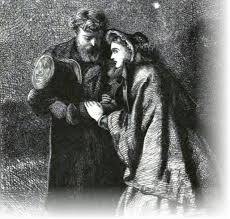
'I'm never going to let this story end, Estella'


DUBLIN DIARY : JUNE 2012


Angry Birds, Da Vinci and Aldus Manutius : the Digital Humanities formula
So, thanks for the efforts with EEBO (Early English Books Online) and ECCO (18th century database - too lazy to check the full form) and with merging them. I totally appreciated the challenges of merging two different software systems having worked on databases myself. It was also heartening to hear that the Bodleian has invested substantial monies into digitising texts and researching around the area. The digital humanists also stressed on the importance of adding annotations to the text (a project they have been working on) and spoke about their 'commonplacer' tool which would allow undergraduates to potentially design their own commonplace book from the various sources available and to then print off such books.
What I did not find in the so-called digital humanists, I found elsewhere. Librarians willing to engage with the problems of digitisation and the subcultures growing around these; academics asking about game engines and game IP; or even advising about archiving videogames and ephemeral textual experiences like gameplay - they all left me ever so thrilled. Then I went to a fascinating talk on whether children should be allowed to choose what they read. So the problems aren't restricted to videogames and the discussions that we have around the PEGI or other ratings (I remember a lovely talk by a BAFTA guy at GameCity a couple of years ago). Even now, libraries keep pondering issues related to whether children should be allowed to read Twilight or Hunger Games - if the so-called 'safe' nature of reading a book is not something we can be sure about, then obviously greater care needs to be taken before people brand videogames as the new evil toy for children. The presentation by Lynne McKechnie spanned discourses in this context from the United Nations Article Thirteen (freedom to seek, receive and impart information), IFLA, the Library Bill of Rights and other such organisations; she unpicked the problems and the inner tensions in the whole discourse. When I asked her what she thought about children being granted access to videogames, she said that the children she worked with were able to make judgments about the material for themselves, the same as they would with other kinds of stories. Kids are smart and making them play less videogames isn't going to make them smarter; perhaps the reverse - but that's another discussion.
'I'm never going to let this story end, Estella'
The other panel that I liked was one on the endings of Great Expectations. Now, this has been one of my stock examples for the multiplicity of texts and of stories in tradtional narrative media being 'reloaded' as it were. Mary Hammond's talk was revelatory in that it provided another look at the famous ending (the later one being suggested by Bulwyer-Lytton) in terms of the market and as a response to what readers wanted. Kind of like the Sherlock Holmes revival? Hammond took issue with Ankhi Mukherjee's point about Dickens's endings breaking the 'habitual coherence of the cultural experience' by challenging any such coherence. She also went on to examine the multiple adaptations of GE, one of Dickens's most adapted novels - including an Indian one by Tanika Gupta and a South Park adaptation. Even in Dickens's lifetime and shortly after, says Hammond, the quires of different editions were being interchanged and the book repackaged. My earlier (mis)conception that the multiple endings were solely due to the author's (and his chum's) intention was set right; like every multiple text in the story-assemblage, Great Expectations and its adaptability owe much to other factors. I was later able to engage the speaker in a discussion about the gamelike nature of GE and her take on it is that the novel is a very plural text and it also tells a simple story. Complex bits, such as Orlick's murder of Mrs Joe, can be taken out easily as it has in certain adaptations. After reloading Dickens yet again, I went to digital humanities panel - of which I have said enough.


DUBLIN DIARY : JUNE 2012

I'm not going to leave out the Guinness, I'm not. Or the videogame-like Dublin tour that I made with my 'significant other' who was only there for a day. I'm only sad that I wasn't able to go visit England even if briefly - because of their prohibitive visa costs. They sell salt and vinegar crisps in Ireland so I bought some for my flight back and as the brown houses of Dublin disappeared when the plane rose into the clouds, I looked down wistfully at the lovely green of Ireland and then that other island that I had so grown to love over the seven years when I lived there.
My Bangor talk
After that long twenty-eight year wait, India has won the Cricket World Cup once again and I cannot but help joining in the jubilation and euphoria in my country. Congratulations to the Indian Cricket team.
This is the first world cup that I haven't watched on television. British television is not interested in cricket, especially since the England team has been so dismal in its recent performances. 'It's not cricket', they'd have said back in the days but well... that's another story. As the team was battling the formidable Pakistan team in the semi-finals, I was not watching the match but giving a talk in lovely Bangor, far from the tense atmosphere at Mohali. I love going to Bangor University both for the place and the people. I would like to thank Dr Astrid Ensslin and Isamar Carillo Masso for inviting me to speak.
The Humanities building in the University looks something like Gryffindor Tower - ancient and dignified. It even has vaulted ceilings and stained glass windows. In such an august venue (although my talk, strictly speaking, was held in a more modern section of the building), I held forth on my pet subject - reading games and playing books. Yes, I'm still making a case for reading game narratives as seriously as literature and films. As I said in earlier posts, I use Deleuze and Guattari's concept of 'minor' literature to analyse game narratives and their place in literature. Here's the relevant section from my abstract:
Videogames are not the only such type of narrative; Gilles Deleuze and Felix Guattari identify similar characteristics in the works of authors ranging from Franz Kafka to Lewis Carroll. They call this type of literature 'minor literature' by which they mean any literature that subverts and dislocates tradition. For Deleuze and Guattari, 'minor literature' is great literature and it does not necessarily belong to minorities, although this may be the case. Like other examples of 'minor literature', videogames contain multitelic and multiple narratives. Further, although they are seen to be at the periphery of narrative studies, they are nevertheless seen to occupy a central position as research in videogames progresses.
I also used examples such as Cortazar's Hopscotch and B.S.Johnson's The Unfortunates to talk about the ludicity of literature itself. Finally, I defined videogames as an 'assemblage' (following Deleuze and adapting DeLanda's definition of assemblages). Assemblages are characterised by rules of exteriority. A component of an assemblage may be detached from it and plugged into a different assemblage in which its interactions are different. The exteriority of relations implies a certain autonomy - 'a relation may change without the terms changing'. I've spoken about this before and this time I was a bit bolder in that I came up with a 'definition' of videogames.
Sonia Fizek, who is doing a PhD on videogames, picked up on this and very rightly asked why I called this a definition especially when many other things could be called assemblages. True enough - Deleuze himself describes other things as assemblages. So the 'definition' is in effect a non-definition. Its aim is to indicate the complexity of videogames as a phenomenon and the problem of identifying something as 'the videogame'. I do not believe in 'the videogame'; videogames are multiple and arguably they resist any easy compartmentalisation more than other media. Instead, the videogame-assemblage plugs into other assemblages and the boundaries give way to organic relationships. I may have more to say when I describe videogames as assemblages but I certainly have less to define. However, definitions provoke people and my guess is that a thought-provoking idea becomes more interesting when put forward as a (non)definition. Thank you Sonia for highlighting this.
The other main issue that rings in my head is that about the 'Canon'. Do videogames have a Canon? Should they have one? And if I were to choose my ten games for the A-Level videogames and literature syllabus (should such a thing ever come to pass), what would they be? Humanities in general now makes it its business to resist attempts towards sustaining the canonical. I do not see any reason why videogames should do otherwise. My personal theoretical orientation prevents me from singling out any specific examples for special attention. Instead of selecting individual games (although like everyone else I have my favourites), I'd go for concepts and ideas and leave the selection of related texts fluid.
There were other questions asked and my memory fails me as to the finer details. Someone asked about videogames and morality. Astrid Ensslin gave us a singularly problematic example of a game where the player as Berlin Wall guard has to decide whether to shoot one of those who tried to cross over. From this and other slightly unrelated meanderings, the session closed with a question about whether we can have a Paradise Lost in videogames. I'm wondering ... after all, I had Milton as my special paper in my Master's. I don't think we need to have a videogame version of Paradise Lost just as we don't know whether a film version will capture its charm. What we need, however, is a work of such epic proportions in videogame-narratives. Videogame storytelling is getting richer by the day and I'm optimistic.
Here's a message to the naysayers, videogames are maturing as very complex narrative media - face it or run away.
Sonia Fizek, who is doing a PhD on videogames, picked up on this and very rightly asked why I called this a definition especially when many other things could be called assemblages. True enough - Deleuze himself describes other things as assemblages. So the 'definition' is in effect a non-definition. Its aim is to indicate the complexity of videogames as a phenomenon and the problem of identifying something as 'the videogame'. I do not believe in 'the videogame'; videogames are multiple and arguably they resist any easy compartmentalisation more than other media. Instead, the videogame-assemblage plugs into other assemblages and the boundaries give way to organic relationships. I may have more to say when I describe videogames as assemblages but I certainly have less to define. However, definitions provoke people and my guess is that a thought-provoking idea becomes more interesting when put forward as a (non)definition. Thank you Sonia for highlighting this.
The other main issue that rings in my head is that about the 'Canon'. Do videogames have a Canon? Should they have one? And if I were to choose my ten games for the A-Level videogames and literature syllabus (should such a thing ever come to pass), what would they be? Humanities in general now makes it its business to resist attempts towards sustaining the canonical. I do not see any reason why videogames should do otherwise. My personal theoretical orientation prevents me from singling out any specific examples for special attention. Instead of selecting individual games (although like everyone else I have my favourites), I'd go for concepts and ideas and leave the selection of related texts fluid.
There were other questions asked and my memory fails me as to the finer details. Someone asked about videogames and morality. Astrid Ensslin gave us a singularly problematic example of a game where the player as Berlin Wall guard has to decide whether to shoot one of those who tried to cross over. From this and other slightly unrelated meanderings, the session closed with a question about whether we can have a Paradise Lost in videogames. I'm wondering ... after all, I had Milton as my special paper in my Master's. I don't think we need to have a videogame version of Paradise Lost just as we don't know whether a film version will capture its charm. What we need, however, is a work of such epic proportions in videogame-narratives. Videogame storytelling is getting richer by the day and I'm optimistic.
Here's a message to the naysayers, videogames are maturing as very complex narrative media - face it or run away.
Subscribe to:
Posts
(
Atom
)


