
My presentation at NGDC, Pune
So, here's another very long overdue post. Partly, because my students have been asking me ...
A Blogpost ... Much Too Late
Much has happened around me since my last blogpost. There is a new Black Ops on the shop shelves and Altair's descendant is now in America. I didn't buy Assassin's Creed 3 despite the overzealous shop attendant's insistence. Kind of regretting it now. The past two months haven't seen a dearth of gaming activity though - despite the pains of my teaching job. I visited Pune to speak at the NASSCOM Game Development Conference and it is this experience that keeps coming to mind.
Of course, for the regulars in the industry, this post must seem to be irrelevant. Everything that could have been said has been said already. However, one likes to replay old games once in a while. This is such a reload. This year's theme was the rise of the Indies. Despite all the euphoria and the promise, I don't know how much of a 'rise' theirs has been. The stories I hear are still those of one-room offices, bit-work for third parties and teams getting smaller; however, it is my indie friends that give me hope when they tell me that they look for art in games, that one does not need to be born a coder to be able to make games and that passion and not downloads in the Android Marketplace can still be a factor to respect. I met many of the famous people in the Indian industry here - indeed, that was my main reason to go to Pune. Somehow, against all prevailing wisdom I still obstinately want to believe that the mobile phone is not the be-all and end-all for gaming in India; consoles and pcs have a future too. I also believe in the importance of good stories in gameplay and I believe in the day when arthouse games will be a reality.
Researching the Videogame Industry in India: Naive Questions That I Asked Myself Over A Year Ago
Just found this while clearing my Dropbox junk. Fresh from the UK and with a lot more enthusiasm than I have now, I framed these questions for an academic at one of the famous 'centres' of research in India who had requested such a list. The said academic never replied. Wonder why.
------------------------------------------
Possible areas of research on the Indian gaming and
animation industry
India has been the sleeping giant of the videogame industry
for over a decade. With a billion strong
population , India’s image as a potential market for the industry is strong
both within the country and abroad. International
players such as Sony, Ubisoft and Zynga are setting up units and testing labs here. India also has a large number of experienced
programmers, creative artists and animators – all three of these being key roles
in the videogame industry. Not many academic and training institutions,
however, make the connection between animation, programming and the creative
arts with the videogame industry. Those that do so concentrate more on either
the animation or the programming aspect of game design and they generally do
not focus on the sociocultural aspect of gaming that the industry needs to stay
informed about; further, they do not take into account the concerns of the
Indian gaming industry as such. More traditional academic disciplines also do
not engage with the videogame industry in the country. A few key questions,
relevant for both businesses and academia, keep arising and remain unanswered.
Any academic research on the subject should take into account the following:
Notes from a DigiHum conference in India (the first, arguably!)
The Digital Humanities in India conference is now over. It was very hectic, almost a chaosmos but it was joyful. Not sure I can trust my tired brain to summarise all the presentations or even some of them. Mark Bernstein on many things digital but mostly the need for joy; Barry Atkins teasing my brains about storytelling in videogames, keynoting the excess in the medium and the simultaneous drive by designers to limit the experience; Amlan Dasgupta giving us his notes from the dust heap of the archive and sending me back to my Walter Benjamin; Debaditya bringing Stiegler into the fray of DigiHum through the fault of Epimetheus and issues of surveillance; Abhijit Gupta showing us the complexities of creating a digital catalogue of early Bengali texts and the fascinating pages in layers of old Bengali type mixing Devnagri and Nashtaliq; Moinak Biswas with a visual archive of photos from an abandoned camera factory; Oyndrila Sarkar on bringing the digital in early British-Indian cartography and her accidental but intriguing run-in with the synchronic and diachronic; Simi Malhotra on the Digital Humanities singularity; Saugata Bhaduri on the crosscultural MMO analysis; Mahitosh Mandal's humanist take on the digital humanities; Sue Thomas's extremely popular (with my students) talk on transliteracy; I enjoyed them all. My own contribution was to problematise videogames using Deleuze's concept of the minoritarian. Here's the summary:
To sum up,
Videogames are
complex media that are read simplistically
Their
main problems are that they tell stories in many tongues and simultaneously
That
they are an assemblage rather than A text
However,
much we avoid them their narrative manifestations emerge variously
Videogames
tell stories … let’s face it and not run away.
I must thank Presidency University for the opportunity (so quickly granted) to start off the Digital Humanities here. Many thanks to the Vice Chancellor, Professor Malabika Sarkar and the Head of English, Professor Shanta Dutta, for their help and support. A huge thank you to my students and to Hanuman da, our departmental saviour for all their help.
The effort wore me out but the positive comments on Facebook give me a lot of encouragement. I hope that this enthusiasm will not die out and that something will come of my efforts. Most of my hopes lie in my students. Nought else.
The Chainsaw And The Scalpel: Impressionistic Ramblings about Computers in The Humanities
Between conversations, cigarettes and classical music we spoke of chainsaws and scalpels. Nothing was cut, of course - no zombie gore in the dismal corridors of Jadavpur University. We were talking about the role of the digital in the Humanities. The digital, somebody said, is like a chainsaw: it hacks away efficiently at great masses of data. The bigger the archive, the better the number crunching and the data analysis. The data has to be coded, metadata added and very human judgements tagged on to a text-now-turned-into-data. Fascinating stuff and I’m dying to write my SQL to get info out. I’ve done it before on coded interviews, on human voices and on feedback; the chainsaw-queries paring down the database to the shape of my logic. Masses of poetry analysed; unanticipated connections made. Algo-rhythm.
As the chainsaw whirrs non-stop, my doubts begin. I remember Lev Manovich saying in his now classic text, ‘Vertov stands half-way between Baudelaire's flâneur and computer user: no longer just a pedestrian walking through a street, but not yet Gibson’s data cowboy who zooms through pure data armed with data mining algorithms.’ I know what I’ve missed; the flaneur, checking out the streets randomly and the chap that’s not quite in any fixed role of the two mentioned - a Dziga Vertov moving through streets aiming his movie camera often at minute details and recording everything. The camera as scalpel - making small but significant incisions. These can be marked up - lines on a light background. Scalpel. Pale scale.
So when one skips in the ‘in-between spaces’ between hyperlinks, those marked-up words or those not-marked-up words, one carves out stories in miniature. A digital scalpel or a chisel even carving out narratives where one least expected them. The digital is not a tool, neither is it about tools; here’s the game reloaded: the digital is not a tool. Derrida calls it ‘originary technicity’. Technicity as how the technical affects the me. A pacemaker is not just a prosthesis (see Tim Clark’s superlative summary of Derrida’s position); it’s life as well as technology. The same by the way goes for a pen. The pen as an extension of the hand. The number as an extension-technology of the finger - digit. A heightened form of the finger-technology is here with us and is writing in the skies. Digital. Not a prosthesis.
So I was digital at the very outset; I am digital, a finger-hand-nerve machine; wired and rewired. So am I a chainsaw or a scalpel? I cannot choose as a becoming-machine. As an originary machine that is in process still. So Chainsaw/ Scalpel is media-specific. Digital Humanities research in many cases seems to be missing the forest for the trees. Chainsawing through database forests leaves splinters everywhere and one walks on them. The broken are pieced together as stories and they reload as other stories. Kate Hayles sensibly points us to media-specific analysis. To club everything that is computer-mediated into the crammed all-encompassing category of the digital is neither fair nor plausible. In analysing the narratives, we often miss the stories. Employing our chainsaw logic gates is great; we, however, miss out the cultural assemblage that is inextricably plugged into the text-crunching assemblage. The analysis needs to be flexible and to adapt. The amount of data does not matter. What matters is the process - whether this is about designing queries to analyse data or about constructing narratives in the leerstellen.The digital is not one tool; it is … media-specific and it is many. An assemblage.
Let’s not oversimplify. Tool / app / plugin is part of the digital assemblage. Your chainsaw suddenly turns into a swiss knife. Or even better, a swiss knife in becoming. In the context of originary technicity, we are neither originary chainsaw or originary scalpel: we are both and simultaneously none of these. Instead of tools, let us think of mindsets, of methodologies and of thinking through this. Mindsets and methodologies.
I haven’t written my customary conference report about the MARG conference so this’ll have to suffice. At the moment, the hotly debated area of Digital Humanities is struggling to carve out definitions - with chainsaw or scalpel. What has emerged with each incision or each hack is at once a chipping-away and an addition. The Digital Humanities are a multiplicity. It’s like those five blind people trying to figure out an elephant. It’s an elephant get it. The leg-assemblage connecting to the trunk-assemblage and to the tail-assemblage: get it? A multiplicity.
As I walk the vast stretches of the Mojave Wasteland in Fallout: New Vegas, a left mouse-click makes my chainsaw whirr furiously in the emptiness of data. Comforting - but I’m still unsure. Much depends on how one looks and where. Plug in the chainsaw-assemblage to a precision plasma rifle assemblage and to many others. Now that’s comforting. Well, as comforting as it can be for a lonely traveller in a wasteland.
Dublin Diary Continued
Okay, that was the more gamey part of my SHARP experience and it'll be a shame not to record the rest as being me, I managed to see videogames everywhere and even have deep conversations about gaming with people who seemed the unlikeliest interlocutors. Anyway, I was slightly miffed by the Early Modernists trying to mark the digital humanities for themselves in their very narrow fashion of creating electronic editions out of obscure (and not so obscure) Renaissance texts. Having seen the Digital Humanities (earlier called New Media Studies) emerge from their incunabular days, I see this recent trend for what it is: people who would shuddered, crossed themselves and shuttered their windows if you mentioned 'code' or 'internet' have now taken up cause with marking up text and xml. It's a good thing, if you ask me. I've spent enough of my life teaching luddite academics that someday they will need to check their emails not to welcome the digital Renaissance that these Early-Modern scholars are attempting to bring in. My beef is with the fact that they miss the woods for the trees. The digital umanista focus on printing and recreating texts like their counterparts in Renaissance Europe. As if that is the only area where digital technologies make a difference. The digital humanists for the most part need to move beyond the narrow confines of using their talents for xml text-creation and also focus on the sweeping and deep cultural changes that your everyday facebook conversation, your tweets, Angry Birds games and iPad apps effect. We need our Aldine Press but we need the Da Vincis too.



Angry Birds, Da Vinci and Aldus Manutius : the Digital Humanities formula
So, thanks for the efforts with EEBO (Early English Books Online) and ECCO (18th century database - too lazy to check the full form) and with merging them. I totally appreciated the challenges of merging two different software systems having worked on databases myself. It was also heartening to hear that the Bodleian has invested substantial monies into digitising texts and researching around the area. The digital humanists also stressed on the importance of adding annotations to the text (a project they have been working on) and spoke about their 'commonplacer' tool which would allow undergraduates to potentially design their own commonplace book from the various sources available and to then print off such books.

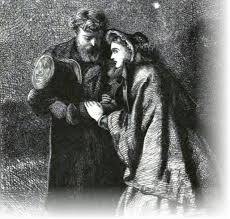
'I'm never going to let this story end, Estella'


DUBLIN DIARY : JUNE 2012


Angry Birds, Da Vinci and Aldus Manutius : the Digital Humanities formula
So, thanks for the efforts with EEBO (Early English Books Online) and ECCO (18th century database - too lazy to check the full form) and with merging them. I totally appreciated the challenges of merging two different software systems having worked on databases myself. It was also heartening to hear that the Bodleian has invested substantial monies into digitising texts and researching around the area. The digital humanists also stressed on the importance of adding annotations to the text (a project they have been working on) and spoke about their 'commonplacer' tool which would allow undergraduates to potentially design their own commonplace book from the various sources available and to then print off such books.
What I did not find in the so-called digital humanists, I found elsewhere. Librarians willing to engage with the problems of digitisation and the subcultures growing around these; academics asking about game engines and game IP; or even advising about archiving videogames and ephemeral textual experiences like gameplay - they all left me ever so thrilled. Then I went to a fascinating talk on whether children should be allowed to choose what they read. So the problems aren't restricted to videogames and the discussions that we have around the PEGI or other ratings (I remember a lovely talk by a BAFTA guy at GameCity a couple of years ago). Even now, libraries keep pondering issues related to whether children should be allowed to read Twilight or Hunger Games - if the so-called 'safe' nature of reading a book is not something we can be sure about, then obviously greater care needs to be taken before people brand videogames as the new evil toy for children. The presentation by Lynne McKechnie spanned discourses in this context from the United Nations Article Thirteen (freedom to seek, receive and impart information), IFLA, the Library Bill of Rights and other such organisations; she unpicked the problems and the inner tensions in the whole discourse. When I asked her what she thought about children being granted access to videogames, she said that the children she worked with were able to make judgments about the material for themselves, the same as they would with other kinds of stories. Kids are smart and making them play less videogames isn't going to make them smarter; perhaps the reverse - but that's another discussion.
'I'm never going to let this story end, Estella'
The other panel that I liked was one on the endings of Great Expectations. Now, this has been one of my stock examples for the multiplicity of texts and of stories in tradtional narrative media being 'reloaded' as it were. Mary Hammond's talk was revelatory in that it provided another look at the famous ending (the later one being suggested by Bulwyer-Lytton) in terms of the market and as a response to what readers wanted. Kind of like the Sherlock Holmes revival? Hammond took issue with Ankhi Mukherjee's point about Dickens's endings breaking the 'habitual coherence of the cultural experience' by challenging any such coherence. She also went on to examine the multiple adaptations of GE, one of Dickens's most adapted novels - including an Indian one by Tanika Gupta and a South Park adaptation. Even in Dickens's lifetime and shortly after, says Hammond, the quires of different editions were being interchanged and the book repackaged. My earlier (mis)conception that the multiple endings were solely due to the author's (and his chum's) intention was set right; like every multiple text in the story-assemblage, Great Expectations and its adaptability owe much to other factors. I was later able to engage the speaker in a discussion about the gamelike nature of GE and her take on it is that the novel is a very plural text and it also tells a simple story. Complex bits, such as Orlick's murder of Mrs Joe, can be taken out easily as it has in certain adaptations. After reloading Dickens yet again, I went to digital humanities panel - of which I have said enough.


DUBLIN DIARY : JUNE 2012

I'm not going to leave out the Guinness, I'm not. Or the videogame-like Dublin tour that I made with my 'significant other' who was only there for a day. I'm only sad that I wasn't able to go visit England even if briefly - because of their prohibitive visa costs. They sell salt and vinegar crisps in Ireland so I bought some for my flight back and as the brown houses of Dublin disappeared when the plane rose into the clouds, I looked down wistfully at the lovely green of Ireland and then that other island that I had so grown to love over the seven years when I lived there.
Dublin Diary: Another After-Action Report
Back to the hot Delhi summer and temperatures that do not seem ever likely to drop. The peacock cries outside my Greater Noida home sound jarring after when I remember Temple Bar in Dublin from the last three or four days. I was at the SHARP 2012 conference in Dublin - a brief respite from the heat and dust. Now, unusually jetlagged, I am wide-awake with the memories of the last few days floating in my head.Yes, I was speaking about after-action reports and other videogame paratexts; Dublin with its history of literary innovation was the best venue one could have asked for. After all, this is the place where the 'after-action report' of a day in the life of a certain Leopold Bloom is set...
I've long argued that the narrative element in videogames is of crucial importance for an understanding of how stories work. The burbling of Rushdie's 'sea of stories' with all its multiple potential stories developing all at once and yet with paradoxical difference is encountered in the medium of the videogame. So to Dublin and the 'Battle for Books' Conference organised by the Society for the History of Authorship, Reading & Publishing. My aim was to speak to a wider audience than just the community of game studies researchers and to reach out to literary critics, scholars, book historians, librarians and publishers with this message:
Videogames tell stories and they tell them interestingly; however, the stories are multiple, ephemeral and much of the storytelling occurs within the performance itself. It is, therefore, not easy to analyse these stories or even to recognise them as such using traditional methods of narrative analysis. To ignore them, however, would be to turn away from the complex ways in which storytelling occurs.
Difficult as it is to analyse such ephemeral texts, using Gerard Genette's framework of 'paratexts' it is possible to approach the textuality of the ephemeral videogame-stories and to freeze individual sessions of gameplay for analysis. Paratexts such as walkthroughs, after-action reports and 'let's play' are helpful in this. My paper was an attempt to establish these as serious objects of research and (may I be so bold) narrative analysis.
.jpg)
What made it more interesting and easier was that I spoke as part of a panel on New Media forms of the book. Professor Alexis Weedon, the chair, had already established the strong links with older narrative media here : the other presentations were on screen adaptations and the much-neglected importance of the practice; and on the transmedial textuality of the videogame Muddle Earth with the books and films telling the same story and with other texts across various media. The first by David Moorehead, a PhD scholar from the University of Bedfordshire, was key in setting the tone and showing how all adaptations link to each other and how the media-specificity of each should not be neglected. This was followed by Claudio Pires Franco's talk on tranmediality. Claudio is the gaming and research consultant at Dubit Limited and as a designer cum academic bridges some massive gaps between the two arenas. Claudio's was an interesting take on how important the story is in games and with a clear introduction to the game narrative, game engines and in-game limitations (such as the lack of slapstick humour due to budget constraints of the producers), he made it much easier for me to ground my presentation in the discourse around transmediality and take off from there.
Anyway, here's a preview for those interested. The slideshow's too big to upload but I'll work something out soon (a pdf maybe)
On the Digital Humanities in India or What You Will
Two weeks ago, I was standing in front of the Las Meninas at the Prado after having played truant at a videogames conference. Mesmerised by the little girls looking at me from within the incredibly lifelike canvas and by that man in the staircase, I felt as if I were in a videogame. Was it art or was it a videogame then? Almost immediately, I remembered the session that I run away from: 'are videogames art?' Eleven years ago, it seems such a long time now, I had asked the questions 'are videogames stories?' and 'can stories be played like videogames?' to a bemused audience of postgrads and academics in an Indian university, my alma mater. These questions haunt me even today, after writing a doctoral dissertation on the subject and many more academic debates and discussions, some of them articles and book chapters. Are videogames art? A rather irate blogger wishes to go back in time and tie Roger Ebert's hands so that he never could type his dictum on videogames not being art. I wish I could too. Tying Ebert's hands is, however, not going to solve my Las Meninas problem. Is my experience of videogames affecting my experience of the Velazquez masterpiece? Digital technology has changed how we experience the world - undoubtedly so. That includes art, literature, culture and you-name-it. So what happens to the pre-digital categories that we comfortably brought to our universities and taught our students? Problems, I say. Problems.
Part of these problems is something called Digital Humanities. For some, it is the answer to the problems that the digital technologies have caused to all those academics who were snug in their Dickens Chairs, their Aristotelian sofas and the like. Naturally, everywhere in Europe and the US, universities have started Digital Humanities courses. They all seem to know what it is and they have some great definitions. This is the good part of the story.
Now, for the not-so-good part: I am back in India again after a good seven years and when I mention Digital Humanities, I see the same bemused faces that I saw after my presentation on videogames those eleven years ago. It’s different, however. Videogames and this whole digital business is not uncool anymore. The whole world is doing Digital Humanities and India is not to be left behind. There’s a small problem though and let’s again bring in Ebert and his tied hands to illustrate this: Indian academics haven’t heard of Roger Ebert and most haven’t the foggiest idea of what videogames are. A large percentage aren’t on Facebook and although many bewail the loss of gigapedia’s free library, the common mainstays of European or American education such as VLEs and e-assessment haven’t reached their office computers. Of course, they don’t tweet; don’t know about Prezi (as opposed to Powerpoint) and would rather create their bibliographies manually rather use Zotero. I met one who did know Zotero but thought it was a note-taking software and she has covered her Kindle (one of the few that you can see around here) in cellophane totally oblivious of the magic sun-proof screen that Amazon prides itself on. Maybe, she just reads it in places where there is no cellophane reflection. Perhaps this is me being mean – so let’s go beyond my little world of web 2.0 for education and research towards the big developments that are purportedly happening in Indian academia. There is the Centre for Internet and Society that does some very important work in the area of digital cultures; there are other places that have a scattered presence in the mainstream academia. However, bigger institutions such as central and state universities have recently started showing interest in Digital Humanities. Here is the second problem: many of these institutions have got their definitions of the area from the zillion different ones in universities the world over. Instead of capitalising on the latecomer's advantage of researching the concept more thoroughly, some of these places have sought (and found) easy ready-to-hand versions more to their liking.The result is that some end up thinking that this is all about digitizing books, some think about law and the digital world, some think fancy and some confused. Kind of like the story of the blind men and the elephant they miss the forest for the trees. The main uniting factor, however, is that they all consider this an area of promise.
Of course, the magic word ‘digital’ ticks the boxes of interdisciplinarity and opens up possibilities of shaking hands with our richer colleagues in the IT faculties. ‘Digital’ also has a cool factor about it – like a male academic’s ponytail or even a metaphorical Lamborghini. Anyway, perhaps in search of this ‘coolness’, in Indian universities there is a rush helter-skelter to grab some expert on the digital humanities (or the so-called New Media), to analyse Facebook, get some surveys on gaming culture and especially on the game (sic!) called Second Life. However, this hasn’t solved any problems for the Humanities departments. Their focus remains limited and the course plans are confused. This is mainly because of the lack of engagement with previous research in the area and a haste that has perhaps stemmed from their earlier attitude to treat the area lightly. As they say, old habits die hard. I only know a couple of people who have expressed an active interest to read up on the area and of them, one is already quite well aware of international discussions and debates on many subjects. The rest seem to be content with their euphoric ‘yay digital’ mantra. It seems to me that some people are trying to do too many things too fast. Call me a purist, but at least as far as Game Studies is concerned, I strongly insist that my students read up their Espen Aarseth, their Ian Bogost and the many other rich discussions on videogames. I also insist that people who talk to me about videogames be willing to experience these games for themselves. If I were to write about Shakespeare, as I once did, I would be expected to have read up everything under the Shakespearean sun from A.C. Bradley to my girlfriend’s latest article on the bard and not to know the plays would be criminal, of course. Even Film Studies professors at least deign to watch the films they talk about. It is not surprising, therefore, that one might expect people who wish to analyse videogames, to at least have a feel of the medium itself.
However, I must not digress. Okay, so what else do I have to offer besides a massive whinge? My own understanding of the term ‘Digital Humanities’, perhaps. Make no mistake, I am and have always been concerned with researching videogames as a storytelling medium. Over the last decade, after having been pushed around under the banner of New Media (which tag I have always protested against) and now being walked into the DigiHum club, I have had to come up with a notion of my own to guarantee my academic sanity. For me, the rapid digitisation of social interaction, entertainment and cultural affects leaves its trace (in the Derridean sense and therefore also a rupture) on traditional understandings of Humanities. It exposes at the same time what was always there in the Humanities but nevertheless unknown; it also points to the close connection that the so-called new media has to the traditional notions. Let us say this in simple words. Digital media do not cause traditional concepts to be replaced by the new and the never-known-before; instead, they point out facets that problematise prior conceptions and renew the process of enquiry.
For example, we know videogames tell stories. Anybody who says that digital games are about to replace storybooks is, however, an idiot. The videogame narrative is multiple and with its saves and reloads presents an uber-complex temporality. However, to say that because videogames do not present the traditional plot structures that we often take as givens, does not mean that they cannot tell stories. Remember Borges’s forking paths, Cortazar’s Hopscotch and Calvino’s castle? Similarly, when people argue about the relationship of the ludic and the narrative, any scholar of narratives or even any random reader will remember how stories often play games with us. We just haven’t been able to study this aspect. At least, not until now. Enter Digital Humanities, Game Studies or call them what you will. Suddenly there is another shake-up of whatever we had taken for granted.
Studying that and facing that challenge in our research is what this discipline (or indeed, indiscipline) is about. Not scanning the obscure letters of a Mr Oldham and keeping them under a password-protected login. Which brings me to another vital thing about the digital world: sharing. Sharing increases the reach of an idea; so what would you say about sharing with millions of computers at unimaginable speeds? Academic culture is changing all over the world. People want to talk to each other across the globe and to listen. The dumb academic gets left far behind - by millions of tweets and facebook posts. If you are an academic going into Digital Humanities research, stay miles away from cliques and do not start by thinking of about competition. Write a blog, share your research with others, take their ideas on board and although I know you must publish your monographs and articles, but leave some free stuff on Scribd or somewhere. Share your thoughts with people not just those peer-reviewed journals.
Digital Humanities, or whatever you call it, is not a new discipline. It is a major cultural shift and it is here to stay and to problematise the stereotypes and the conventions. As game-designer and scholar Richard Bartle has said about coming to terms with videogame culture, the message here is : ‘drown or learn to swim.’ In a world, which can brook challenges and which can share solutions, I do not think we need to keep anyone’s hands tied. I would then untie Roger Ebert’s by now famous hands and take him in front of Las Meninas. Maybe he will revise his comment; maybe he will leave us with more problems. Either way, that’s the fun. Here’s to a great beginning to Digital Humanities in India and many more years, my masters.
Subscribe to:
Posts
(
Atom
)


