
Showing posts with label After action report. Show all posts
My Book Is Out at Last!
After action report
,
agency
,
Becoming
,
Bergson
,
Boal
,
Death
,
Deleuze
,
Magic Circle
,
monograph
,
Slider
,
Spinoza
,
storytelling
,
technicity
,
Time
,
Total War
,
walkthroughs
,
Wastelands
No comments
As some of you know already, my book Videogames and Storytelling: Reading Games and Playing Books was published in September 2015 by Palgrave Macmillan. Here is the blurb from the publisher’s website:

Grand Theft Auto IV saw more copies being sold than the latest superhero blockbusters or the last Harry Potter novel. Most of its players and critics commend its storytelling experience; however, when it comes to academic analysis, mainstream humanities research seems confused about what to do with such a phenomena. The problem is one of classification, in the first instance: 'is it a story, is it a game, or is it a machine?' Consequently, it also becomes a problem of methodology – which traditional discipline, if any, should lay claim to video game studies becoming the moot question. After weathering many controversies with regards to their cultural status, video games are now widely accepted as a new textual form that requires its own media-specific analysis. Despite the rapid rise in research and academic recognition, video game studies has seldom attempted to connect with older media and to locate itself within broader substantive discourses of the earlier and more established disciplines, especially those in the humanities. Video Games and Storytelling aims to readdress this gap and to bring video games to mainstream humanities research and teaching. In the process, it is also a rethinking story versus game debate as well as other key issues in game studies such as time, agency, involvement and textuality in video game-narratives.
(For more info, such as the Table of Contents and ordering, see the publisher's website: http://www.palgrave.com/page/detail/Video-Games-and-Storytelling/?sf1=barcode&st1=9781137525048)
For those inclined towards electronic editions, a Kindle version is also available now. Here’s the link: http://www.amazon.com/Video-Games-Storytelling-Reading-Playing-ebook/dp/B017DQ7J3E/ref=dp_kinw_strp_1/276-1064401-1083624
What I don’t say in the blurb but feel I should here is that the book comes with a few warnings. There’s quite a bit of Deleuze in there (as there has been and will be in my work) and there’s my obsession with the now extinct THQ Studio’s hallmark game series STALKER. Predictably, of course, there’s Tarkovsky, Lewis Carroll and PKD rubbing shoulders inside discussions on videogames. My interest in paratexts and walkthroughs takes the form of a chapter-length discussion and of course, time, agency and involvement (called ‘immersion’ by some) figure importantly in what I have to say. Finally, I end with a discussion of eggs and which end to break them on. Ludology vs. Narratology has turned into the egg-endian debate that the Lilliputs in Gulliver’s Travels consider so sacrosanct.
Here's the email address for those wishing to request a review copy: reviews@palgrave.com
Finally, I love the book cover. Thanks especially to Palgrave Macmillan for all their help and patience.
Dublin Diary Continued
Okay, that was the more gamey part of my SHARP experience and it'll be a shame not to record the rest as being me, I managed to see videogames everywhere and even have deep conversations about gaming with people who seemed the unlikeliest interlocutors. Anyway, I was slightly miffed by the Early Modernists trying to mark the digital humanities for themselves in their very narrow fashion of creating electronic editions out of obscure (and not so obscure) Renaissance texts. Having seen the Digital Humanities (earlier called New Media Studies) emerge from their incunabular days, I see this recent trend for what it is: people who would shuddered, crossed themselves and shuttered their windows if you mentioned 'code' or 'internet' have now taken up cause with marking up text and xml. It's a good thing, if you ask me. I've spent enough of my life teaching luddite academics that someday they will need to check their emails not to welcome the digital Renaissance that these Early-Modern scholars are attempting to bring in. My beef is with the fact that they miss the woods for the trees. The digital umanista focus on printing and recreating texts like their counterparts in Renaissance Europe. As if that is the only area where digital technologies make a difference. The digital humanists for the most part need to move beyond the narrow confines of using their talents for xml text-creation and also focus on the sweeping and deep cultural changes that your everyday facebook conversation, your tweets, Angry Birds games and iPad apps effect. We need our Aldine Press but we need the Da Vincis too.


Angry Birds, Da Vinci and Aldus Manutius : the Digital Humanities formula
So, thanks for the efforts with EEBO (Early English Books Online) and ECCO (18th century database - too lazy to check the full form) and with merging them. I totally appreciated the challenges of merging two different software systems having worked on databases myself. It was also heartening to hear that the Bodleian has invested substantial monies into digitising texts and researching around the area. The digital humanists also stressed on the importance of adding annotations to the text (a project they have been working on) and spoke about their 'commonplacer' tool which would allow undergraduates to potentially design their own commonplace book from the various sources available and to then print off such books.

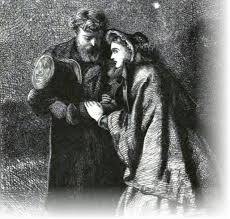
'I'm never going to let this story end, Estella'


DUBLIN DIARY : JUNE 2012


Angry Birds, Da Vinci and Aldus Manutius : the Digital Humanities formula
So, thanks for the efforts with EEBO (Early English Books Online) and ECCO (18th century database - too lazy to check the full form) and with merging them. I totally appreciated the challenges of merging two different software systems having worked on databases myself. It was also heartening to hear that the Bodleian has invested substantial monies into digitising texts and researching around the area. The digital humanists also stressed on the importance of adding annotations to the text (a project they have been working on) and spoke about their 'commonplacer' tool which would allow undergraduates to potentially design their own commonplace book from the various sources available and to then print off such books.
What I did not find in the so-called digital humanists, I found elsewhere. Librarians willing to engage with the problems of digitisation and the subcultures growing around these; academics asking about game engines and game IP; or even advising about archiving videogames and ephemeral textual experiences like gameplay - they all left me ever so thrilled. Then I went to a fascinating talk on whether children should be allowed to choose what they read. So the problems aren't restricted to videogames and the discussions that we have around the PEGI or other ratings (I remember a lovely talk by a BAFTA guy at GameCity a couple of years ago). Even now, libraries keep pondering issues related to whether children should be allowed to read Twilight or Hunger Games - if the so-called 'safe' nature of reading a book is not something we can be sure about, then obviously greater care needs to be taken before people brand videogames as the new evil toy for children. The presentation by Lynne McKechnie spanned discourses in this context from the United Nations Article Thirteen (freedom to seek, receive and impart information), IFLA, the Library Bill of Rights and other such organisations; she unpicked the problems and the inner tensions in the whole discourse. When I asked her what she thought about children being granted access to videogames, she said that the children she worked with were able to make judgments about the material for themselves, the same as they would with other kinds of stories. Kids are smart and making them play less videogames isn't going to make them smarter; perhaps the reverse - but that's another discussion.
'I'm never going to let this story end, Estella'
The other panel that I liked was one on the endings of Great Expectations. Now, this has been one of my stock examples for the multiplicity of texts and of stories in tradtional narrative media being 'reloaded' as it were. Mary Hammond's talk was revelatory in that it provided another look at the famous ending (the later one being suggested by Bulwyer-Lytton) in terms of the market and as a response to what readers wanted. Kind of like the Sherlock Holmes revival? Hammond took issue with Ankhi Mukherjee's point about Dickens's endings breaking the 'habitual coherence of the cultural experience' by challenging any such coherence. She also went on to examine the multiple adaptations of GE, one of Dickens's most adapted novels - including an Indian one by Tanika Gupta and a South Park adaptation. Even in Dickens's lifetime and shortly after, says Hammond, the quires of different editions were being interchanged and the book repackaged. My earlier (mis)conception that the multiple endings were solely due to the author's (and his chum's) intention was set right; like every multiple text in the story-assemblage, Great Expectations and its adaptability owe much to other factors. I was later able to engage the speaker in a discussion about the gamelike nature of GE and her take on it is that the novel is a very plural text and it also tells a simple story. Complex bits, such as Orlick's murder of Mrs Joe, can be taken out easily as it has in certain adaptations. After reloading Dickens yet again, I went to digital humanities panel - of which I have said enough.


DUBLIN DIARY : JUNE 2012

I'm not going to leave out the Guinness, I'm not. Or the videogame-like Dublin tour that I made with my 'significant other' who was only there for a day. I'm only sad that I wasn't able to go visit England even if briefly - because of their prohibitive visa costs. They sell salt and vinegar crisps in Ireland so I bought some for my flight back and as the brown houses of Dublin disappeared when the plane rose into the clouds, I looked down wistfully at the lovely green of Ireland and then that other island that I had so grown to love over the seven years when I lived there.
Dublin Diary: Another After-Action Report
Back to the hot Delhi summer and temperatures that do not seem ever likely to drop. The peacock cries outside my Greater Noida home sound jarring after when I remember Temple Bar in Dublin from the last three or four days. I was at the SHARP 2012 conference in Dublin - a brief respite from the heat and dust. Now, unusually jetlagged, I am wide-awake with the memories of the last few days floating in my head.Yes, I was speaking about after-action reports and other videogame paratexts; Dublin with its history of literary innovation was the best venue one could have asked for. After all, this is the place where the 'after-action report' of a day in the life of a certain Leopold Bloom is set...
I've long argued that the narrative element in videogames is of crucial importance for an understanding of how stories work. The burbling of Rushdie's 'sea of stories' with all its multiple potential stories developing all at once and yet with paradoxical difference is encountered in the medium of the videogame. So to Dublin and the 'Battle for Books' Conference organised by the Society for the History of Authorship, Reading & Publishing. My aim was to speak to a wider audience than just the community of game studies researchers and to reach out to literary critics, scholars, book historians, librarians and publishers with this message:
Videogames tell stories and they tell them interestingly; however, the stories are multiple, ephemeral and much of the storytelling occurs within the performance itself. It is, therefore, not easy to analyse these stories or even to recognise them as such using traditional methods of narrative analysis. To ignore them, however, would be to turn away from the complex ways in which storytelling occurs.
Difficult as it is to analyse such ephemeral texts, using Gerard Genette's framework of 'paratexts' it is possible to approach the textuality of the ephemeral videogame-stories and to freeze individual sessions of gameplay for analysis. Paratexts such as walkthroughs, after-action reports and 'let's play' are helpful in this. My paper was an attempt to establish these as serious objects of research and (may I be so bold) narrative analysis.
.jpg)
What made it more interesting and easier was that I spoke as part of a panel on New Media forms of the book. Professor Alexis Weedon, the chair, had already established the strong links with older narrative media here : the other presentations were on screen adaptations and the much-neglected importance of the practice; and on the transmedial textuality of the videogame Muddle Earth with the books and films telling the same story and with other texts across various media. The first by David Moorehead, a PhD scholar from the University of Bedfordshire, was key in setting the tone and showing how all adaptations link to each other and how the media-specificity of each should not be neglected. This was followed by Claudio Pires Franco's talk on tranmediality. Claudio is the gaming and research consultant at Dubit Limited and as a designer cum academic bridges some massive gaps between the two arenas. Claudio's was an interesting take on how important the story is in games and with a clear introduction to the game narrative, game engines and in-game limitations (such as the lack of slapstick humour due to budget constraints of the producers), he made it much easier for me to ground my presentation in the discourse around transmediality and take off from there.
Anyway, here's a preview for those interested. The slideshow's too big to upload but I'll work something out soon (a pdf maybe)
Under the Mask 2011
I never buy mementoes. I'm not sure why but I always manage to forget that I should buy stuff when I visit new places until I reach the departure area of airports and have nowhere else to go barring duty-free shops. On my way back from Athens, however, I did buy something and yes, it was from a duty free shop. It was a t-shirt with some Greek text on it and the image of a ancient Greek theatre mask. Here's what it said:

Examples based on different game genres will be analysed here, such as the ‘Rise and Fall of the House of Jimius’, an AAR based on Rome: Total War (The Creative Assembly 2004), ‘The Amateur’, which is based on Hitman: Blood Money (Eidos 2006) and Ben Abraham’s ‘videogame-novelization’ called Permanent Death (Abraham 2009). The main aim here is to highlight the variety of the AARs, the creativity of their writers and to examine the conventions that the genre is building around itself. A comparison with older narrative media will be equally important. Indeed, the relationship between AARs and films based on videogames is worth investigating - the Hitman film and the AAR are cases in point. The same holds true for AARs and printed fan-fiction. With the combination of image, videos, game scores, strategy tips and imaginative rewriting of the game’s plot, the AAR combines many kinds of texts, ranging from the walkthrough to the graphic novel. It will also be argued here that the AAR is an important way of talking about stories in videogames.
The mask hides the man
Shut up inside it, he sees
everything as if through
two dark holes;
from the darkness of the mask
he contemplat
the universe with detachment like a god.
In a mask you feel an ancient strength;
in a mask you dare things that the mind
cannot conceive.
Shut up inside it, he sees
everything as if through
two dark holes;
from the darkness of the mask
he contemplat
the universe with detachment like a god.
In a mask you feel an ancient strength;
in a mask you dare things that the mind
cannot conceive.
I felt I had to buy it. It would remind me of the many masks that I have to wear always. It reminded me of videogames where I take on a mask - my real-life character interacting complicatedly with the mask that tries to hide it. Previously, I have said in Ludus ex and elsewhere that I do not believe in immersion but rather see the game persona as a becoming and the mask as another plugging in to the assemblage. The whole process fascinates me and the mask works so well as a metaphor of me as a becoming-game, becoming-avatar and simply becoming.
Which is why I think 'Under the Mask' is one of the coolest titles for a videogame conference. Readers will remember that I have been to all the iterations of this conference bar one. I'm going back again. Check out the link to the abstracts here (http://underthemask.wikidot.com/abstracts). I strongly recommend it if you are interested in videogames and can make it to Luton on 2nd June.
As for me, this is my last games conference in the UK and it will soon be time to pack my bags. Here's the abstract of my paper:
Souvik Mukherjee
Rewriting Unwritten Texts: After-action Reports and Videogames
Storytelling in videogames still remains a contentious issue and one that commentators have found difficult to agree on for over a decade. On the one hand, the multiplicity of possible events within the game narrative makes it difficult to employ traditional literary analysis and on the other, the stories themselves are often unfavourably compared to literary classics and criticised for lacking the depth and the significance. Despite these issues, however, players continue to enjoy playing videogames as a storytelling medium and the narrative exists, as it were, at an unstable and marginal level where it is recorded not only in the player’s memory but in walkthroughs, guides, wikis and the recent genre of fan-fiction based on actual gameplay instances and called ‘after-action report’ (referred to as AAR, hereafter). Studies of walkthroughs (Ashton and Newman 2010; Newman 2008) and cheat codes (Consalvo 2007) are slowly coming to the forefront; the after-action report or the game journal has, however, remained largely unnoticed in Game Studies. This paper explores after-action reports and the stories they tell.Examples based on different game genres will be analysed here, such as the ‘Rise and Fall of the House of Jimius’, an AAR based on Rome: Total War (The Creative Assembly 2004), ‘The Amateur’, which is based on Hitman: Blood Money (Eidos 2006) and Ben Abraham’s ‘videogame-novelization’ called Permanent Death (Abraham 2009). The main aim here is to highlight the variety of the AARs, the creativity of their writers and to examine the conventions that the genre is building around itself. A comparison with older narrative media will be equally important. Indeed, the relationship between AARs and films based on videogames is worth investigating - the Hitman film and the AAR are cases in point. The same holds true for AARs and printed fan-fiction. With the combination of image, videos, game scores, strategy tips and imaginative rewriting of the game’s plot, the AAR combines many kinds of texts, ranging from the walkthrough to the graphic novel. It will also be argued here that the AAR is an important way of talking about stories in videogames.
I am an Assassin and I fly on fire
Safety and Peace, traveller. The story I tell today is not of Altair, my illustrious ancestor. Those whom he removed from this world by the will of God, ever so glorious, have returned to our story. Such is the cyclic fate of man.
I am Ezio of Florence of the House of Auditore born to the pleasures of the reborn Italian states and embroiled in the conspiracies that govern our troubled lives. I too am an assassin or rather, am training to be one. Training well I must say as the streets of Milan and Venice are abuzz with rumours about me. They paint portraits of me so that people can report me. The town-criers cry warnings. The guards are on high alert. There are rumours that I can fly. At other times I would have laughed but today I am dead serious about flying. I will fly into the Doge’s palace, otherwise impregnable and bristling with the spears of its thousand guards. Today my job is to save a life , not to take one. They say the Doge’s padre will poison him today. Like I saved Lorenzo de Medici, I must save this Doge. Else, the future of Venice lies with the Borgia scum.

Fly, I said and you did not take me seriously. After all, this is still the early Renaissance. I am sure your history books have recorded the story of my friend Leonardo, the artist and polymath, even though it has effaced mine. Leonardo has invented a flying machine. Yes, as stupendous as that. Our first test flight ended up as a major embarrassment and increased my resolve of not trusting men of learning. I landed amongst the rooftops and was very lucky not to have my bones turned into jelly. Leonardo has had a brainwave since then. We are going to use fires all over the city rooftops and heat the air. The heated air is going to lift up Leonardo’s contraption whenever it sinks down. Whenever it sinks , I have to steer it towards a fire and of course, steer clear of the archers or kick them off the roofs.
Meanwhile, back to my job of clearing the rooftops where I plan to have the fires. My hidden blade just slid smoothly into my palm as I wiped off the blood of the last dead guard. So back to Leonardo and then I will have more stories to tell.
I am Ezio of Florence of the House of Auditore born to the pleasures of the reborn Italian states and embroiled in the conspiracies that govern our troubled lives. I too am an assassin or rather, am training to be one. Training well I must say as the streets of Milan and Venice are abuzz with rumours about me. They paint portraits of me so that people can report me. The town-criers cry warnings. The guards are on high alert. There are rumours that I can fly. At other times I would have laughed but today I am dead serious about flying. I will fly into the Doge’s palace, otherwise impregnable and bristling with the spears of its thousand guards. Today my job is to save a life , not to take one. They say the Doge’s padre will poison him today. Like I saved Lorenzo de Medici, I must save this Doge. Else, the future of Venice lies with the Borgia scum.

Fly, I said and you did not take me seriously. After all, this is still the early Renaissance. I am sure your history books have recorded the story of my friend Leonardo, the artist and polymath, even though it has effaced mine. Leonardo has invented a flying machine. Yes, as stupendous as that. Our first test flight ended up as a major embarrassment and increased my resolve of not trusting men of learning. I landed amongst the rooftops and was very lucky not to have my bones turned into jelly. Leonardo has had a brainwave since then. We are going to use fires all over the city rooftops and heat the air. The heated air is going to lift up Leonardo’s contraption whenever it sinks down. Whenever it sinks , I have to steer it towards a fire and of course, steer clear of the archers or kick them off the roofs.
Meanwhile, back to my job of clearing the rooftops where I plan to have the fires. My hidden blade just slid smoothly into my palm as I wiped off the blood of the last dead guard. So back to Leonardo and then I will have more stories to tell.
Souvik's Waterloo
Waterloo, November 2010
Yesterday, I finally managed to beat Wellington and Bluecher’s combined armies near this little Belgian village called Waterloo. This happened on my third attempt when I finally decided to play on the easy skill level. Yes, I’ve bought Napoleon: Total War after reading all those rave reviews that dub it the best strategy game ever and although I haven’t gone very far with the campaigns, I’ve played all the historical battles that are available in the game. Waterloo, obviously is one of the most signficant. The historical battles begin with you playing as the British at Waterloo and end by putting you in the same battlefield as the French - talk about complex and nonlinear histories. Of that, however, another time. Here, I’m more concerned with strategy and with describing how I led Napoleon’s army to victory.

In the real battle of Waterloo, the British under the Duke of Wellington were facing Napoleon himself near Waterloo, an area that the Duke had visited and remembered from the previous year. The British army was actually a very mixed group of soldiers with many Dutch and Prussian units. They were stationed at a strategically advantageous position behind a ridge with only a fraction of their main strength exposed to Napoleon. Further, below the ridge lay three villages which they occupied: Papellotte on the left, Huguemont on the right and Le Hayes Sainte in the centre. The French forces were on lower ground within striking distance of the villages and with superior artillery. They had lost some vital time in beginning the attack on account of the ground being too muddy for the artillery to move. Wellington and Napoleon had never faced each other. The only way for the French to win was to defeat Wellington before his Prussian allies under Bluecher arrived to reinforce him. The Prussians did arrive in time and Napoleon suffered a devastating defeat after which he was exiled to St. Helena.
In Napoleon, the number of forces on each side are much less than in the actual battle. Nevertheless, the units that participate in the battle are all historical units and their placement on the battlefield is more or less accurate. The events, however, might be quite different because they depend on how you play the game. The battle is hard, very hard indeed. Quite uncannily you end up doing what Napoleon did in the actual battle and suffer the same consequences. I’ve watched Waterloo, the movie, countless times and read the battle plans as many times. Many a time had I thought that if I had a chance, I’d do it all differently. However, this didn’t quite work out in Napoleon and except on the easiest level, my troops were decimated to a man.

Waterloo: Battle Map in Napoleon Total War
Even though I say so myself, I’m no mean armchair general. I’ve conquered the other Total War games with relative ease, even at the hardest levels. Napoleon, however, is way too hard. The AI is quite good and the game cheats a bit and starts you off with unfair handicaps. The three farmhouses are virtually indestructible and after a constant barrage of 12-pounder fire on them for over an hour (game time), I was only able to cause 3% damage to Papellotte. Wellington’s troops have incredible high morale whereas even Napoleon’s Guard show their backs much more easily. Finally, Napoleon’s famed artillery is hardly present on the field. In Waterloo, Christopher Plummer (as Wellington) is heard saying that Napoleon moves his cannon as if they were pistols. In the game, Napoleon hardly has any cannon to move and those that he has are under sustained artillery attack seconds after the game starts. God, how I missed my 24-pounder howitzers from Empire: Total War.
The battle, however, was too big a challenge to resist - fighting in Waterloo against the heaviest odds which, as many forums testify, have beaten many good gamers was sheer glory. After the initial battle scene was revealed through a cutscene, the enemy cannon started blowing holes in the ranks of my fusiliers. Haste was required and I found myself frantically moving all my units save two corps of the Old Guard and Napoleon’s bodyguard. All this while, my stationed artillery fired at the British cannon, if only to draw fire away from my infantry units. Then, the siege of Papellotte began. Unlike Napoleon, I did not choose to tease the British at their strongest position and I did not tempt them out of the ridges that provided them with cover. I had attacked the British left, skirting around a hill towards Papellotte with the mass of my units and leaving two units of fusiliers to attack the farmhouse and one to wait as reserve.
The jaegers in Papellotte were overthrown after some initially effective resistance. The farmhouse in French hands, my reserve fusiliers moved in to provide the extra support against any troops that might emerge from hiding (from previous gameplay, I knew that there was a detachment of Rifles concealed nearby).

Battle Plan for Waterloo in my gameplay of Napoleon: Total War
As soon as I reached the far side of the hill near Papellotte, the Prussian army began to pour in. Marshal Grouchy who was sent to pursue them had clearly been as unsuccessful in the game as he was in the historical battle. I could almost hear Napoleon sighing, ‘Grouchy, Grouchy! How he tries my patience!’. Anyway, you don’t need to be a Bonaparte to get upset with incompetent colleagues. Seeing the Prussian move closer, I had my cannon unlimber and spray his front ranks with canister fire while my lancer cavalry dug into his rearguard which was already being harried by my grenadiers and fusiliers. The Prussian cavalry had by now come within range of my fusiliers who quickly formed squares to repel cavalry charges. Encouraged , and at the same time, not knowing what else to do I threw in my cuirassiers and Marshal Ney’s cavalry into the melee. My cavalry was, alas, destroyed to a man but by God, they managed to break the Prussians. Bluecher, their general, was dead and their artillery was being cut to pieces by my Chasseurs Cheval horsemen whom I had moved into this sector. The game AI here was quite spectacular in its stupidity. The British troops stood still and watched while I destroyed their allies. The Prussians destroyed, I had over four infantry divisions and the mounted Chasseurs to attack Wellington’s left flank with. Even more importantly, I had my horse artillery up on the mountain with Wellington’s flank at my mercy. Soon the Earl of Uxbridge’s horseman were scattered by volleys from my cannon. The dragoons and the Duke’s cavalry who charged to save their dying comrades were sliced to pieces by my fusiliers in square formation. Soon the British commanders were dead and my troops were proceeding to roll up the British lines like a carpet.
That, however, was not to happen too easily: the Black Watch intervened. Masses of these Scottish soldiers attacked me in waves, their red uniforms soaking up their blood but still their morale held and constant fire from two sides, canister fire from my artillery and two abortive cavalry charges could not break them. I had to throw my fresh division of the Young Guard against them as my other two divisions routed. The Black Watch was beaten at last but as the last tartan uniforms were edging away to retreat, they created time for waves of British infantry to move into position and harass my Young Guard. An advancing column of Rifles (anyone familiar with Sean Bean from Sharpe’s Rifles ?) was held back by my fusiliers in the Papellotte farmhouse. Time to send in the Old Guard.
The British finally attacked my left flank. Jaeger and Riflemen (remember Sharpe’s Rifles) attached my only Fusilier Regiment that remained intact - firing at will, they almost broke my ranks. The Old Guard had just started marching and one Corps was despatched to destroy the British light infantry. The Jaegers and Riflemen dissolved into the forest whence they had emerged. This time, however, they didn’t retreat in order: they routed.

My reserve was now poised towards attacking the British flank and my artillery kept firing ceaselessly. The Young Guard had held and the Fusiliers from Papellotte had given them some support. It was now the turn of the Old to replace the Young. Two companies of my elite Old Guard broke the British flank. I could now send Napoleon’s bodyguard to mop up the rear of the routing British and Dutch. They offered to surrender and I accepted. My men were exhausted and I couldn’t pursue. Shifting the camera further above the battlefield I actually saw the British soldiers running away - little red squares scattered on the mini-map while the blue squares representing my remaining army in a close formation on Wellington’s chosen hillock.
That’s how the Battle of Waterloo was won by Napoleon … by me.

That's the man!
In the real battle of Waterloo, the British under the Duke of Wellington were facing Napoleon himself near Waterloo, an area that the Duke had visited and remembered from the previous year. The British army was actually a very mixed group of soldiers with many Dutch and Prussian units. They were stationed at a strategically advantageous position behind a ridge with only a fraction of their main strength exposed to Napoleon. Further, below the ridge lay three villages which they occupied: Papellotte on the left, Huguemont on the right and Le Hayes Sainte in the centre. The French forces were on lower ground within striking distance of the villages and with superior artillery. They had lost some vital time in beginning the attack on account of the ground being too muddy for the artillery to move. Wellington and Napoleon had never faced each other. The only way for the French to win was to defeat Wellington before his Prussian allies under Bluecher arrived to reinforce him. The Prussians did arrive in time and Napoleon suffered a devastating defeat after which he was exiled to St. Helena.
In Napoleon, the number of forces on each side are much less than in the actual battle. Nevertheless, the units that participate in the battle are all historical units and their placement on the battlefield is more or less accurate. The events, however, might be quite different because they depend on how you play the game. The battle is hard, very hard indeed. Quite uncannily you end up doing what Napoleon did in the actual battle and suffer the same consequences. I’ve watched Waterloo, the movie, countless times and read the battle plans as many times. Many a time had I thought that if I had a chance, I’d do it all differently. However, this didn’t quite work out in Napoleon and except on the easiest level, my troops were decimated to a man.

Waterloo: Battle Map in Napoleon Total War
Even though I say so myself, I’m no mean armchair general. I’ve conquered the other Total War games with relative ease, even at the hardest levels. Napoleon, however, is way too hard. The AI is quite good and the game cheats a bit and starts you off with unfair handicaps. The three farmhouses are virtually indestructible and after a constant barrage of 12-pounder fire on them for over an hour (game time), I was only able to cause 3% damage to Papellotte. Wellington’s troops have incredible high morale whereas even Napoleon’s Guard show their backs much more easily. Finally, Napoleon’s famed artillery is hardly present on the field. In Waterloo, Christopher Plummer (as Wellington) is heard saying that Napoleon moves his cannon as if they were pistols. In the game, Napoleon hardly has any cannon to move and those that he has are under sustained artillery attack seconds after the game starts. God, how I missed my 24-pounder howitzers from Empire: Total War.
The battle, however, was too big a challenge to resist - fighting in Waterloo against the heaviest odds which, as many forums testify, have beaten many good gamers was sheer glory. After the initial battle scene was revealed through a cutscene, the enemy cannon started blowing holes in the ranks of my fusiliers. Haste was required and I found myself frantically moving all my units save two corps of the Old Guard and Napoleon’s bodyguard. All this while, my stationed artillery fired at the British cannon, if only to draw fire away from my infantry units. Then, the siege of Papellotte began. Unlike Napoleon, I did not choose to tease the British at their strongest position and I did not tempt them out of the ridges that provided them with cover. I had attacked the British left, skirting around a hill towards Papellotte with the mass of my units and leaving two units of fusiliers to attack the farmhouse and one to wait as reserve.
The jaegers in Papellotte were overthrown after some initially effective resistance. The farmhouse in French hands, my reserve fusiliers moved in to provide the extra support against any troops that might emerge from hiding (from previous gameplay, I knew that there was a detachment of Rifles concealed nearby).

Battle Plan for Waterloo in my gameplay of Napoleon: Total War
As soon as I reached the far side of the hill near Papellotte, the Prussian army began to pour in. Marshal Grouchy who was sent to pursue them had clearly been as unsuccessful in the game as he was in the historical battle. I could almost hear Napoleon sighing, ‘Grouchy, Grouchy! How he tries my patience!’. Anyway, you don’t need to be a Bonaparte to get upset with incompetent colleagues. Seeing the Prussian move closer, I had my cannon unlimber and spray his front ranks with canister fire while my lancer cavalry dug into his rearguard which was already being harried by my grenadiers and fusiliers. The Prussian cavalry had by now come within range of my fusiliers who quickly formed squares to repel cavalry charges. Encouraged , and at the same time, not knowing what else to do I threw in my cuirassiers and Marshal Ney’s cavalry into the melee. My cavalry was, alas, destroyed to a man but by God, they managed to break the Prussians. Bluecher, their general, was dead and their artillery was being cut to pieces by my Chasseurs Cheval horsemen whom I had moved into this sector. The game AI here was quite spectacular in its stupidity. The British troops stood still and watched while I destroyed their allies. The Prussians destroyed, I had over four infantry divisions and the mounted Chasseurs to attack Wellington’s left flank with. Even more importantly, I had my horse artillery up on the mountain with Wellington’s flank at my mercy. Soon the Earl of Uxbridge’s horseman were scattered by volleys from my cannon. The dragoons and the Duke’s cavalry who charged to save their dying comrades were sliced to pieces by my fusiliers in square formation. Soon the British commanders were dead and my troops were proceeding to roll up the British lines like a carpet.
That, however, was not to happen too easily: the Black Watch intervened. Masses of these Scottish soldiers attacked me in waves, their red uniforms soaking up their blood but still their morale held and constant fire from two sides, canister fire from my artillery and two abortive cavalry charges could not break them. I had to throw my fresh division of the Young Guard against them as my other two divisions routed. The Black Watch was beaten at last but as the last tartan uniforms were edging away to retreat, they created time for waves of British infantry to move into position and harass my Young Guard. An advancing column of Rifles (anyone familiar with Sean Bean from Sharpe’s Rifles ?) was held back by my fusiliers in the Papellotte farmhouse. Time to send in the Old Guard.
The British finally attacked my left flank. Jaeger and Riflemen (remember Sharpe’s Rifles) attached my only Fusilier Regiment that remained intact - firing at will, they almost broke my ranks. The Old Guard had just started marching and one Corps was despatched to destroy the British light infantry. The Jaegers and Riflemen dissolved into the forest whence they had emerged. This time, however, they didn’t retreat in order: they routed.

I don't like St. 'Elena: going home after victory
My reserve was now poised towards attacking the British flank and my artillery kept firing ceaselessly. The Young Guard had held and the Fusiliers from Papellotte had given them some support. It was now the turn of the Old to replace the Young. Two companies of my elite Old Guard broke the British flank. I could now send Napoleon’s bodyguard to mop up the rear of the routing British and Dutch. They offered to surrender and I accepted. My men were exhausted and I couldn’t pursue. Shifting the camera further above the battlefield I actually saw the British soldiers running away - little red squares scattered on the mini-map while the blue squares representing my remaining army in a close formation on Wellington’s chosen hillock.
That’s how the Battle of Waterloo was won by Napoleon … by me.
Lara Croft Blog
Just came across a Lara Croft blog. The random next blog feature in blogger is to be thanked. The blog is called 'Adventures of Lara Croft' and is a sort of after-action report on Tomb Raider games. The author is quite passionate about Lara and posts videos of his games and Lara Croft's adventures in mods. He tells stories, offers advice on gameplay and tests out mods.
Another entry for my walkthroughs and AAR database.
A sample story cited by Ashley (the putative author of the blog) begins thus:
In the snowy mountains of Alaska Lara has to make a forced landing with her helicopter because of engine trouble. Now she does not know how to get home on time for Christmas...
The rest is to be found here. There's so much of meta stuff that game researchers like myself miss. Videogames are still a very young area and they are growing very fast in different directions. The AAR and walkthrough are examples of areas that are in urgent need of research and exploration.
Subscribe to:
Posts
(
Atom
)


